

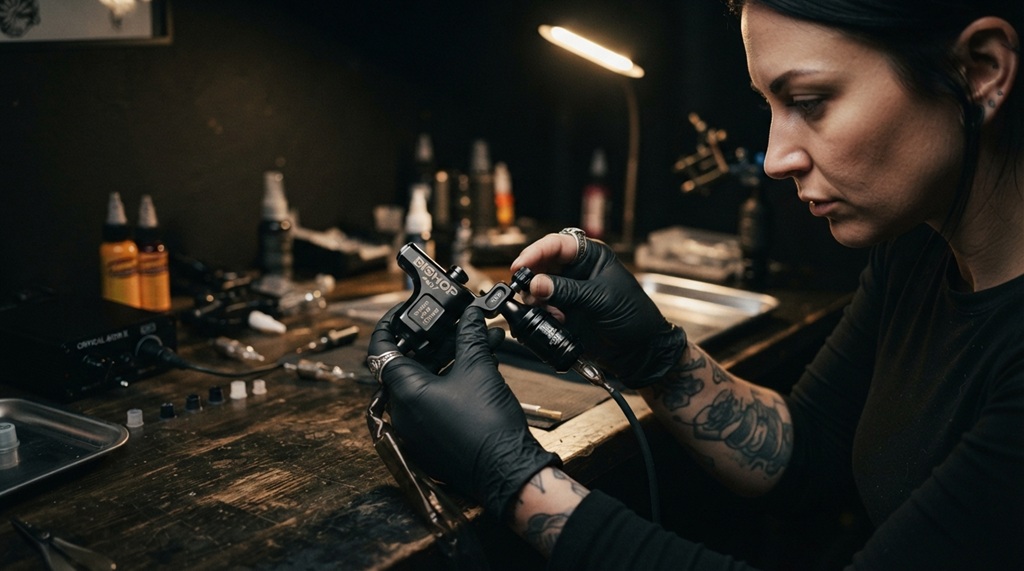

Want clean tattoo lines? Look for a machine with a tight, steady needle stroke and stable voltage. A coreless rotary machine or a well-tuned coil liner running a short stroke (2.5mm–3.0mm) usually does the job best. No single machine guarantees clean lines on its own. But the right stroke, speed, and needle setup make consistency much easier, even if your hand technique is still developing.
Three things create a clean line: the machine’s mechanical consistency, the needle and voltage you pair with it, and your own hand speed and pressure. Many artists chase a brand name when the real problem is a mismatched setup. A long-stroke shading machine won’t give you fine linework. Voltage that’s too high won’t work well with a tight needle grouping. This guide breaks down the variables that actually matter, so you can buy with confidence or fine-tune what you already own.
Maybe you’re shopping for your first serious liner. Maybe your lines keep coming out shaky or blown out and you don’t know why. Either way, the sections below cover machine types, stroke length, voltage, needle pairing, and grip choice. These are the real factors that separate a clean line from a messy one.
Coil vs. Rotary Machines: Which Is Better for Lining?
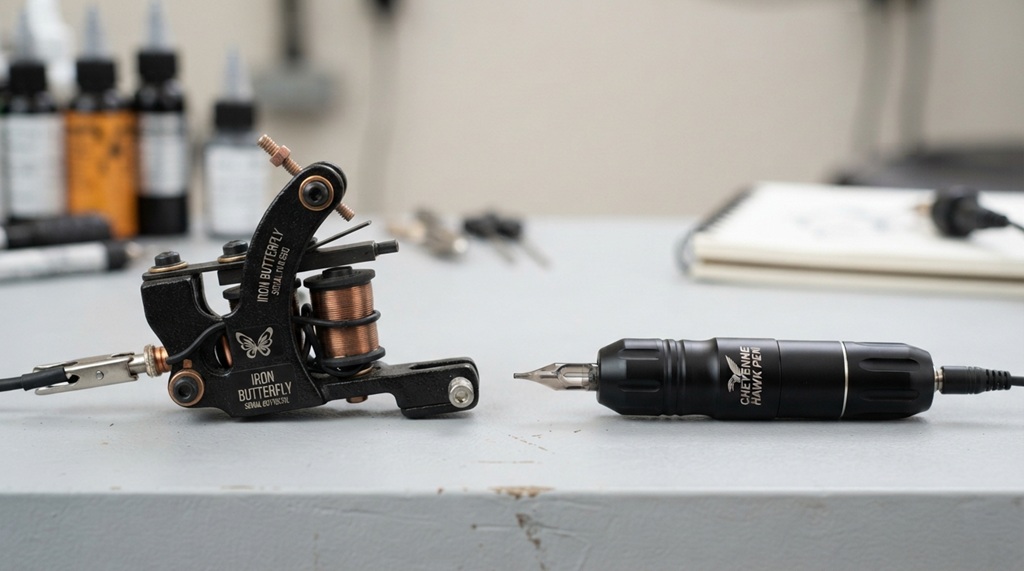
Both coil and rotary machines can produce clean lines. Rotary machines tend to forgive more mistakes, which helps artists still building consistent hand speed. Coil machines give sharper, more mechanical feedback once you’ve mastered the timing.
Coil machines use an electromagnetic circuit that snaps the needle bar back and forth. Traditional coil liners run a punchy, fast stroke. Many old-school linework artists like this because it packs ink into the skin with a distinct hit. But coil machines need regular tuning. Spring tension, contact screw gap, and voltage all have to work together. They can also drift out of tune during a long session.
Rotary machines use a motor to drive the needle in a smooth, continuous loop. They run quieter, weigh less, and need far less maintenance since there are no contact points or springs to adjust. This consistency matters for clean lines. A rotary machine’s stroke won’t shift mid-tattoo the way a coil machine’s springs can. That’s why most professional linework artists today reach for rotary machines.
Which Tattoo Machine Builds Cleaner Lines faster?
Choosing between a hard-hitting coil and a forgiving rotary machine ultimately comes down to your level of hand control and technical experience. For emerging artists and apprentices still refining their linework, starting with a modern rotary machine is often the smartest investment; its plug-and-play consistency eliminates mechanical variables so you can focus entirely on hand speed, depth, and needle angle. Conversely, if you have already mastered manual tuning and crave the tactile, punchy feedback that snaps crisp ink into tough skin, a finely calibrated coil liner remains an unrivaled industry standard provided you are willing to navigate its steeper maintenance curve. Whichever technology you select, paired with a solid understanding of shop standards and client intake protocols like what age can you get a tattoo you will build a safer, more precise lining workflow from day one.
Why Stroke Length Is the Most Overlooked Factor
Stroke length is how far the needle travels forward and back on each cycle. It affects line cleanliness more than almost any other spec, and most beginners ignore it when comparing machines.
A shorter stroke (around 2.5mm–3.2mm) moves faster and gives you more control. That makes it ideal for fine, precise linework. Longer strokes (3.5mm and up) push more ink per pass, which works well for shading or bold blackwork. But on thin lines, a long stroke often looks inconsistent or slightly blown out, because the needle travels too far to stay controlled at low speed.
Here’s an angle most buying guides skip: stroke length interacts directly with your hand speed. Work naturally fast and light? A shorter stroke keeps up without over-saturating the skin. Work slower with heavier pressure? A slightly longer stroke can actually cause less trauma per pass, since it needs fewer passes to seat the ink. In other words, “shortest stroke” isn’t automatically “best for everyone.” Test a couple of stroke lengths on practice skin at your normal working speed before you trust a spec sheet number to suit your hand.
Voltage and Speed: Getting the Needle Speed Right
Correct voltage matters more for clean lines than machine brand. Too much voltage makes the needle overshoot and blow out the line. Too little causes skips and patchy, broken lines.
Most rotary liners run cleanly between 6 and 8 volts, though this varies by machine and needle configuration. Start at the low end of the manufacturer’s recommended range and work up from there. Coil machines are typically tuned by ear and feel rather than a fixed voltage number, since spring tension changes the equation.
Signs Your Voltage Is Off
- Lines look shaky or “vibrated”: This often means too much voltage. The needle moves faster than your hand can steadily guide it.
- Lines look faded or have gaps: This usually means too little voltage. The needle isn’t penetrating consistently.
- The machine feels like it’s fighting your hand movement: This often signals a stroke speed mismatch with your working pace, regardless of voltage.
Try this simple test: run a straight line on practice skin at three voltage settings, a half-volt apart, keeping your hand speed identical each time. Find the setting that produces the crispest, most even line without extra passes. That’s your baseline. Write it down, because it will differ slightly for every needle configuration you use.
Needle Configuration and Its Effect on Line Quality
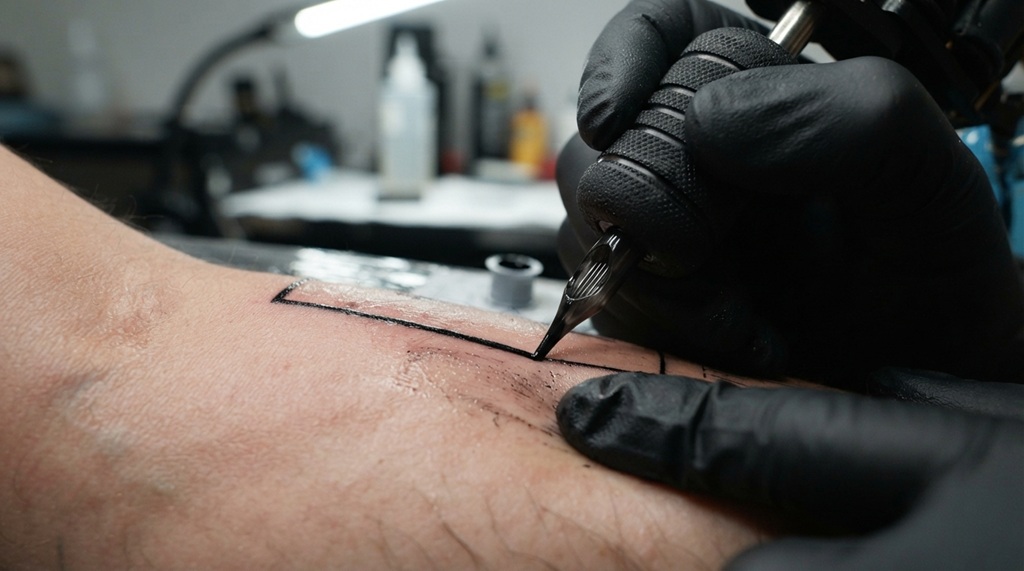
The machine only does half the work. Needle grouping and taper influence line quality just as much as the machine itself.
Round liner needles (RL) are grouped tightly to create a defined, unbroken line. Match the needle count (1RL, 3RL, 5RL, and so on) to the line weight you want. Smaller groupings suit fine detail. Larger groupings suit bold outlining. Taper length matters too. A long taper deposits ink gradually and suits thinner lines. A short taper works more aggressively and suits bold, saturated linework.
Many artists learn this the hard way: pairing a long-taper needle with a machine tuned for bold work (or the reverse) can make even a great machine produce inconsistent lines. The needle isn’t releasing ink at the rate the stroke and voltage expect. When you switch needle brands or tapers, recheck your voltage. Don’t assume your old setting still applies. This is one of the most common reasons artists blame their machine when the real issue is an unadjusted setup after a needle change.
Grip, Weight, and Balance: The Ergonomic Side of Clean Lines
A machine’s weight and grip diameter affect line quality indirectly, but significantly. Hand fatigue and poor balance both show up as shakier, less controlled lines as a session goes on.
Lighter machines, especially compact rotary pens, reduce fatigue during long linework sessions. That matters because tired hands are one of the most common causes of inconsistent lines toward the end of a piece. Grip diameter comes down to personal preference. Some artists find more control with a slimmer grip closer to how they hold a pen. Others prefer a thicker grip for stability during longer sessions. No size works universally best, so test a few before you commit to one machine long-term.
Balance matters too. A front-heavy machine, weighted toward the needle end, can actually help with control on straight lines since it naturally stays perpendicular to the skin. A rear-heavy machine can feel more agile for curved or detailed work.
Cartridge Needles vs. Traditional Needles for Lining
Cartridge needles work better for most artists doing linework today. Consistency and hygiene drive that choice, though traditional needle-and-tube setups still have loyal users who prefer the feel.
Cartridges come pre-sterilized with a fixed needle-to-membrane setup. That means less variability between needles, which gives you a real advantage when you want consistent line quality across a session or between clients. Traditional needles require you to assemble the needle, tube, and grip yourself. This gives more customization, but it also introduces more room for inconsistency if you don’t repeat the setup exactly the same way each time.
Cartridges’ membrane systems help control ink flow and reduce splatter. That’s part of why most professional linework today happens on cartridge-compatible rotary machines.
Frequently Asked Questions
What voltage is best for clean tattoo lines?
There’s no single “best” number. It depends on your machine, needle grouping, and hand speed. Most rotary liners produce clean lines between 6 and 8 volts. Start low and increase gradually while testing on practice skin, since too much voltage is the most common cause of shaky or blown-out lines.
Is a rotary or coil machine better for beginners doing linework?
Rotary machines generally work better for beginners doing lining, since they hold their tune longer and need less mechanical adjustment. Coil machines can produce equally clean lines, but they need more frequent tuning and hand-timing practice to stay consistent.
Does a more expensive machine automatically mean cleaner lines?
No. Price mainly reflects build quality, motor durability, and brand reputation, not automatic line quality. A properly tuned mid-range machine, paired with the right needle, will consistently outperform an expensive machine used with mismatched settings.
Why do my lines look clean at the start of a session but sloppy by the end?
Fatigue usually causes this, not the machine. As your hand tires, your speed and pressure become less consistent. Choose a lighter machine and take short breaks during long linework sessions to help maintain consistency.
What needle size is best for fine, clean outlines?
Smaller round liner groupings, like 1RL or 3RL, work as the standard for fine, detailed outlines. Larger groupings (5RL and up) suit bolder linework. The right size depends on the line weight you want for that specific piece, not a fixed rule.
Conclusion
Clean lines don’t come from one perfect machine. They come from matching stroke length, voltage, and needle configuration to your own hand speed, then keeping that setup consistent every time you tattoo. Rotary machines with a shorter stroke tend to give you the most forgiving starting point, but a well-tuned coil liner can perform just as well once you’ve nailed the timing. Test your specific combination on practice skin, note what settings produce your cleanest results, and stick with that baseline instead of chasing a new machine every time a line comes out shaky.