

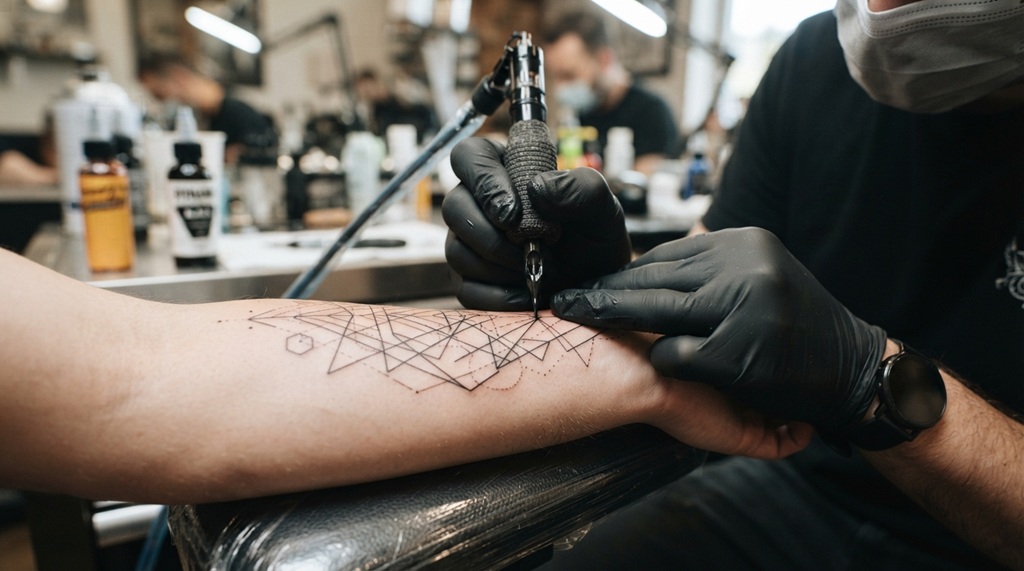

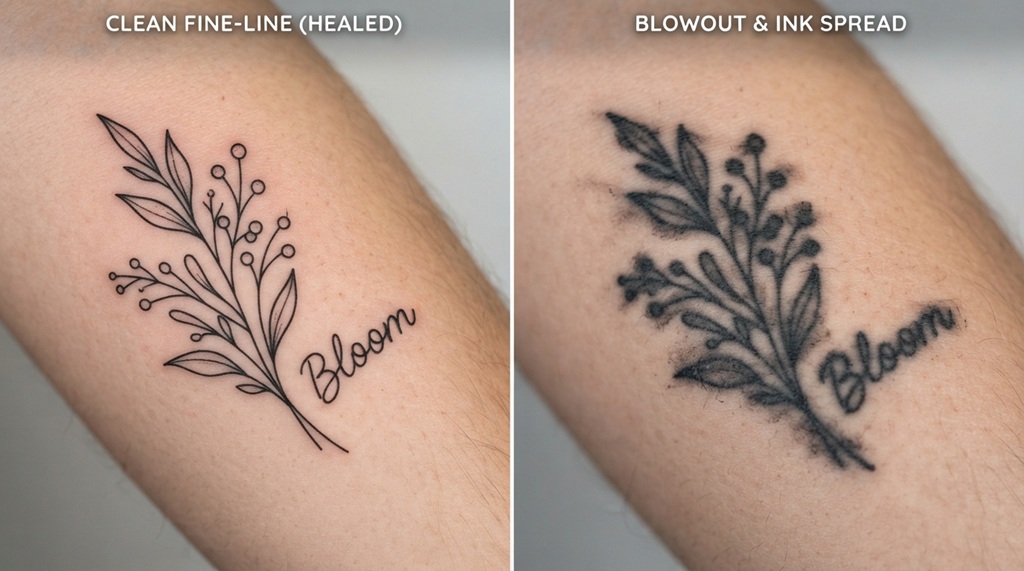
Blowouts happen when ink spreads under the skin instead of staying in a crisp line. You can prevent this by using the correct needle size, holding a shallow angle, and controlling your machine speed. Fine line work rewards precision over power, and small adjustments make a big difference.
Most blowouts trace back to three causes: too much depth, too much pressure, or the wrong needle grouping. New artists often push harder because they want the line to look bold right away. That instinct usually backfires and creates the smudged, spread-out look clients hate.
This guide breaks down the exact technique, equipment, and skin prep that keep fine lines sharp. You will also find real troubleshooting tips for problem areas like fingers, inner arms, and aging skin.
What Causes Blowouts in Fine Line Tattoos
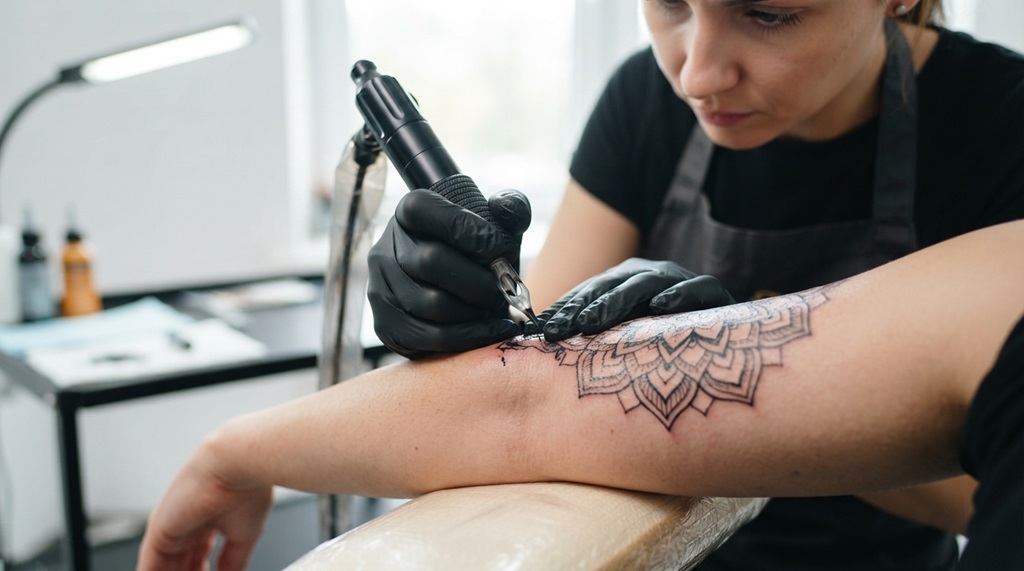
A blowout happens when the needle deposits ink below the dermis, into the fatty tissue where it cannot hold shape. Ink migrates sideways in that looser tissue and creates a blurred, thick line instead of a crisp one.
Needle Depth Is the Main Culprit
Going too deep is the single biggest cause of blowouts. The dermis is thin, often less than 2 millimeters, so even a slight miscalculation pushes the needle into fat.
New artists sometimes compensate for a light-looking line by pushing deeper. This is the wrong fix. A faint line usually means you need a slower pass or a second pass, not more depth.
Excess Pressure Spreads the Ink
Heavy hand pressure forces ink outward faster than the skin can hold it. This is especially common with fine line work because artists try to force saturation with a single needle.
Light, even pressure lets the skin do more of the work. You should feel like you are guiding the needle, not driving it.
Wrong Needle Choice
A grouping that is too large for delicate work increases trauma to the skin and raises blowout risk. Most fine line artists work with a single needle (1RL) or a small round liner between 3RL and 5RL, depending on the desired thickness.
Choosing the Right Needle and Machine Setup
The right setup starts with a 1RL to 5RL needle and a machine running at a slower, controlled speed. Fine line work is not about power. It is about consistency.
Needle Size Guide
- 1RL: Thinnest line, best for delicate detail and single-needle work
- 3RL: Slightly bolder, good for beginners transitioning from single needle
- 5RL: Best for outlines that need to stay fine but visible from a distance
Machine Voltage and Speed
Lower voltage reduces trauma and keeps the needle from overworking the skin. Most fine line artists run their machine slightly lower than they would for bold linework, then compensate with a slow, steady hand speed instead of raw power.
Rotary machines tend to give more consistent results for fine line work because they produce a smoother stroke. Coil machines can still work well, but they demand more hand control to avoid overworking a line.
Correct Hand Positioning and Needle Angle
A shallow angle, close to 90 degrees but never pressed straight down, keeps the needle at the correct depth automatically. This single adjustment prevents more blowouts than any other technique change.
The Angle Matters More Than Speed
Many artists focus on machine speed and forget that angle controls depth just as much. A needle held too flat drags across the skin and creates patchy, inconsistent lines. A needle held too steep drives straight down and increases blowout risk.
The sweet spot is close to vertical, with a very slight lean in the direction of travel. This lets the needle glide instead of stab.
Hand Stability Techniques
Resting your hand on a stable surface, or using a hand rest, removes small tremors that create depth inconsistency. Even experienced artists use rests for long fine line sessions because fatigue affects control after an hour or more.
Take breaks. A tired hand presses harder without realizing it, and that is when blowouts creep in during the final third of a session.
Skin Preparation to Prevent Ink Blowouts
Preparing the skin correctly is essential for controlling line precision, as dehydrated or inflamed tissue lacks the structural elasticity needed to hold fine ink deposits in place. When skin lacks moisture, needle resistance drops dramatically, allowing pigment to migrate beneath the dermis into deeper vascular layers and create permanent blowouts. Ensuring the skin is deeply hydrated, calm, and structurally sound prior to tattooing dramatically reduces this risk, laying the perfect foundation for razor-sharp results. Once you have perfected these subtle skin dynamics for delicate work, expanding your technical range to bolder, heavier line weights is a natural next step explore our guide on how to identify old school tattoo styles and key rules to master traditional tattooing principles.
Hydration Before the Session
Clients should arrive well-hydrated, ideally after moisturizing the area for a few days leading up to the appointment. Dry, flaky skin does not hold a line as cleanly as supple skin does.
Avoid Over-Stretching
Over-stretching the skin during the tattoo can thin it out in that spot, increasing blowout risk. Many artists stretch too hard because it seems like it steadies the surface. A firm, moderate stretch works better than an aggressive one.
Skip Numbing Cream Overuse
Heavy numbing cream use can swell the skin and change its texture temporarily, which affects needle depth accuracy. If a client needs numbing, use it as directed and give the skin time to return to its normal state before starting.
Placement Areas That Are More Blowout-Prone
Thin-skinned or high-movement areas like fingers, inner wrists, and ankles carry a higher blowout risk than flatter areas like the forearm or thigh. These spots have less fatty tissue and more give, so the margin for error shrinks.
Fingers and Hands
Finger skin is thin and constantly moving, which makes consistent depth difficult. Many artists reduce needle size and slow their pace significantly for finger work, sometimes doing a lighter first pass and a touch-up later.
Inner Arms and Wrists
The inner arm and wrist have looser skin that stretches easily. This looseness is convenient for the client but tricky for the artist, since over-stretching here is common and increases the odds of ink spreading.
Aging or Sun-Damaged Skin
Skin that has lost elasticity from age or sun exposure holds ink less predictably. According to industry experts, older or sun-damaged skin often needs a lighter touch and smaller needle groupings to avoid spreading.
Fixing a Blowout Once It Happens
A minor blowout can often be minimized with a light touch-up after full healing, but a severe one may need laser correction or a redesign. Do not attempt to fix a fresh blowout during the same session. This usually makes it worse.
Wait for Full Healing
Skin needs at least four to six weeks to heal before you assess how bad a blowout looks. Some blur fades naturally as swelling goes down, so early judgment often overestimates the damage.
When Touch-Ups Work
If the blowout is minor, a careful touch-up with the correct needle and angle can tighten the line significantly. This is one of the more common outcomes in fine line correction work.
When to Recommend Laser Removal
Severe blowouts that spread widely under the skin may need partial laser removal before a redesign is possible. This is a conversation to have honestly with the client, since covering a bad blowout with more ink rarely gives a clean result.
Frequently Asked Questions
What is the safest needle size for fine line tattoos?
Most artists consider 1RL to 3RL the safest range for fine line work, since smaller groupings reduce trauma to the skin. The exact choice depends on the design and the client’s skin type.
Why do fine line tattoos blow out more than bold tattoos?
Fine line tattoos use less ink per pass, so artists sometimes compensate with extra depth or pressure. That compensation is exactly what causes ink to spread into the fatty layer below the skin.
Can a blowout be fixed without laser removal?
Yes, minor blowouts can sometimes be tightened with a touch-up after the skin fully heals. Severe blowouts usually need at least partial laser removal before a clean fix is possible.
How long should I wait before touching up a blowout?
Wait a minimum of four to six weeks for the skin to fully heal before deciding on a fix. Judging a blowout too early often overestimates how bad it actually looks.
Do fine line tattoos fade faster than traditional tattoos?
Fine line tattoos can fade or blur sooner than bold linework, especially in high-movement areas like hands and fingers. Proper aftercare and sun protection slow this process considerably.
Conclusion
Preventing blowouts comes down to a few consistent habits: the right needle, a shallow angle, light pressure, and well-prepped skin. None of these require expensive equipment. They require patience and a slower, more deliberate hand.
Fine line tattoos reward artists who resist the urge to push harder for a bolder look. Slow down, trust the needle size you have chosen, and let the skin do its part. That combination is what separates a crisp fine line tattoo from one that blurs within a year.