

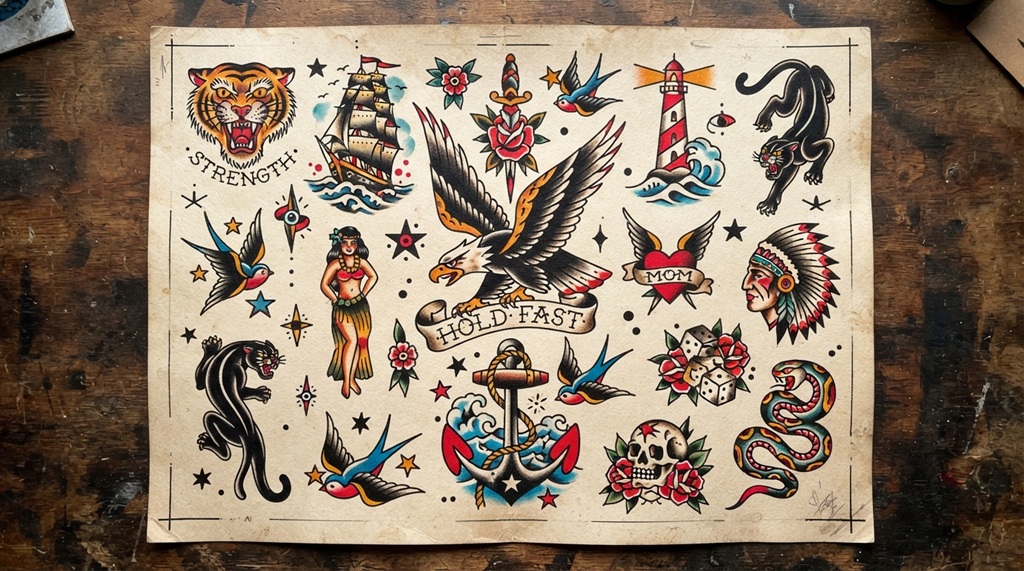

Old school tattoos are easy to spot once you know what to look for. They use thick black outlines, a small color palette, and simple bold designs like anchors, swallows, and roses. This style started with sailors and soldiers in the early 1900s, and it still shapes modern tattoo culture today.
If you love tattoo art, learning to identify old school work helps you appreciate the history behind it. It also helps you talk to your artist with the right words when you want a piece in this style. This guide breaks down the exact visual traits, common motifs, and key rules that define old school tattoos.
We will cover the technical elements, popular symbols, the difference between old school and neo-traditional, and tips for spotting real old school work versus modern imitations.
What Makes a Tattoo “Old School”
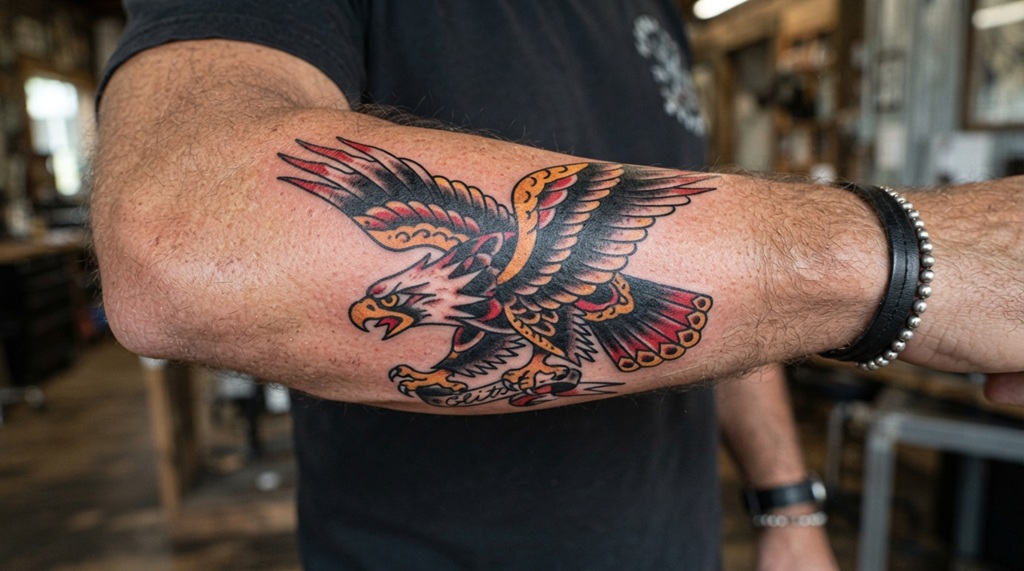
Old school tattoos, also called traditional tattoos, follow a strict visual formula built for durability and clarity. The style traces back to Norman “Sailor Jerry” Collins and other early American tattoo artists who worked in port cities during the 1930s and 1940s.
These artists designed tattoos to survive decades on skin that would stretch, age, and fade. That practical need shaped every rule of the style. Bold lines hold up better over time than fine details. Limited colors stay visible longer than complex shading. Simple shapes read clearly even from a distance.
Sailor Jerry himself pushed the craft forward by studying Japanese tattooing and bringing new techniques to American shores, according to tattoo historians. His work became the foundation that most old school artists still reference today.
The Core Visual Elements to Look For
Old school tattoos share a specific set of technical traits. Once you know these, you can identify the style in seconds.
Bold, Thick Outlines
Every old school tattoo starts with a heavy black outline. This line work is much thicker than what you see in fine-line or minimalist tattoos. Artists use this technique because thick lines age better and stay sharp for decades, while thin lines tend to blur and fade over time.
Limited Color Palette
Classic old school tattoos use a small range of colors, usually red, green, yellow, and black. Artists avoid gradients or subtle shading. Instead, they use flat, solid color blocks inside the bold outlines. This limited palette was originally a practical choice, since early tattoo inks came in fewer shades and needed to remain visible under different lighting.
Minimal Shading and Depth
You will not find realistic shadows or 3D effects in true old school work. Artists use simple techniques like small dots or basic cross-hatching to suggest depth, but the overall look stays flat and graphic. This is one of the clearest ways to tell old school apart from newer, more photorealistic styles.
Simple, Symmetrical Compositions
Old school designs favor balance and simplicity over complex detail. A rose has clean, rounded petals. An anchor sits centered with even proportions. This simplicity makes the design easy to read at a glance, which was important when tattoos needed to communicate meaning quickly.
Classic Old School Tattoo Motifs and What They Mean
Certain symbols show up again and again in old school tattoo art, and each one carries its own history and meaning.
Nautical Symbols
Anchors, swallows, ships, and compasses dominate old school tattoo sheets because the style grew out of sailor culture. An anchor often symbolized stability or a safe return home. Swallows traditionally marked how far a sailor had traveled, with one swallow representing 5,000 nautical miles.
Pin-Up Girls
Pin-up designs became popular during World War II, often inspired by the same imagery found on military aircraft nose art. These tattoos featured bold outlines and flat coloring, just like every other old school design.
Roses and Flowers
Roses appear constantly in old school work, usually rendered with thick outlines and minimal shading. They often symbolize love, loss, or remembrance, and artists frequently paired them with banners or names.
Skulls and Daggers
Skulls represented mortality or rebellion, while daggers often symbolized danger or protection. These motifs became popular among military members and later spread into broader tattoo culture.
Banners and Script
Old school tattoos often include ribbon-style banners with bold, simple lettering. These usually held names, dates, or short phrases, and the lettering style itself became a recognizable part of the tradition.
Distinguishing Old School from Neo-Traditional Tattooing
While neo-traditional tattooing evolved directly from the foundations of old school work, telling them apart comes down to artistic constraint versus modern adaptability: traditional designs rely on flat, graphic compositions built with strict primary color palettes, simple silhouettes, and heavy black linework designed to age predictably. Conversely, neo-traditional pieces elevate those classic bold outlines by introducing expansive color gradients, variable line weights, dimensional shading, and intricate illustrative textures such as delicate fur on wildlife or realistic filigree that push far past the flat, minimalist framework of early maritime flash. To explore how these foundational design rules shape specific heritage motifs, dive into our detailed analysis of what does a snake tattoo mean?.
Key Rules That Define Authentic Old School Tattoos

A few core rules separate genuine old school tattoos from designs that just borrow the aesthetic without following the tradition.
- Bold outlines come first. Every element in the design connects to a thick black line, with no exceptions.
- Color stays flat. Artists avoid blending or gradients, using solid color blocks instead.
- Designs favor simplicity. Old school tattoos avoid excessive detail because it does not hold up well over time.
- Symbolism matters. Traditional motifs carry specific meanings rooted in sailor, military, and working-class culture.
- Proportions stay balanced. Symmetry and clean composition take priority over hyper-realistic accuracy.
Artists who specialize in this style often study historical flash sheets from pioneers like Sailor Jerry to understand these rules firsthand. This respect for tradition is part of what keeps old school tattooing alive today.
How to Spot a Poorly Executed Old School Tattoo
Not every tattoo that claims to be “old school” actually follows the rules, and knowing the warning signs helps you choose a skilled artist. Thin, inconsistent line work is one of the biggest red flags, since authentic old school tattoos depend on bold, even outlines.
Watch for designs that mix too many colors or use unnecessary detail that clutters the composition. A true old school piece stays clean and readable even from several feet away. If a design looks busy or overly realistic, it is straying from the traditional formula.
Finally, check the artist’s portfolio for consistency. A tattoo artist who understands old school work will show a clear pattern of bold lines, flat color, and classic motifs across their previous pieces, not just one or two examples that happen to fit the style.
Frequently Asked Questions
What is the difference between old school and traditional tattoos?
“Old school” and “traditional” are usually the same thing, both referring to the bold, flat-color style that started with early American tattoo artists like Sailor Jerry. Some people use “traditional” as the broader term and “old school” to describe the earliest, most classic version of it. In everyday conversation, tattoo artists and clients tend to use both words interchangeably.
Why do old school tattoos use such thick lines?
Thick lines hold up better over decades because skin naturally stretches and ages. Thin lines tend to blur or disappear faster, while bold lines stay visible and sharp even in older tattoos. This practical reason is why the thick-outline rule became a defining feature of the style.
Are old school tattoos still popular today?
Yes, old school tattoos remain one of the most requested styles in shops worldwide. Their bold, timeless look appeals to people who want a piece that will still look sharp decades later. Many modern artists also blend old school elements into other styles, keeping the tradition relevant.
Can old school tattoos include modern subjects?
Yes, artists often apply old school techniques, like bold outlines and flat color, to modern subjects such as pop culture icons or personal symbols. As long as the piece follows the core rules of the style, it still counts as old school even if the subject matter is new.
How do I find an artist who specializes in old school tattoos?
Look for artists whose portfolios consistently show bold outlines, limited color palettes, and classic motifs like roses, anchors, or pin-ups. Many old school specialists also reference historical flash art in their marketing or social media. Booking a consultation is the best way to confirm an artist truly understands the style before committing to a piece.
Conclusion
Old school tattoos stand out because of their bold outlines, flat color palettes, and classic motifs rooted in sailor and military history. Once you know these key visual rules, spotting the style becomes simple, whether you are browsing flash art or evaluating a potential artist. This tradition has lasted for nearly a century because it works, both visually and practically, which is exactly why it remains a cornerstone of tattoo culture today.