

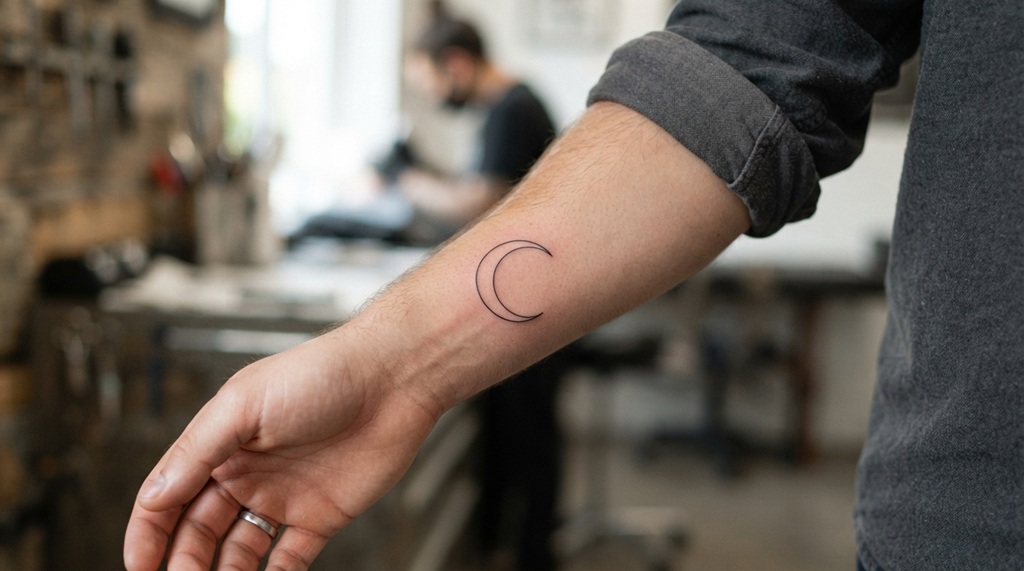

A minimalist tattoo lasts when you focus on three things: simple line work, the right placement, and a skilled artist. Thin lines and small details fade faster than bold ones, so your design choices now decide how it looks in ten years. This guide walks you through exactly what to check before you sit in the chair.
Minimalist tattoos look easy. They are not. A single clean line has nowhere to hide mistakes, and it has nowhere to hide fading either. That’s why so many small tattoos turn into blurry smudges after a few years, while others stay crisp for decades.
This article breaks down what actually makes a minimalist design age well. You’ll learn which styles hold up, which placements help or hurt, and how to talk to your artist so you get a tattoo you still love later.
What Makes a Minimalist Tattoo “Last”
A minimalist tattoo lasts when the ink stays readable as it settles into your skin over the years. Skin cells turn over constantly. Ink particles shift slightly with them. On a bold, simple design, that shift barely matters. On a design with thin lines or fine detail, it can turn a crisp image into a fuzzy blob.
Three factors decide how well a tattoo ages:
- Line thickness. Thicker lines hold their shape longer. A 3-point line reads clearly at year one and still reads clearly at year fifteen. A hairline stroke often doesn’t survive that long.
- Ink saturation. Solid, well-packed ink resists fading better than light, wispy shading.
- Skin location. Some areas of the body hold detail far better than others (more on this below).
Minimalist doesn’t mean fragile. It means simple. A well-executed minimalist tattoo can outlast a busy, detailed piece, because there’s less for the eye to notice going wrong.
Choosing a Style That Ages Well
Fine-Line Tattoos: Beautiful Now, Risky Later
Fine-line tattoos use very thin needles and light ink deposits. They look elegant on day one. Over 5 to 10 years, though, thin lines often spread and blur, especially in areas with a lot of movement or sun exposure.
If you love the fine-line look, ask your artist to slightly thicken key lines, like the outer edges of a shape. This keeps the delicate feel while giving the tattoo a better shot at staying sharp.
Bold Line Minimalism: The Safer Long-Term Choice
Bold, single-line designs (think a simple mountain outline or a geometric shape) tend to hold up best. The thicker line gives the ink room to spread slightly without losing its form.
This style still reads as minimalist. It just trades a little delicacy for durability, a fair trade if you want the tattoo to look good decades from now.
Dot Work and Small Symbols
Small dot-work pieces, like a cluster of stars or a tiny symbol, can age well if the dots are placed with enough space and ink density. Dots that are too small or too close together often merge into a single blurry patch over time.
Ask your artist to use slightly larger, well-spaced dots if longevity matters more to you than ultra-fine detail.
Placement Impacts Longevity
Where you place a minimalist tattoo dictates its lifespan far more than most realization leads on, as high-friction or frequently exposed skin rapidly degrades fine lines. Opting for flat, stable areas like the inner forearm, upper arm, or calf ensures the ink remains sharp and resilient over time. If you want to design a long-lasting piece tailored to these optimal placements, check out our step-by-step tutorial on sketch custom tattoo art: A beginner’s guide.
Best Placements for Detail Retention
- Upper arm and shoulder – Skin here stays relatively firm and sees less friction.
- Upper back – Flat, stable skin with minimal stretching.
- Calf – Firm skin that doesn’t fold or crease much.
Placements That Blur Detail Faster
- Fingers and hands – Constant washing, sun exposure, and skin turnover cause rapid fading. Many artists warn that finger tattoos often need touch-ups within a year or two.
- Feet – Friction from shoes and thick skin turnover cause similar fading.
- Inner wrist and ribs – Thin, stretchy skin can distort fine lines over time.
If your dream design is meant for your finger or wrist, ask your artist to go bolder with the lines than you normally would. It’s a small adjustment that meaningfully extends how long the tattoo stays legible.
Working With Your Artist to Future-Proof the Design

Your artist’s technique affects longevity as much as your design choices do. A skilled artist adjusts needle depth, line weight, and ink saturation based on where the tattoo goes and how your skin behaves.
Questions to Ask Before You Book
- “Have you done minimalist or fine-line work before?” Ask to see healed photos, not just fresh ones. Fresh tattoos always look great. Healed tattoos show the truth.
- “Will you adjust the line weight for this placement?” A good artist should proactively suggest thicker lines for hands, feet, or fingers.
- “How does this design usually look after 5+ years?” Experienced artists can often show you real examples from past clients.
Why Healed Photos Matter More Than Fresh Ones
A fresh tattoo is swollen and inflamed, which makes lines look thicker and bolder than they’ll end up. Always ask to see photos taken after the tattoo fully healed, ideally a year or more later. This is the single best way to judge whether an artist’s minimalist style actually holds up.
Design Choices That Quietly Improve Longevity
Here’s an angle most guides skip: negative space and spacing between elements matter as much as the lines themselves.
When two lines or shapes sit too close together, ink can bleed into the gap over time and merge them into a single dark shape. This is especially common with small geometric tattoos, where triangles, circles, or crosshatching sit tightly packed.
Ask your artist to build in slightly more breathing room between elements than the initial sketch shows. It won’t be obvious on day one, but it prevents the “muddy” look that shows up in years three through five, which is one of the most common complaints with small, detailed tattoos.
Similarly, avoid designs with more than 2 to 3 fine details in a space smaller than a coin. Simpler really is better when the goal is a tattoo that lasts.
Aftercare Habits That Protect a Minimalist Tattoo
Aftercare affects a minimalist tattoo’s lifespan just as much as the design itself, because thin lines have less ink to lose before they start looking patchy.
- Use sunscreen religiously. UV exposure breaks down ink faster than almost anything else. This matters even more for thin lines, since they have less ink density to begin with.
- Moisturize consistently, even years after healing. Dry, cracked skin ages tattoos faster.
- Avoid excessive exfoliation over the tattooed area, since it can accelerate ink loss.
- Get touch-ups early, if needed, rather than waiting until the design is significantly faded.
None of this is unique to minimalist tattoos, but the margin for error is smaller. A bold traditional tattoo can lose some ink and still look fine. A thin-line minimalist piece often can’t.
Frequently Asked Questions
How long do minimalist tattoos typically last before fading?
Most minimalist tattoos start showing visible signs of fading or blurring within 5 to 10 years, depending on placement and line thickness. Tattoos on high-friction areas like hands and feet fade faster, sometimes within 1 to 2 years. Bold-line designs on stable areas like the upper arm or back tend to last the longest.
Are fine-line tattoos a bad idea if I want something permanent?
Fine-line tattoos aren’t a bad idea, but they do require more maintenance than bolder designs. If permanence matters more to you than ultra-delicate detail, ask your artist to thicken key lines slightly. This keeps the minimalist aesthetic while improving how well it holds up over time.
What’s the best placement for a small, simple tattoo?
The upper arm, shoulder, and upper back are generally the best spots for detail retention. These areas have firmer, more stable skin with less friction and stretching. Avoid fingers, feet, and inner wrists if you want the design to stay sharp for many years.
How do I know if a tattoo artist is skilled at minimalist designs?
Ask to see healed photos of their past minimalist work, not just fresh photos. A skilled artist will have examples showing how their line work looks a year or more after healing. If they only show fresh tattoos, that’s a sign to ask more questions before booking.
Can I get touch-ups on a minimalist tattoo if it fades?
Yes, and it’s common practice for fine-line and small tattoos. Most artists recommend a touch-up within 1 to 3 years for high-friction placements like hands or feet. Getting the touch-up early, before the design fades too much, gives the best results.
Final Thoughts
A minimalist tattoo can absolutely last a lifetime, but it takes a few deliberate choices upfront. Pick a style with enough line weight for your chosen placement, ask your artist about their healed results, and stay consistent with sunscreen and moisturizer. Do these three things, and your simple, clean design will still look sharp decades from now.