

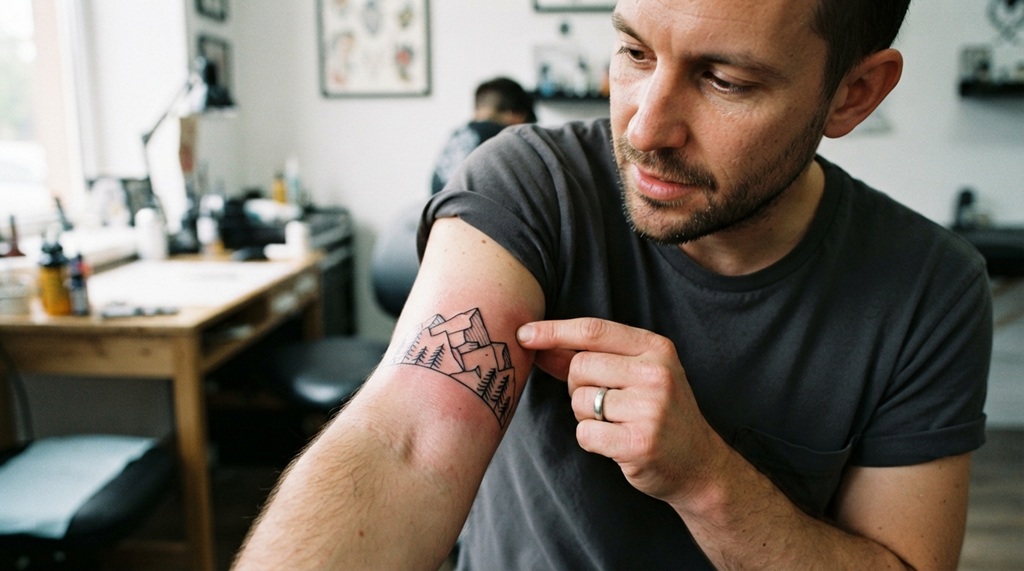

A red, swollen, or oozing tattoo in the first week can mean infection. You can treat mild cases at home with clean hands, gentle washing, and the right ointment. But some signs mean you need a doctor right away, not a home remedy.
This guide walks you through how to tell infection apart from normal healing, what to do at home for mild cases, and which warning signs mean it’s time to see a professional. Tattoo infections are uncommon but not rare, and catching one early makes treatment much easier.
Nothing here replaces medical advice. Think of this as a first step: a way to understand what’s happening on your skin so you can act fast and confidently.
Is Your Tattoo Actually Infected, or Just Healing Normally?
Most “scary” tattoo symptoms in the first few days are just your body doing its job. True infection has a specific pattern that’s different from normal healing.
Decoding the Healing Process: What Normal Tattoo Recovery Looks Like
While initial inflammation can easily be mistaken for an infection, standard tattoo healing naturally involves localized redness, mild swelling, and radiating warmth around the freshly etched linework during the first 48 to 72 hours. It is entirely expected for the area to weep a small amount of clear fluid mixed with excess ink and blood plasma, which peaks around the second day before steadily subsiding as your skin creates a protective barrier. Differentiating between normal tissue trauma and a developing infection requires monitoring these early reactions; however, if your discomfort is driven primarily by placement rather than a complication, discover to manage tattoo pain levels on sensitive body parts during this initial critical window to ensure a comfortable recovery.
What Infection Looks Like
Infection usually shows up between day 2 and day 7. Watch for these signs:
- Redness that spreads outward instead of shrinking
- Swelling that gets worse after day three, not better
- Pain that increases instead of easing
- Thick, yellow or green discharge with a bad smell
- Skin that feels hot to the touch over a wide area
- A fever, chills, or feeling generally unwell
One or two mild signs alone don’t confirm infection. But a combination of these, especially spreading redness plus fever, is a strong signal.
Step-by-Step: How to Clean and Treat a Mildly Infected Tattoo at Home
Mild infections without fever or spreading redness can often be managed at home with careful hygiene. Follow these steps consistently, two to three times a day, until symptoms improve.
Step 1: Wash Your Hands First
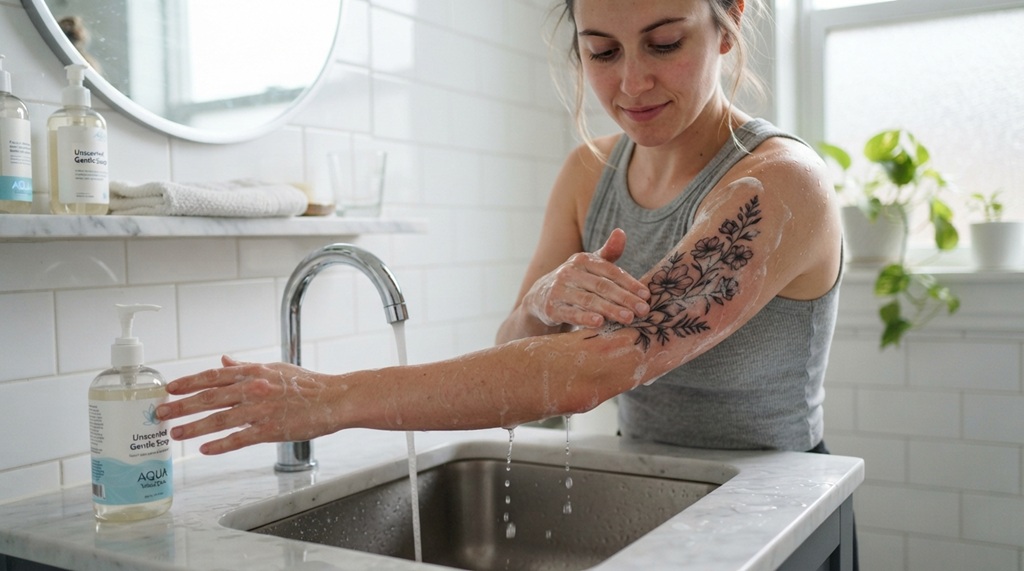
Always wash your hands with soap and water before touching your tattoo. Dirty hands are one of the most common ways bacteria get reintroduced into healing skin.
Step 2: Clean the Tattoo Gently
Use a fragrance-free, antibacterial soap and lukewarm water. Wash in gentle circular motions for about 10-15 seconds, then rinse fully. Avoid scrubbing friction can reopen the skin and let more bacteria in.
Step 3: Pat Dry, Don’t Rub
Use a clean paper towel or a dedicated soft cloth to pat the area dry. Rubbing with a towel can irritate inflamed skin and spread bacteria from other parts of your body.
Step 4: Apply a Thin Layer of Antibacterial Ointment
A thin layer of an over-the-counter antibacterial ointment can help control minor bacterial growth. Avoid thick layers tattoos need to breathe, and heavy ointment can trap moisture and bacteria underneath.
Step 5: Leave It Uncovered (Usually)
Most tattoo artists recommend leaving a healing tattoo uncovered after the first day, unless it will touch dirty clothing or surfaces. Air exposure helps keep the area dry and slows bacterial growth.
Step 6: Track Changes Daily
Take a photo each day in the same lighting. This makes it much easier to tell whether redness and swelling are shrinking or spreading, since day-to-day changes can be hard to judge by eye alone.
What NOT to Do When You Suspect Infection
Some common “home remedies” actually make tattoo infections worse. Avoid these completely.
- Don’t pop or squeeze any pus-filled areas. This pushes bacteria deeper into the skin and can spread the infection.
- Don’t use hydrogen peroxide or rubbing alcohol on the tattoo. These damage healthy skin cells and can fade the ink while doing little against deeper infection.
- Don’t apply petroleum jelly (Vaseline) as a primary treatment. It’s too thick for infected skin and can trap bacteria underneath.
- Don’t re-bandage tightly or use non-breathable wraps. This traps heat and moisture, both of which help bacteria multiply.
- Don’t use leftover antibiotics from a previous illness. Wrong dosage or wrong antibiotic type can worsen resistance and won’t necessarily target the bacteria involved.
- Don’t ignore a fever. A fever alongside tattoo symptoms is a sign the infection may be spreading beyond the skin.
When to Stop Home Treatment and See a Doctor
Home care works for mild, surface-level infections. Certain signs mean the infection may be spreading deeper, and a doctor’s evaluation is necessary.
Seek medical care if you notice any of the following:
- Redness that spreads more than an inch beyond the tattoo outline
- Red streaks moving away from the tattoo (a sign of lymphatic spread)
- A fever above 100.4°F (38°C)
- Pus that is thick, green, gray, or has a strong odor
- Swelling that continues to worsen after 3-4 days of home care
- Increasing pain rather than gradual improvement
- Any dizziness, confusion, or rapid heartbeat
According to industry experts in wound care, bacterial skin infections that reach the bloodstream can become serious quickly, so waiting too long is riskier than an unnecessary doctor visit. A doctor may prescribe oral antibiotics, and in rare, severe cases, may need to drain an abscess.
An Overlooked Factor: Your Tattoo Aftercare Product Might Be the Problem
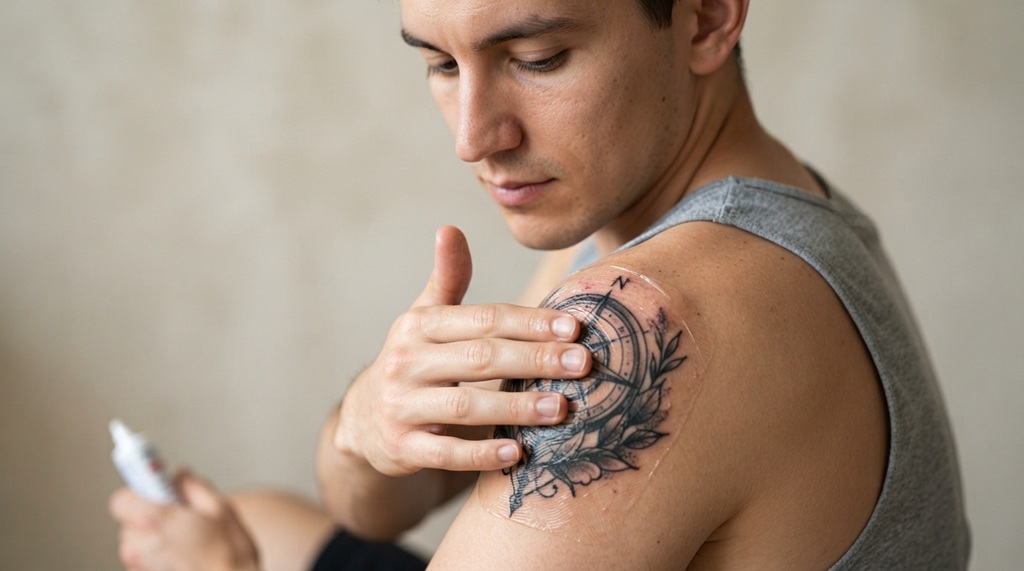
Most articles focus only on hygiene and wound signs. One thing rarely mentioned: the aftercare product itself can sometimes cause or worsen irritation that looks like infection.
Some tattoo balms and lotions contain fragrances, lanolin, or heavy oils that clog pores on freshly damaged skin. This can trigger contact dermatitis redness, itching, and small bumps that mimic early infection symptoms but are actually an allergic or irritant reaction, not bacterial.
If your symptoms started right after switching aftercare products, or if the irritation is itchy rather than painful, consider pausing that product and switching to a plain, fragrance-free option for 24-48 hours. If the irritation calms down noticeably, the product was likely the trigger, not an infection. This simple test can save you an unnecessary trip to urgent care.
How to Prevent Infection in the First Place
Prevention is far easier than treatment. A few consistent habits in the first two weeks make infection much less likely.
- Follow your tattoo artist’s specific aftercare instructions, since studios vary slightly in their recommendations
- Avoid swimming pools, hot tubs, and open water (like lakes or the ocean) for at least two weeks
- Wear loose, breathable clothing over the tattoo to reduce friction and trapped sweat
- Avoid touching the tattoo with unwashed hands, even briefly
- Keep pets away from direct contact with the healing area
- Change bedsheets and pillowcases more often during the healing period
- Avoid direct sun exposure, which can irritate healing skin and increase infection risk
Frequently Asked Questions
How long does a tattoo infection take to show symptoms?
Most infections appear between day 2 and day 7 after getting the tattoo. Symptoms that show up later, closer to week two or beyond, are less likely to be infection and more likely to be an allergic reaction or unrelated skin issue.
Can I treat a tattoo infection with just Neosporin?
Neosporin and similar over-the-counter ointments can help with very mild, surface-level infections. But if symptoms don’t improve within 48 hours, or if you notice fever or spreading redness, you need a doctor’s evaluation rather than more ointment.
Is it normal for a new tattoo to be warm to the touch?
Mild warmth in the first 1-2 days is normal, since it’s part of the body’s natural inflammatory response. Warmth that increases, spreads, or comes with a fever after day three is not normal and suggests infection.
Should I cover an infected tattoo with a bandage?
Generally, no. Infected tattoos heal better with air exposure, since bandages trap moisture and heat, which bacteria need to grow. The exception is if you’re in a dirty environment where the wound risks direct contamination.
Can a tattoo infection heal on its own without antibiotics?
Very mild, surface-level infections sometimes resolve with diligent home hygiene alone. However, deeper or spreading infections typically need prescription antibiotics, and delaying treatment increases the risk of complications like abscesses or cellulitis.
Conclusion
A little redness and swelling in the first few days is normal tattoo healing, not infection. True infection shows a different pattern: spreading redness, worsening pain, thick discharge, or fever. Mild cases often respond well to gentle cleaning, a thin layer of antibacterial ointment, and keeping the area dry and uncovered.
But home care has limits. If symptoms worsen after three or four days, or you notice red streaks, fever, or foul-smelling discharge, see a doctor rather than waiting it out. Catching an infection early and knowing when home treatment isn’t enough is the best way to protect both your skin and your new ink.