

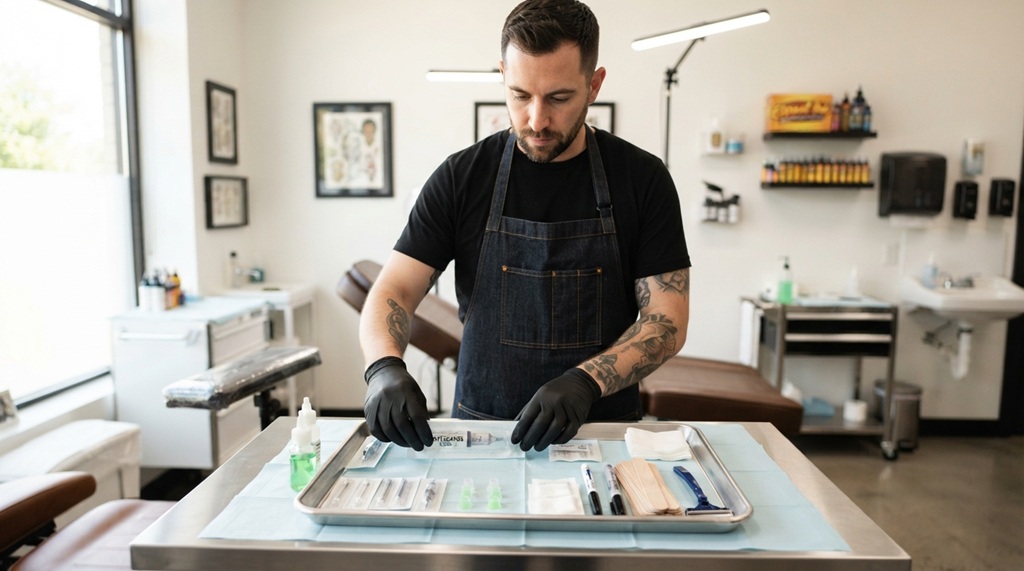

A sanitary tattoo station starts with three things: a disinfected work surface, single-use barriers on every touch point, and sterile equipment sealed until the moment you use it. Get those three right, and you’ve already solved most of the risk. Get them wrong, and you put your client’s health and your license on the line.
This guide breaks the setup process into clear steps. You’ll learn what to clean, what to cover, what to sterilize, and what to throw away after every single client. None of this is guesswork. It’s the same routine that licensed studios use to pass health inspections and keep their reputation intact.
Whether you’re setting up your first station or tightening up an existing routine, this checklist will help you work faster and safer.
Why a Sanitary Station Matters More Than Talent
Skill gets you good tattoos. Sanitation keeps your clients safe and your studio open. Bloodborne pathogens like Hepatitis B, Hepatitis C, and HIV can spread through contaminated needles or surfaces, so a clean station isn’t optional it’s the job.
Health departments inspect studios for exactly this reason. According to industry experts, most citations during tattoo shop inspections come from cross-contamination issues, not tattooing technique. A single uncovered surface or reused item can shut down an inspection on the spot.
Clients notice, too. A tidy, wrapped-up station builds trust before you even pick up the machine. Many people choose their artist based on how clean the shop looks, not just the portfolio.
What You Need Before You Start
Gather every item before your client sits down. Walking away mid-setup to grab supplies increases the risk of contaminating your gloves or your station.
Core Supplies Checklist
- Hospital-grade disinfectant (EPA-registered, tuberculocidal)
- Disposable barrier film or plastic wrap
- Single-use needle cartridges (pre-sterilized, sealed)
- New ink caps for every session
- Fresh, unopened ink bottles or single-use ink portions
- Non-latex disposable gloves (multiple pairs)
- Sterile gauze and paper towels
- Sharps disposal container
- Biohazard waste bags
- Autoclave-sterilized tools (if using reusable grips or tubes)
Equipment Sterilization Essentials
While disposable cartridges and pre-sterilized single-use tubes have streamlined modern tattoo setups, any reusable metal hardware—including grips, tube tips, and tray accessories—demands rigorous autoclave sterilization between sessions. Sterilizing these high-risk components ensures absolute cross-contamination prevention before they ever touch your workstation. To complement your spotless setup with precision performance, seamlessly integrate top-tier gear by reading our guide on to pick the best rotary tattoo machine for clean lines.
Step-by-Step: Setting Up the Station
Follow these steps in order every single time. Skipping the order like covering surfaces before disinfecting them defeats the purpose.
Step 1: Clear and Disinfect the Surface
Remove everything from your workstation first. Spray the entire surface with hospital-grade disinfectant and let it sit for the full contact time listed on the label, usually one to ten minutes. Wipe it down with a clean paper towel. Never spray disinfectant near open ink bottles or sterile packaging, since overspray can contaminate them.
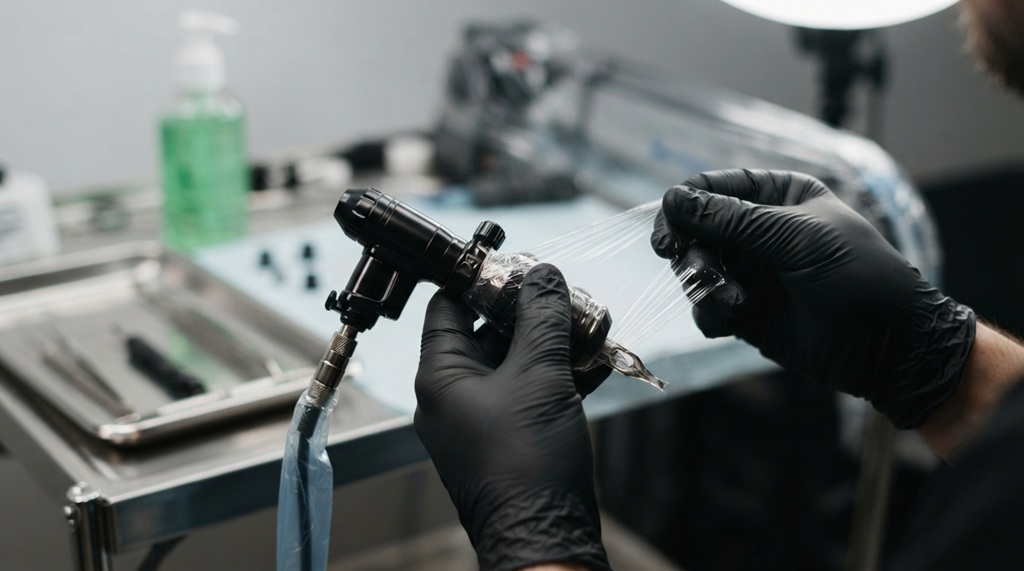
Step 2: Cover Every Touch Point With Barrier Film
Wrap barrier film or plastic film around anything you’ll touch mid-tattoo: the machine grip, clip cord, power supply, spray bottle, and armrest. Change these barriers between every client, not just when they look dirty. This step prevents cross-contamination even when your gloves brush against equipment.
Step 3: Open Sterile Tools in Front of the Client
Open needle cartridges, ink caps, and any sealed sterile item only after the client is seated and only in their view. This isn’t just about trust it confirms the seal wasn’t broken before use. If a package looks damaged or the indicator strip hasn’t changed color, discard it and grab a new one.
Step 4: Pour Fresh Ink Into New Caps
Never dip directly into a shared ink bottle during the session. Pour what you need into single-use caps before you start, and throw away any leftover ink in those caps afterward. Reusing ink caps or dipping a used needle back into a bottle contaminates the entire supply.
Step 5: Set Up Your Sharps and Waste Disposal
Place your sharps container and biohazard bag within arm’s reach before you begin. You should never have to walk across the room holding a used needle. A cluttered disposal setup is one of the most common reasons artists accidentally cause needle-stick injuries.
Step 6: Glove Up Last
Put on fresh gloves only after every barrier, tool, and ink cap is in place. If you touch anything outside your sterile field after gloving up your phone, a doorknob, your hair change gloves before touching your client again.
Common Mistakes That Break Sanitary Protocol
Even experienced artists slip into bad habits over time. Watch for these specific errors.
Reusing Barrier Film Between Clients
Barrier film isn’t reusable, even if it still looks clean. Skin cells, blood, and ink residue can sit on the surface without being visible. Replace every barrier after each client, no exceptions.
Touching Non-Sterile Items With Gloved Hands
Answering your phone, adjusting your chair, or grabbing a marker with gloves on transfers contamination straight back to your station. If you need to touch something outside your sterile field, remove your gloves first and put on a new pair afterward.
Storing Ink Bottles Too Close to the Work Area
Ink bottles sitting near your active station risk overspray from disinfectant or accidental contact with dirty gloves. Keep your working ink supply in a separate, clean holding area away from the tattoo zone itself.
Skipping Autoclave Spore Testing
If your studio uses an autoclave for reusable equipment, run a spore test on a regular schedule most health boards recommend weekly testing. A machine that looks like it’s working can still fail to fully sterilize tools. Keep your test results on file in case of an inspection.
A Setup Detail Most Guides Skip: Air Quality and Airflow
Most articles stop at surfaces and tools, but airflow matters too. Aerosolized particles from spray bottles, disinfectant, and even skin prep can settle on “clean” surfaces minutes after you’ve wiped them down. Position your workstation away from direct airflow from fans, open windows, or HVAC vents that blow across your tray. If your studio uses a fan for client comfort, point it so it moves air away from your sterile field, not across it. This small adjustment reduces the chance of airborne particles landing on freshly disinfected equipment right before you start.
How to Break Down the Station After the Session
Cleanup matters as much as setup. Dispose of sharps in the designated container immediately never set a used needle down, even for a second. Remove and discard every barrier film in a lined trash bag, then re-disinfect the entire surface underneath, even though it was covered. Bag any reusable tools for autoclave sterilization before their next use. Finally, restock your station with fresh barriers and sealed supplies so it’s ready for the next client without a rushed, last-minute setup.
FAQ
How often should I disinfect my tattoo station?
Disinfect the entire surface before every client, not just at the start of the day. Even if the same client returns for a touch-up, treat it as a brand-new setup with fresh barriers and disinfectant.
Can I reuse needle cartridges if they’re rinsed and stored properly?
No. Needle cartridges are single-use only, regardless of rinsing or storage. Reusing them, even on the same client across sessions, violates sanitary standards and most state regulations.
What’s the difference between disinfecting and sterilizing?
Disinfecting kills most germs on a surface using a chemical spray, while sterilizing eliminates all microbial life, including spores, usually through heat in an autoclave. Surfaces get disinfected; needles, tubes, and metal tools get sterilized.
Do I need an autoclave if I only use disposable equipment?
If every tool that touches skin is single-use and pre-sterilized from the manufacturer, you may not need an autoclave for tattooing itself. Many studios still keep one on hand for reusable items like piercing tools or certain grips.
How long should disinfectant sit on a surface before I wipe it?
Check the product label, since contact times vary by brand. Most hospital-grade disinfectants need one to ten minutes of wet contact time to fully kill pathogens before you wipe the surface.
Final Thoughts
A sanitary tattoo station isn’t complicated once it becomes routine. Disinfect first, cover every touch point, open sterile tools in front of your client, and dispose of everything properly when you’re done. Build these steps into muscle memory, and you protect your clients, your license, and the trust that keeps people coming back to your chair.