

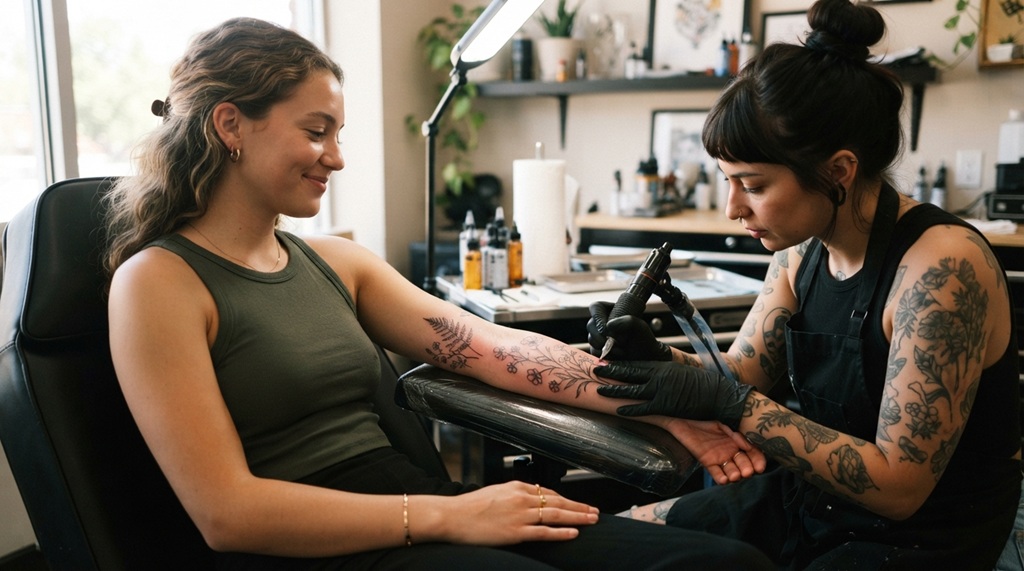

How to manage tattoo pain on sensitive body parts comes down to three things: preparation before the session, technique during it, and proper aftercare once you leave the studio. Sensitive areas like the ribs, hands, and spine hurt more because thin skin, dense nerves, and close-to-the-surface bone sit right under the needle.
The good news: you can manage this pain. Preparation, breathing techniques, and smart scheduling all make a real difference. This guide walks you through exactly how to handle the toughest spots on the pain chart.
We’ll cover which body parts hurt the most, why they hurt, and what you can actually do about it before, during, and after your session.
Why Some Body Parts Hurt More Than Others
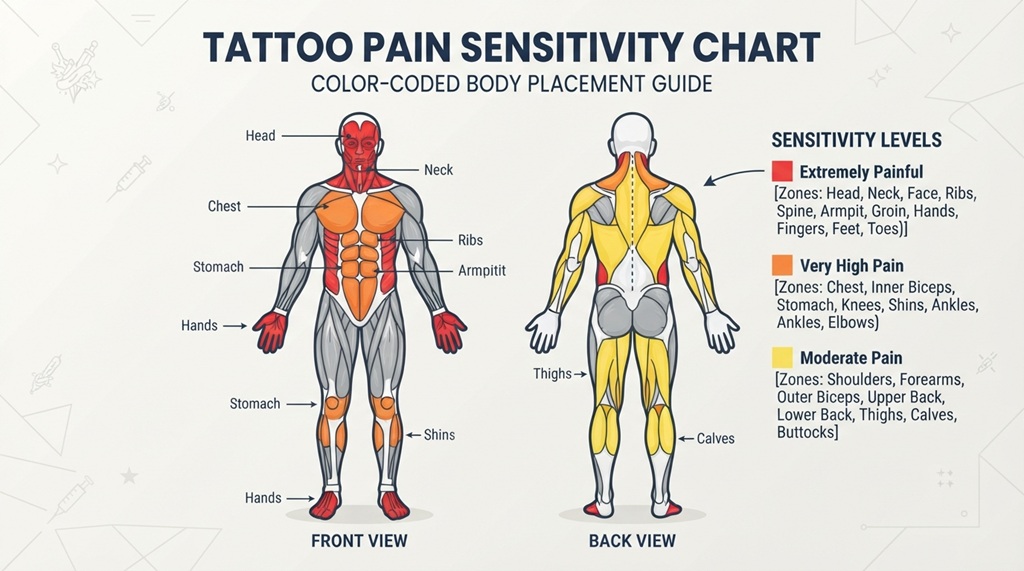
Pain levels depend on three main factors: nerve density, skin thickness, and how close the bone sits to the surface. Areas with all three hurt the most.
Nerve Density
Some areas of the body pack in far more nerve endings than others. Ribs, fingers, and feet fall into this high-density category. More nerves mean your brain receives more pain signals per second.
Skin and Fat Thickness
Thin skin with little fat underneath offers less cushion. The needle vibration transfers straight to nerve endings and bone. Areas like the sternum, spine, and ankle bones fit this description.
Proximity to Bone
When a needle works directly over bone, the vibration echoes. This creates a duller but more persistent ache. Ribs, collarbones, and shins are common examples.
The Most Sensitive Body Parts for Tattoos (Ranked)
Not every “sensitive area” hurts the same way. Some produce sharp, stinging pain. Others create a deep, dull ache that lingers.
Ribs and Sternum
The ribs consistently rank among the most painful tattoo spots, according to tattoo artists and pain-mapping surveys shared across the industry. Thin skin sits directly over bone here, and every breath moves the skin slightly during the session.
Hands, Fingers, and Feet
These areas have dense nerve clusters packed into a small space. Tattoos here also heal slower because hands and feet see constant use and friction.
Inner Arm, Elbow, and Armpit
The inner arm and armpit contain thin skin and lymph nodes close to the surface. The elbow sits right over a joint with almost no fat padding.
Spine and Neck
The spine has bone running the entire length of the tattoo. Many clients describe this as a buzzing or electric sensation rather than sharp pain.
Behind the Knee and Ankle
Behind the knee, skin folds and moves constantly, which increases sensitivity. The ankle bone offers almost no cushioning at all.
How to Prepare Your Body Before the Session
Preparation starts days before you sit in the chair, not the morning of your appointment. Small choices in the lead-up affect how your body handles pain.
Sleep and Hydration
Get a full night’s sleep before your appointment. Well-rested bodies handle pain and stress far better than tired ones. Drink plenty of water in the days leading up to your session, since hydrated skin takes ink more smoothly and heals faster.
Eat a Real Meal First
Never show up on an empty stomach. Low blood sugar makes pain feel worse and increases your risk of feeling lightheaded or fainting during longer sessions. Eat a balanced meal with protein and complex carbs about an hour before you arrive.
Skip Alcohol and Blood Thinners
Avoid alcohol for at least 24 hours before your session. Alcohol thins your blood, which causes more bleeding and can make the ink harder to set properly. Skip aspirin, ibuprofen, and fish oil supplements too, unless your doctor says otherwise.
Mastering Session Endurance: Real-Time Strategies for In-Chair Comfort
Once the needle meets your skin, managing discomfort transitions from physical preparation to real-time mind and body control. By maintaining a steady, rhythmic breathing pattern and intentionally relaxing tense muscles particularly in high-sensitivity zones you directly signal your nervous system to regulate its stress response and suppress pain spikes. However, maintaining composure in the chair is only half the battle; ensuring the long-term vibrant quality of your ink depends on how you treat your skin the moment the machine stops. To transition seamlessly from session endurance to optimal recovery, explore our essential guide to heal a new tattoo fast without scabbing and protect your fresh investment.
Breathing Techniques
Slow, controlled breathing helps regulate your nervous system’s pain response. Try inhaling for four counts, holding for four, then exhaling for four. This technique, often called box breathing, keeps your body from tensing up around the needle.
Muscle Relaxation
Tensed muscles amplify pain signals. Consciously relax the area being tattooed, especially if it’s near a joint like the elbow or knee. Clenching actually pulls skin tighter against the needle and increases discomfort.
Distraction Methods
Bring headphones and a playlist, podcast, or audiobook. Conversation with your artist also works well as a distraction during longer sessions. Your brain processes less pain when it’s focused on something else.
Take Breaks When Needed
Most artists build breaks into longer sessions, especially on painful areas like ribs or feet. Speak up if you need a minute. A five-minute pause to stretch and breathe can make the rest of the session far more manageable.
One Angle Most Guides Skip: Matching Pain Tolerance to Session Length
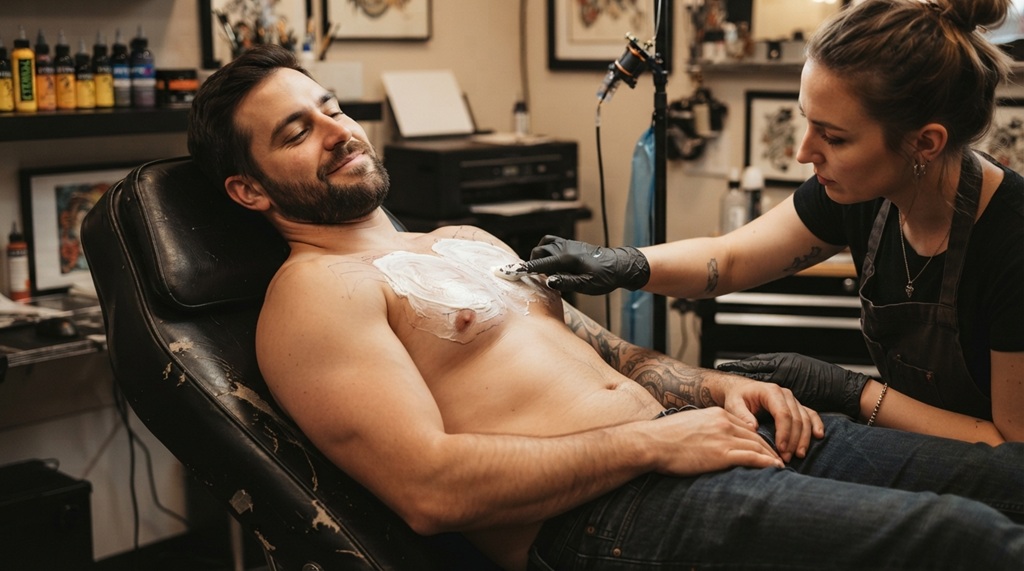
Most articles rank body parts by pain level and stop there. But pain tolerance isn’t static; it drops the longer a session runs. A rib tattoo that feels manageable for the first 45 minutes often becomes unbearable by hour two, even for experienced clients.
Talk to your artist about splitting large pieces on sensitive areas into multiple shorter sessions instead of one long one. A two-hour session split into two one-hour appointments, spaced a week or two apart, often produces better results than pushing through pain fatigue in one sitting. Rushed work on sensitive skin under high pain also increases the risk of the artist adjusting technique to work faster, which can affect line quality.
If you’re planning a large piece on your ribs, spine, or feet, ask your artist directly about their session-length policy before booking. Good artists will tell you honestly when a break makes sense.
How to Care for Sensitive Tattoos After the Session
Pain management doesn’t end when you leave the studio. Sensitive areas often need extra care during healing because they experience more friction and movement.
Keep the Area Clean and Moisturized
Wash the tattoo gently with unscented soap twice a day. Apply a thin layer of fragrance-free lotion once the initial ointment phase ends, usually after two to three days.
Avoid Tight Clothing and Friction
Areas like the ribs, armpit, and inner thigh rub against clothing constantly. Wear loose, breathable fabric over the tattoo for at least the first two weeks. Friction during healing increases pain and can damage the fresh ink.
Watch for Signs of Infection
Some redness and swelling is normal for the first few days. Contact your artist or a doctor if you notice spreading redness, pus, or a fever, since these signal a possible infection rather than normal healing discomfort.
Frequently Asked Questions
Does numbing cream actually work for tattoos?
Yes, topical numbing creams containing lidocaine can reduce pain, especially on sensitive areas. Apply them well before your appointment, following the product instructions, and check with your artist first since some prefer clients avoid numbing agents.
What’s the most painful place to get a tattoo?
Most artists and pain surveys point to the ribs, armpit, and inner elbow as the most painful spots. Areas with thin skin, little fat, and dense nerves consistently rank at the top.
Can I take painkillers before getting a tattoo?
Avoid aspirin and ibuprofen before your session since they thin your blood. Acetaminophen (Tylenol) is generally considered safer, but confirm with your artist or doctor beforehand.
How long does tattoo pain last after the session?
Soreness typically peaks in the first 24 to 48 hours, then fades over the following week. Sensitive areas like ribs or feet may stay tender slightly longer due to ongoing friction and movement.
Is it normal to feel pain days after getting tattooed?
Mild tenderness for several days is normal, especially on sensitive spots. Sharp or worsening pain after day three, though, can signal irritation or infection and deserves attention.
Final Thoughts
Sensitive-area tattoos hurt more, but the pain is manageable with the right preparation. Sleep well, eat beforehand, and skip alcohol and blood thinners. During the session, breathe steadily, relax your muscles, and don’t hesitate to ask for breaks.
Talk to your artist about splitting larger pieces into shorter sessions if you’re tackling a spot like the ribs or spine. And once you leave the chair, proper aftercare keeps sensitive skin healing smoothly. Pain is temporary. With the right approach, it’s just one part of getting art you’ll wear for life.