

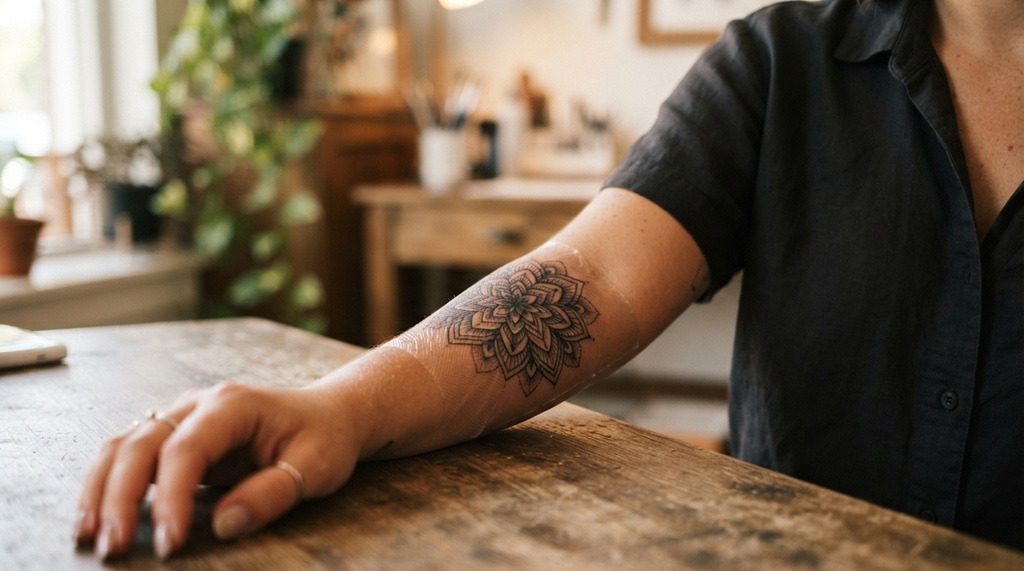

You can heal a new tattoo fast, without heavy scabbing or early fading, by keeping it clean, moisturized, and protected from sun and friction. Most tattoos heal in two to three weeks on the surface, with the deeper skin layers settling over the next few months. The habits you build in the first ten days matter most.
This guide breaks down exactly what to do (and what to avoid) at each stage of healing. It also covers why scabbing happens in the first place and how you can reduce it without picking at your skin or risking damage to the artwork you just paid for.
Whether this is your first tattoo or your fifteenth, the fundamentals stay the same: clean hands, light moisture, breathable coverage, and patience.
Why Tattoos Scab and Fade in the First Place
Scabbing happens because your skin treats a tattoo like an open wound, and fading often starts when that scab pulls out ink before the skin fully seals.
What Causes Scabbing
A tattoo needle punctures your skin thousands of times per minute. Your body responds the way it responds to any injury: it sends plasma and blood to the surface, then forms a protective layer as it heals. When that layer dries out too much, it thickens into a hard scab instead of a thin, flexible film.
Thick scabs form for a few common reasons:
- The tattoo dried out between aftercare applications
- Too much ointment was used, which trapped moisture and bacteria underneath
- The area rubbed against clothing or bedding
- The skin was picked at or scratched
Understanding the Causes of Early Ink Fading
Fading during recovery typically occurs when ink lifts away with prematurely pulled scabs before the underlying dermal layers have fully regenerated. Unprotected sun exposure further accelerates pigment breakdown, as aggressive UV rays easily penetrate lightweight fabrics and destabilize fresh ink. By maintaining optimal skin moisture and avoiding hard scabs, your tattoo can heal evenly while preserving maximum color saturation; however, internal factors matter just as much as external care for instance, alcohol thins your blood and impedes natural cellular repair, making it essential to consult our can you drink after getting a tattooso you can prevent excess bleeding and unwanted scab formation during those critical first 48 hours.
The First 24 Hours: What to Do Right After Getting Tattooed
Your first day sets the tone for the entire healing process, so keep the area covered, clean, and undisturbed.
Most artists apply a thin bandage or a breathable film wrap before you leave the studio. Leave this on for the time your artist recommends, usually between two and six hours, unless it starts to leak heavily or feels too tight.
When you remove the covering:
- Wash your hands thoroughly before touching the area.
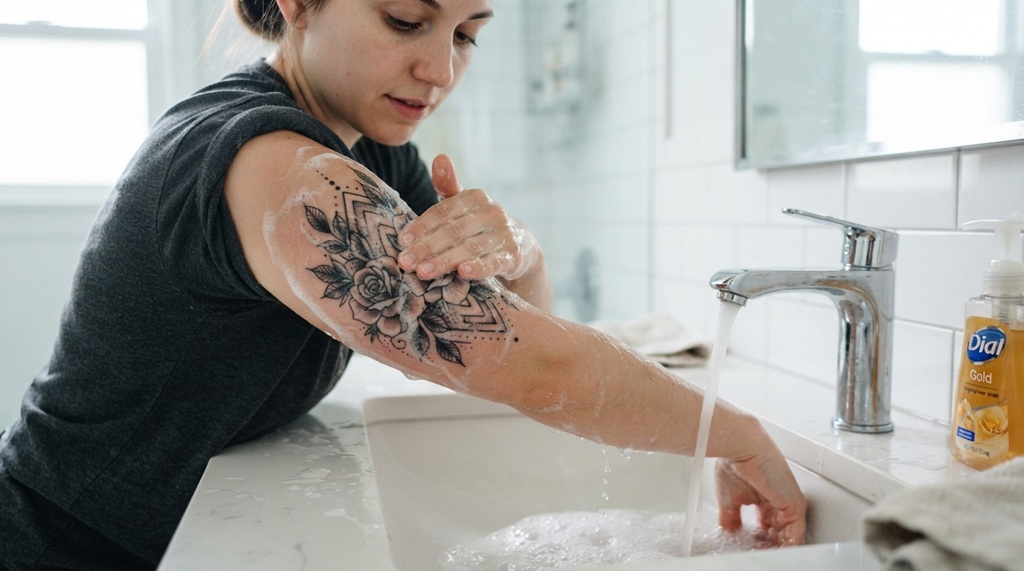
- Rinse the tattoo with lukewarm water and a fragrance-free antibacterial soap.
- Pat it dry with a clean paper towel; avoid cloth towels, since they can carry bacteria and snag on the skin.
- Apply a thin layer of the aftercare product your artist recommended.
- Leave the tattoo uncovered unless your artist instructed otherwise.
Avoid soaking the tattoo, swimming, or applying thick layers of ointment on day one. Thin and consistent care beats heavy, occasional care.
Days 2 to 6: Managing the Peeling and Light Scabbing Phase
Light peeling and thin scabbing are normal during this window, and your job is to keep the skin moisturized enough that scabs stay soft and flexible instead of hard and thick.
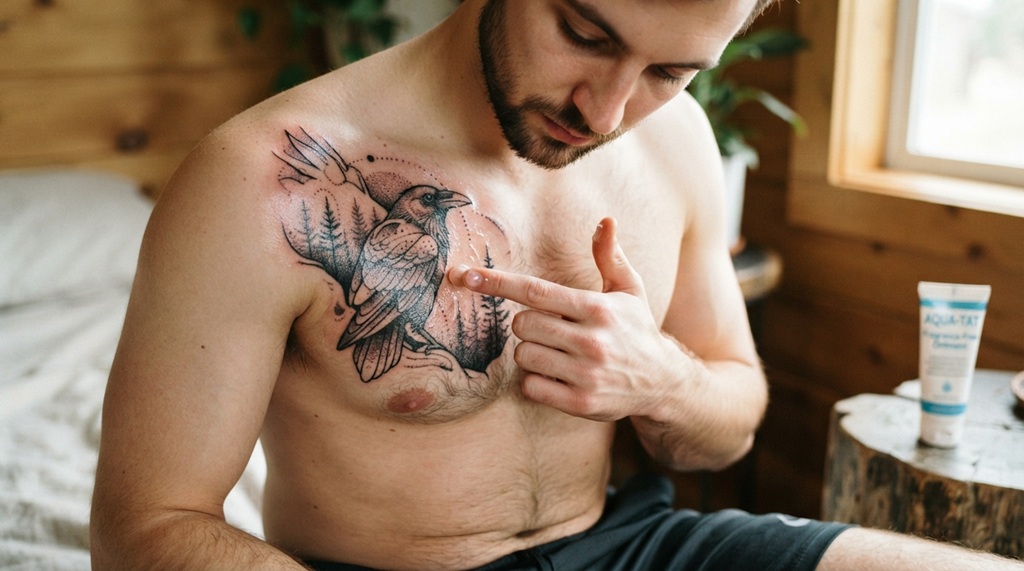
Wash the tattoo once or twice a day with gentle soap and water. After washing, apply a thin layer of unscented lotion or the aftercare balm your artist gave you. The tattoo should never look shiny or greasy; if it does, you’re using too much product.
Signs Your Healing Is On Track
- The area feels tight but not painful
- Skin looks dry and slightly flaky, similar to a mild sunburn peeling
- Colors look slightly cloudy under a thin layer of dead skin
- Minimal to no oozing after the first two days
Signs You Should Adjust Your Routine
- Scabs feel thick, raised, or crusty
- The area is itchy enough to disturb your sleep
- Redness spreads beyond the tattooed skin
- You notice pus or a strong odor, which can signal infection
If you see the second list of symptoms, cut back on ointment thickness and switch to a lighter moisturizer. If infection signs appear, contact your artist or a doctor rather than guessing.
Days 7 to 14: Reducing Itchiness and Avoiding Ink Loss
The itchiest phase of healing usually hits during week two, and resisting the urge to scratch is the single biggest factor in preventing patchy fading.
Scratching or picking pulls at scabs before they’re ready to release, and any scab that comes off early usually takes a small patch of ink with it. This is the most common cause of blotchy, faded spots in an otherwise solid tattoo.
Instead of scratching, try:
- Tapping or lightly slapping the area to interrupt the itch signal
- Applying a thin layer of unscented moisturizer
- Wearing loose, breathable clothing over the tattoo
- Keeping your nails short so accidental scratching does less damage
By the end of this stage, most surface scabbing should be gone, and the skin will look more like your finished tattoo, just with a slight matte or dry texture.
Sun Protection: The Step Most People Get Wrong
Sun exposure is one of the fastest ways to fade a tattoo, and this risk doesn’t disappear once the surface heals; it continues for the life of the tattoo.
During the first two to four weeks, keep new tattoos out of direct sunlight entirely, and cover them with loose clothing if you’ll be outside. Sunscreen shouldn’t go on a tattoo until the skin has fully closed, since sealing sunscreen over an open wound can trap bacteria and irritate healing skin.
Once the tattoo is fully healed, apply a broad-spectrum SPF 30 or higher every time it’s exposed to sun, even on cloudy days. UV rays break down pigment molecules over time, which is why tattoos on frequently sun-exposed areas, like forearms and hands, tend to fade faster than tattoos on covered skin.
An Overlooked Factor: Hydration and Diet During Healing
Most aftercare guides focus only on what you put on your skin, but what you put in your body plays a real role too. Skin that’s well-hydrated from the inside heals with more elasticity, which means less cracking, less hard scabbing, and a smoother surface for ink to settle into.
Drinking enough water in the days after getting tattooed helps keep skin supple rather than tight and dry. Diets low in protein and vitamin C can also slow the skin’s ability to rebuild collagen, since collagen production is central to wound healing. This doesn’t mean you need a strict meal plan, but a few extra glasses of water and a reasonably balanced diet during the first week can genuinely support smoother healing, according to industry experts and healthcare professionals who specialize in wound care.
Common Aftercare Mistakes That Slow Healing
Small habits can undo weeks of careful aftercare, and most healing problems trace back to one of the mistakes below.
- Over-moisturizing: Thick ointment layers trap moisture against the skin, which softens scabs too much and can lead to infection.
- Re-bandaging too long: Keeping a tattoo wrapped past the first day blocks airflow the skin needs to heal properly.
- Using scented products: Fragranced lotions and soaps often irritate healing skin and can trigger allergic reactions.
- Swimming too early: Pools, lakes, and oceans all carry bacteria that can infect open or partially healed skin.
- Wearing tight clothing: Friction from tight fabric can pull at scabs and irritate fresh ink.
- Skipping sunscreen after healing: Fading often shows up months later, not during the healing window itself, which makes this mistake easy to overlook.
FAQ: Tattoo Healing Questions
How long does a new tattoo take to heal completely?
The surface usually heals within two to three weeks, but the deeper layers of skin can take up to three months to fully settle. Colors and linework often look slightly different once this deeper healing finishes.
Is it normal for a tattoo to scab a little?
Yes, thin, light scabbing is a normal part of healing. Thick, raised, or crusty scabs usually mean the area is either too dry or has too much ointment trapped underneath.
Can I speed up tattoo healing?
You can’t dramatically shorten the natural healing timeline, but consistent aftercare, proper hydration, and avoiding sun exposure can prevent setbacks that slow healing down or cause fading.
Why is my tattoo itchy during healing?
Itching is a normal nerve response as new skin cells form and old skin flakes away. Tapping the area or applying a thin layer of moisturizer usually helps more than scratching.
When can I put sunscreen on a new tattoo?
Wait until the tattoo is fully healed and no longer peeling or scabbing, typically two to three weeks. After that, apply SPF 30 or higher every time it’s exposed to sunlight.
Conclusion
Healing a new tattoo fast without heavy scabbing or early fading comes down to a few consistent habits: gentle cleaning, thin moisturizing, breathable coverage, and staying out of the sun. Most healing problems come from doing too much, not too little, whether that’s over-applying ointment or picking at scabs out of impatience.
Stick to a simple routine, watch for warning signs like spreading redness or thick crusting, and give your skin the time it needs. A little discipline in the first two weeks pays off in sharper lines and richer color for years to come.