

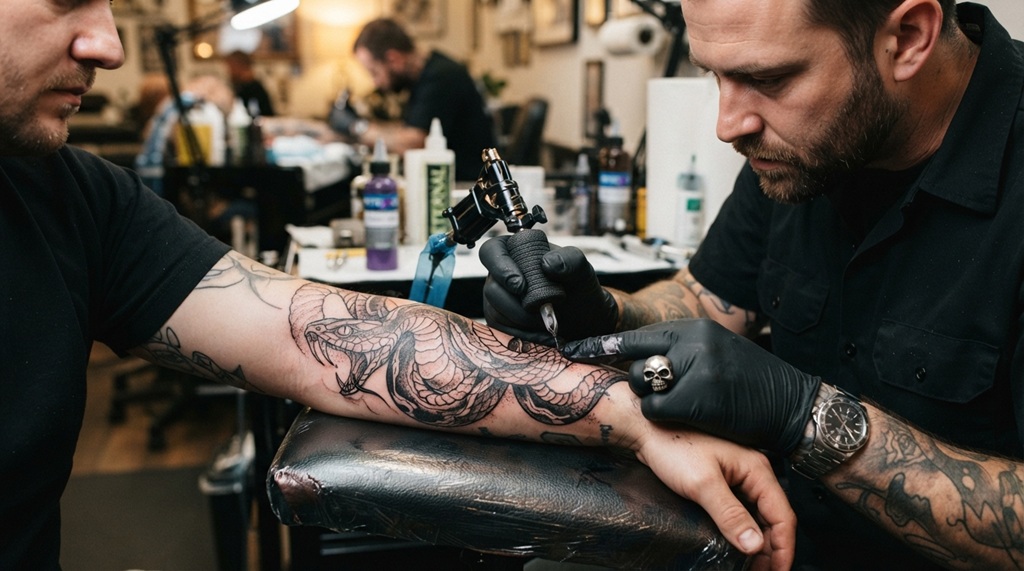

A snake tattoo means different things depending on its style, color, and pose. Most commonly, it symbolizes transformation, healing, danger, temptation, or protection. The exact meaning shifts based on the culture you draw from and the details you add to the design.
Snakes shed their skin. That single fact is why so many people choose this tattoo to mark a big life change. But snakes also carry heavier meanings tied to religion, medicine, and mythology, so the symbolism isn’t one-size-fits-all.
This guide walks through the most common snake tattoo meanings, the cultural traditions behind them, and the design choices that change what your tattoo says. By the end, you’ll know exactly what to tell your tattoo artist.
What Snake Tattoos Symbolize Across Cultures
Snake symbolism changes drastically depending on which culture or tradition it comes from. The same coiled snake can mean healing in one context and evil in another.
Ancient Egyptian Symbolism
In Egyptian mythology, the cobra represented royalty and divine protection. The uraeus, a rearing cobra symbol, appeared on pharaohs’ crowns to show authority and guard against enemies. A cobra tattoo in this style often signals strength, leadership, or protection.
Greek and Roman Mythology
The Greeks linked snakes to healing through Asclepius, the god of medicine. His staff, wrapped by a single snake, is still the symbol used in modern medicine today. This is where the “medical snake” tattoo comes from, and it’s a popular choice among nurses, doctors, and healthcare workers.
Christian and Biblical Symbolism
In Christian tradition, the snake in the Garden of Eden represents temptation, sin, and deception. Many Western tattoo designs draw on this meaning, especially when the snake is paired with an apple or wrapped around a tree. People who choose this design often want to explore themes of temptation, moral struggle, or forbidden knowledge.
Eastern and Hindu Traditions
In Hindu mythology, the snake (or naga) represents fertility, protection, and a connection to the divine. The coiled serpent Kundalini symbolizes spiritual energy resting at the base of the spine, ready to awaken. Many people choose this style when they want a tattoo tied to spiritual growth rather than danger.
Snake Tattoo Meaning: Rebirth and Transformation
The most universal snake tattoo meaning is transformation. Snakes shed their old skin and emerge renewed, which makes them a natural symbol for personal growth.
People often get this tattoo after a major life change. Common reasons include recovering from addiction, leaving a toxic relationship, or starting over after a loss. The shedding process becomes a visual metaphor for letting go of the past.
This meaning works well with a snake mid-shed, showing the old skin peeling away from the new one underneath. It’s a subtle but powerful way to tell a personal story without words.
Snake Tattoo Meaning: Danger, Power, and Protection
A coiled or striking snake often represents danger, power, or a warning to others. This design choice appeals to people who want a tattoo that projects strength.
Some people choose venomous species like a rattlesnake or cobra specifically because of their reputation. The rattlesnake, tied to the “Don’t Tread on Me” flag, carries a message of defiance and self-reliance in American symbolism.
Others use the snake as a guardian figure. In several cultures, snakes were believed to protect sacred spaces or ward off evil spirits. A snake wrapped around a dagger, sword, or skull often leans into this protective, warrior-like meaning.
Snake Tattoo Meaning: Temptation and Duality
Snakes represent duality better than almost any other animal in tattoo art. They can stand for both good and evil, healing and harm, at the same time.
This makes the snake a popular choice for people who want to express inner conflict or the balance between opposing forces. A two-headed snake, or a snake split between light and dark shading, visually represents this tension.
The temptation angle also draws from the Adam and Eve story, where the snake convinces Eve to eat the forbidden fruit. People sometimes choose this meaning to represent a personal struggle with desire, addiction, or a difficult choice they made.
How Snake Tattoo Styles Transform Their Inner Meaning
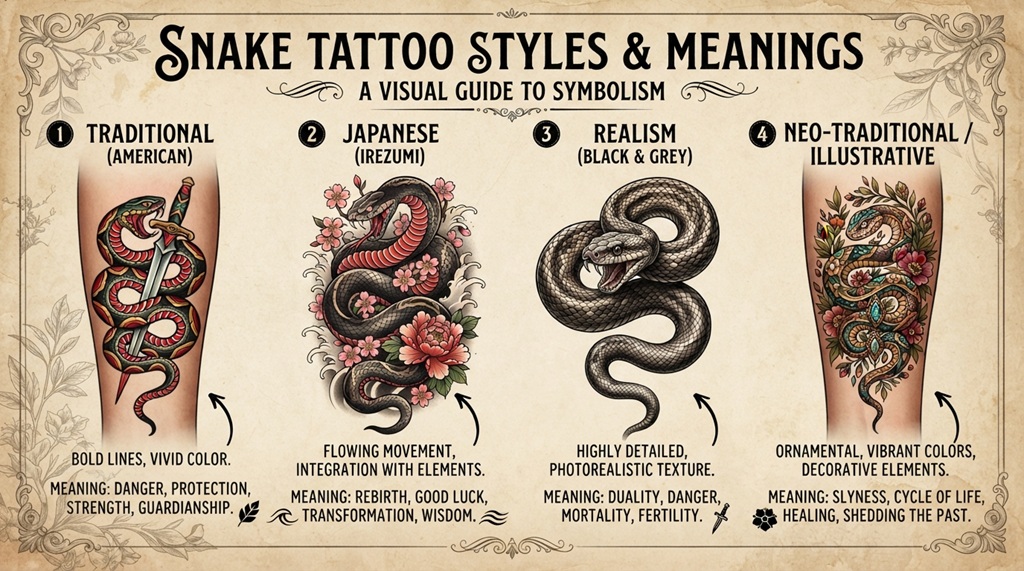
The specific artistic style and body placement you choose alter a serpent tattoo’s core symbolism just as profoundly as its underlying mythos a bold Japanese Irezumi snake evokes protective strength and guard against bad fortune, whereas a minimalist fine-line design highlights quiet personal rebirth and subtle transformation. To explore how serpent motifs compare to other ancient cultural designs, learn understand tribal symbols and their hidden meanings.
Snake Wrapped Around an Object
A snake coiled around a sword, dagger, rose, or skull adds a layer to the base meaning. A rose usually softens the design toward themes of love mixed with danger. A skull pushes the meaning toward mortality or a warning about death.
Snake Eating Its Own Tail (Ouroboros)
The ouroboros, a snake biting its own tail, symbolizes infinity, cycles, and eternal renewal. This ancient symbol appears across Egyptian, Greek, and Norse traditions. It’s a strong choice for anyone drawn to themes of life, death, and rebirth as an unending cycle.
Traditional American vs. Japanese Irezumi Snake Tattoos
Traditional American snake tattoos use bold outlines, limited color, and simple shading, often paired with daggers or roses. Japanese irezumi-style snakes are more detailed, often shown in dynamic, coiling poses with intricate scale work. In Japanese tattoo culture, the snake (hebi) is linked to protection, wisdom, and warding off illness or misfortune.
Choosing the Right Snake Tattoo Placement
Placement affects how a snake tattoo reads visually, since the animal’s long body naturally follows certain body shapes better than others.
The forearm and calf are popular spots because the snake’s body can wrap naturally around the limb, creating a coiled, lifelike effect. The spine is another common choice, letting the snake’s body run the full length of the back for a more dramatic presentation. Smaller, simpler snake designs work well on the wrist, ankle, or behind the ear for people who want something subtle.
One angle worth considering that most guides skip: think about how the snake’s movement direction relates to your story. A snake climbing upward on the arm or leg often reads as growth or ascension, while a snake coiled downward or striking outward tends to read as defense or warning. Talk to your artist about which direction fits the meaning you’re going for, not just the space you have available.
Frequently Asked Questions About Snake Tattoo Meaning
What does a snake tattoo mean spiritually?
Spiritually, a snake tattoo often represents transformation, awakened energy, or a connection to the divine. In Hindu tradition, it’s tied to Kundalini energy rising through the body. In many other cultures, it also stands for wisdom gained through hardship.
Is a snake tattoo bad luck?
No single tradition agrees on this, so a snake tattoo isn’t universally bad luck. In Western Christian symbolism, snakes are linked to temptation and sin, but in Egyptian, Hindu, and Japanese traditions, they represent protection and healing. The meaning depends entirely on the cultural lens you’re using.
What does a snake tattoo mean for a woman?
A snake tattoo doesn’t carry a different meaning based on gender; the symbolism stays the same regardless of who wears it. Many women choose snake tattoos to represent personal transformation, resilience, or reclaiming power after a difficult experience. Others are drawn to the snake’s connection to fertility and feminine energy in certain mythologies.
What does a two-headed snake tattoo mean?
A two-headed snake usually represents duality, such as good versus evil or two opposing paths in life. It can also symbolize a difficult decision or an internal conflict the wearer is working through. In some interpretations, it represents balance between two strong but opposite forces.
Do snake tattoos have a religious meaning?
Yes, snakes appear in the symbolism of most major religions and mythologies. Christianity ties the snake to temptation, Hinduism ties it to spiritual energy, and ancient Egyptian religion ties it to royal protection. The specific religious meaning depends on which tradition your design draws from.
Final Thoughts
Snake tattoo meaning isn’t fixed. It shifts based on the culture, style, and personal story behind the design. Whether you want to symbolize rebirth, protection, temptation, or raw power, there’s a version of this tattoo that fits.
Before you book an appointment, decide which meaning matters most to you. Then work with your artist to choose the pose, style, and added elements, such as a rose or dagger, that support that story. A snake tattoo done with intention will always mean more than one copied straight from a flash sheet.