



Every meaningful tattoo starts with one question: what do you want this piece to say about you? Don’t start with images. Start with the message. Write down the feeling, memory, or value you want to carry on your skin. This one sentence becomes your filter for every symbol you consider next.
Many people jump straight to Pinterest and get overwhelmed. They see thousands of pretty designs, but none of them feel personal. That’s because they skipped the first step. The symbol should serve the meaning, not the other way around.
Try this exercise. Finish this sentence: “I want this tattoo to remind me of ______.” Your answer might be a person, a turning point, a belief, or a goal. Once you have that sentence, you have a compass. Every symbol you research next should point back to it.
Research the True Meaning Behind a Symbol
A symbol’s meaning can shift depending on culture, religion, and history, so quick research protects you from picking something that doesn’t say what you think it says. A quick Google image search isn’t research. Real research means checking multiple sources and understanding the roots of the symbol.
Check Cultural and Religious Origins
Many popular tattoo symbols come from specific cultures or spiritual traditions. A lotus flower carries deep meaning in Buddhism. A Celtic knot ties back to Irish heritage. Wearing these symbols without understanding their background can feel disrespectful to people from that culture, and it can also leave you with a design that means something different than you intended.
Before you commit, ask:
- Where did this symbol originate?
- Does it hold sacred or ceremonial meaning?
- Am I comfortable wearing it as an outsider to that tradition, if I am one?
Look at How Meaning Changes Across Cultures
The same image can mean different things in different places. An owl represents wisdom in Western culture, but it symbolizes death in some other traditions. A red rose usually signals love, but in some contexts, it can represent sorrow or remembrance. Spend fifteen minutes reading a few reputable sources before you fall in love with a design.
Match the Symbol to Your Personal Story
The strongest tattoos connect a universal symbol to a specific personal story, which is what turns generic art into something only you could wear. Anyone can get an anchor tattoo. Not everyone can explain why that anchor represents the year they rebuilt their life after a hard loss.
Try connecting your symbol choice to a real memory. If you’re picking a tree to represent growth, think about which type of tree matters to you. Maybe it’s the oak from your grandparents’ backyard. Maybe it’s a cherry blossom from a trip that changed your outlook. Small personal details like these transform a common symbol into a one-of-a-kind piece.
Here’s a method tattoo artists often recommend: write a short paragraph about the meaning first, before you look at any reference images. Then search for symbols that match what you wrote. This order matters. It stops you from choosing a design just because it looks cool, then trying to force a meaning onto it later.
Choosing Symbols That Stand the Test of Time
Selecting artwork for a permanent piece requires balancing immediate emotional resonance with long-term personal evolution. While your perspectives will naturally shift over the years, the most enduring designs rely on universal themes broad enough to accommodate your growth yet nuanced enough to remain deeply personal. Prioritizing timeless iconography over fleeting moods ensures your ink retains its core significance decades down the line; for instance, seeing snake tattoo meaning and symbolism seamlessly adapt across different life stages illustrates how classic motifs maintain their depth over a lifetime.
Avoid Trend-Driven Choices
Trendy symbols can feel dated fast. Think about designs that were everywhere a decade ago. Many people who got them now feel disconnected from the meaning. Ask yourself if you’d still want this symbol if it stopped being popular tomorrow. If the answer is yes, that’s a good sign.
Test the Symbol Against Future Milestones
Picture yourself five years from now. Will this symbol still represent something true? A tattoo tied to a specific relationship might not age well if that relationship ends. A tattoo tied to a personal value, like resilience or curiosity, tends to hold up better over time because those values rarely disappear.
Talk to a Tattoo Artist Before You Finalize the Design
A skilled tattoo artist can turn your idea into a design that actually works as a tattoo, not just as a picture. This step gets skipped too often. People show up with a finished concept and expect the artist to simply copy it. Instead, treat your artist as a creative partner.
Bring your research and your personal story to the consultation. Explain the meaning behind the symbol you’re considering. A good artist will ask questions, suggest adjustments, and tell you honestly if a design won’t hold up well on skin over time. Fine details that look great in a digital sketch can blur within a few years, especially in high-friction areas like hands or feet.
According to industry experts, the best tattoo results come from close collaboration between client and artist, not from handing over a printout and walking away. Your artist knows how linework, shading, and placement affect a design’s lifespan. Trust that expertise.
Combine Multiple Symbols Without Creating Visual Clutter
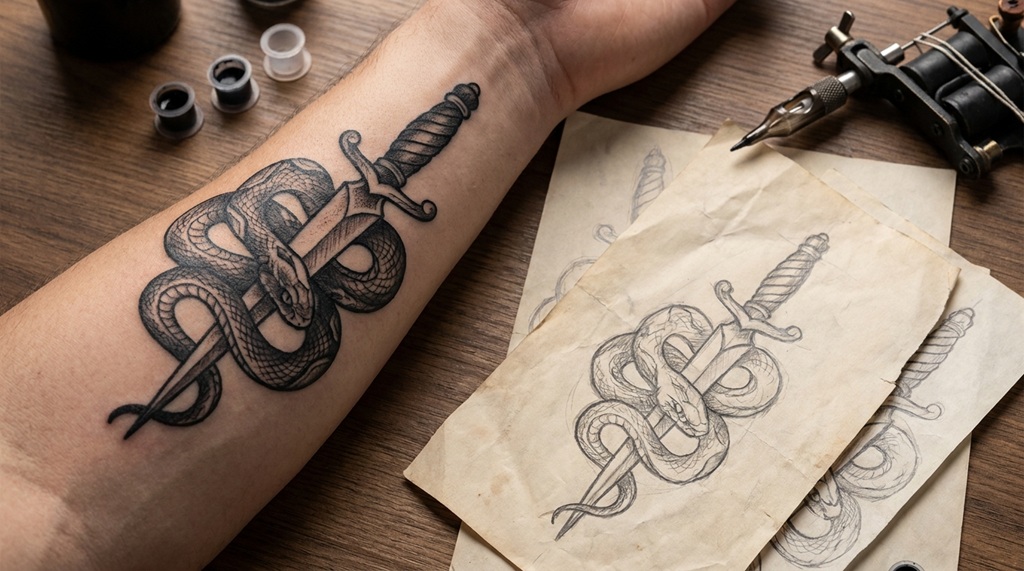
Combining symbols works best when each one adds a distinct layer of meaning, and the overall design still reads clearly from a distance. This is where many custom pieces go wrong. People try to pack five meaningful things into one small tattoo, and the result looks crowded and confusing.
A stronger approach: pick one primary symbol as the anchor. Then choose one or two supporting elements that complement it visually. For example, a compass as the main image, with small stars worked into the background. This keeps the design readable while still layering in personal meaning.
Ask your artist to sketch a rough mockup before the appointment. Seeing the combined design on paper (or digitally) helps you catch clutter early, before it’s permanent.
Decide on Placement Based on the Symbol’s Purpose
Where you place a symbol can change how it functions in your life, so it’s worth thinking about visibility just as much as design. A tattoo meant as a private reminder might work best somewhere only you can see easily, like your ribs or inner arm. A tattoo meant as a statement of identity might belong somewhere more visible, like the forearm.
Think about how often you want to see the tattoo. Daily glances at your wrist create a different relationship with a symbol than a piece on your back that you rarely look at directly. Both are valid choices. The key is matching placement to purpose, not just picking a spot because it’s popular right now.
Frequently Asked Questions
How do I know if a symbol is culturally appropriate for me to get?
Research the symbol’s origin and ask whether it holds sacred or restricted meaning within its source culture. If you’re unsure, talk to people from that culture or read sources written by members of it. When in doubt, choose a different symbol or work with your artist to create something original instead.
What’s the most common mistake people make when choosing tattoo symbols?
The most common mistake is choosing a symbol based on how it looks before understanding what it means. This often leads to regret once someone learns the symbol carries a different or conflicting meaning. Always research first, then evaluate the visual design.
Can I create my own symbol instead of using a traditional one?
Yes, and many tattoo artists actually recommend this for deeply personal pieces. A custom symbol, built from your own story, can feel more meaningful than a traditional one that carries someone else’s history. Work with your artist to sketch an original design that represents your specific experience.
How many symbols is too many for one tattoo?
There’s no fixed number, but clarity matters more than quantity. If a symbol doesn’t add distinct meaning or gets lost visually in the design, it’s probably one too many. A good test: if you can’t explain each element’s purpose in one sentence, simplify.
Should I pick a symbol that matches my personality or one that represents a goal?
Both approaches work well, and the right choice depends on what you want the tattoo to do for you. A personality-based symbol celebrates who you already are. A goal-based symbol serves as a daily reminder of who you’re becoming. Some people combine both in a single design.
Final Thoughts
Picking meaningful symbols for your next tattoo comes down to one core habit: research before you commit. Start with the message you want to carry, dig into the symbol’s true meaning, and connect it to your own story. Then bring that groundwork to a skilled artist who can turn it into a design built to last.
A tattoo is permanent, but the process of choosing it doesn’t have to feel rushed. Take the time to get it right, and you’ll end up with art that still means something to you decades from now.