

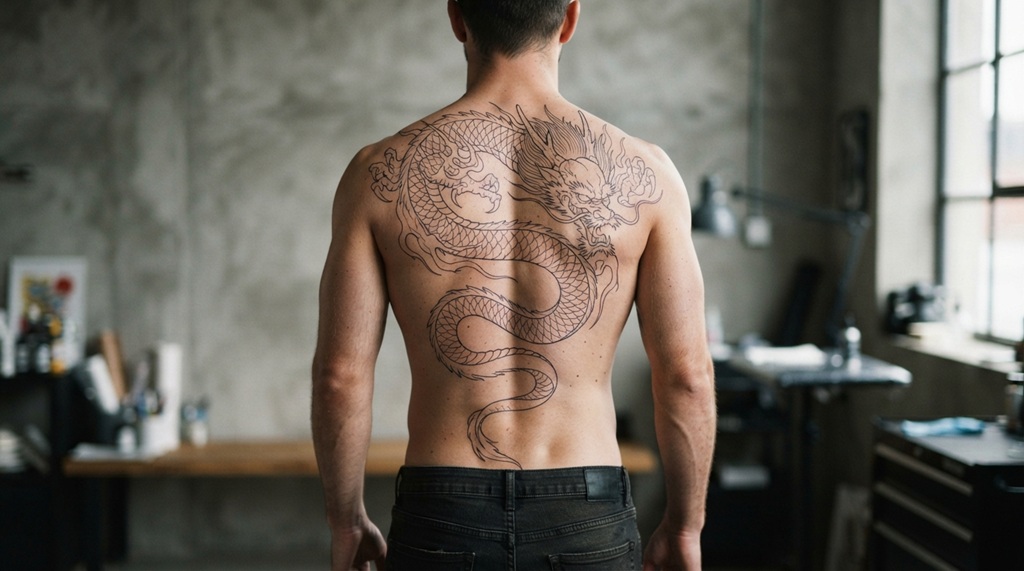

A full back piece tattoo works best when the design follows your body’s natural shape, not just a flat picture stretched across your skin. Good back piece tattoos use the spine, shoulder blades, and hips as guides. This keeps the artwork moving naturally instead of looking like a sticker slapped onto your back.
Getting this right takes planning before the needle ever touches your skin. Your artist needs to map out proportions, decide how elements connect, and account for how your body moves and changes over time.
This guide breaks down exactly how professional tattoo artists approach back piece composition, so you can walk into your consultation with realistic expectations and better questions.
Why Body Shape Matters More Than the Design Itself
Your back’s shape determines what will actually look good, before you even pick a theme. Every back is different. Shoulder width, spine curve, torso length, and even muscle tone all change how a design sits.
A tall, narrow back suits vertical compositions that stretch the eye up and down. A broader back can handle wider horizontal elements or symmetrical designs that spread across both shoulder blades. Artists who skip this assessment often produce work that looks great on paper but awkward on skin.
How Artists Read Your Back Before Drawing Anything
Most experienced artists will have you stand, sit, and move during a consultation. They watch how your skin folds when you bend forward and how your shoulder blades shift when you raise your arms.
This isn’t just about looks. Skin that stretches or bunches during movement can distort a tattoo if the design doesn’t account for it. A dragon’s tail that looks perfect while you stand still might warp oddly when you reach overhead.
Planning the Layout: Where Each Element Should Sit
The spine acts as the natural centerline for almost every back piece, and most designs either follow it or deliberately break from it for effect. Placing major focal points along or near the spine creates visual balance.
Common layout zones include:
- Upper back and shoulders: Good for bold focal pieces like a face, animal head, or crest. This area gets the most visibility when shirts are cropped or off.
- Mid-back: Works well for connecting elements, like flowing hair, smoke, or vines that link the upper and lower design.
- Lower back: Often used for grounding elements such as roots, water, or a base pattern that anchors the whole piece.
Artists typically sketch the placement in stages rather than drawing the full design at once. This lets you approve the composition before committing to detail work.
Balancing Positive and Negative Space
Negative space, the untattooed skin left visible, is just as important as the ink itself. Overcrowding a back piece with too much detail leaves no room for the eye to rest, and can make the whole design look cluttered from a distance.
According to industry experts, some of the strongest back pieces use negative space deliberately, letting the natural skin tone act as part of the composition. This is especially common in Japanese-style tattoos, where background elements like clouds or waves intentionally leave gaps.
Creating Seamless Flow: Unifying Multi-Element Back Designs
Achieving true visual flow the effortless movement of the viewer’s eye across the entire canvas is what elevates a unified back piece above a disjointed collection of individual tattoos. Without strategic continuity, even the most detailed motifs risk appearing haphazardly pasted together; however, master artists establish harmony by employing directional elements like wind bars, flowing water, or organic linework to physically bridge separate features, while maintaining a consistent shading technique and repeating key tonal palettes throughout the composition. When combining distinct concepts such as portraiture, floral accents, and background patterns, it is vital to collaborate with your artist on an overarching connectivity plan during the initial consultation rather than midway through the process and while mastering a full back piece demands precise mapping across expansive muscular zones, these fundamental placement strategies apply universally; explore how to pick the right forearm tattoo size and layout to see how these exact composition principles translate to single-panel body art.
Sizing and Proportions: Getting the Scale Right
The size of each element should relate to its distance from the main focal point, not just look right in isolation. Many beginner artists (or clients pushing for too much detail) scale elements incorrectly, and the piece ends up looking unbalanced once it’s finished.
A few sizing principles that experienced artists follow:
Central or focal images are usually the largest element in the piece. Supporting elements, like smaller flowers, birds, or background details, stay smaller so they don’t compete with the main image.
Distance from the spine often affects scale too. Elements closer to the spine tend to stay tighter and more detailed, while elements near the shoulders or sides can be bolder and simpler, since they’re viewed from further away or at an angle.
Accounting for Future Growth or Weight Changes
Your body will likely change over the years, and a well-planned tattoo should hold up reasonably well through those changes. Weight fluctuation, muscle gain, and aging skin all affect how a tattoo looks over time.
Artists sometimes build in slightly more negative space or avoid packing detail too close to areas prone to stretching, like the lower back or sides. This isn’t something every client thinks to ask about, but it’s a genuinely useful question to raise during your consultation.
Choosing a Style That Works With Full Back Compositions
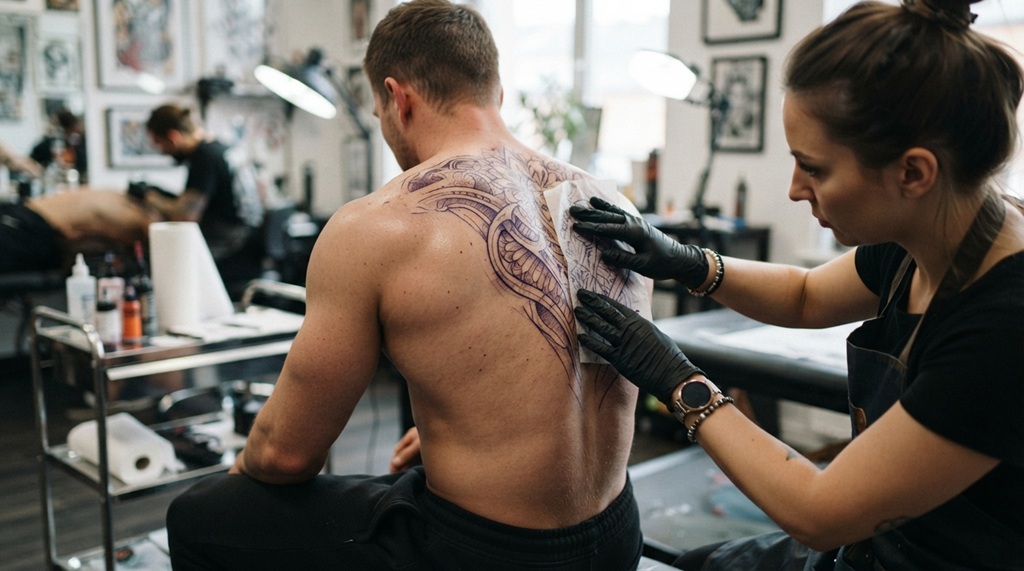
Not every tattoo style translates well to large-scale back pieces, and picking the right one from the start saves major headaches later. Some styles are built for flow and scale; others struggle to fill large space without looking empty or overly busy.
Styles that generally work well for full back pieces include:
- Japanese (Irezumi): Built specifically around large-scale composition, with established conventions for background, wind bars, and water.
- Realism: Works well for a single large focal image but needs careful planning for supporting elements.
- Blackwork and dotwork: Strong for geometric or symmetrical back designs, especially when precision matters more than color.
- Neo-traditional: Bold lines and consistent color palettes help maintain flow across a large piece.
If you’re drawn to a style not built around large compositions, like fine-line minimalism, ask your artist directly whether it will work at this scale. A skilled artist will tell you honestly if a style needs adjusting for a full back piece.
Working With Your Artist: What to Bring to the Consultation
A productive consultation depends on how clearly you communicate your ideas, not just how skilled your artist is. Vague requests like “something with a dragon and some flowers” leave too much room for miscommunication.
Bring reference images, even if they’re not exact matches to what you want. Showing an artist five images you like, and explaining what specifically draws you to each one, gives them far more to work with than a single verbal description.
It also helps to be upfront about your pain tolerance and time availability. Full back pieces are typically completed across multiple sessions, sometimes over many months, and your artist needs to plan the layout with that timeline in mind.
Frequently Asked Questions
How long does it take to complete a full back piece tattoo?
Most full back pieces take between 20 and 60+ hours of tattooing time, spread across multiple sessions. The exact number depends on detail level, color work, and your pain tolerance during each sitting.
Should I plan the entire back piece before starting, or can I add to it later?
Planning the full layout in advance is strongly recommended, even if you’re getting it done in stages. Starting without a complete plan often leads to spacing problems, since later additions may not fit properly around earlier work.
Does a full back piece have to cover the entire back?
No, a full back piece can leave intentional negative space and doesn’t need to cover every inch of skin. Some of the most visually striking designs use empty space deliberately as part of the composition.
How much does a full back piece tattoo typically cost?
Costs vary widely based on the artist’s experience, location, and design complexity, often ranging from a few thousand dollars to well over ten thousand. Ask your artist for a session-rate or project estimate during your consultation.
Can I combine multiple tattoo styles in one back piece?
Yes, but it requires careful planning to keep the piece visually cohesive. A skilled artist can blend styles using consistent shading, color, or connecting elements so the mix doesn’t look disjointed.
Final Thoughts
A full back piece tattoo succeeds when the design respects your body’s actual shape, not just the artist’s original sketch. Layout, flow, proportion, and style all work together to create a piece that looks intentional from every angle.
Take your time choosing an artist who asks thoughtful questions about placement and movement, not just theme and color. That extra planning stage is often what separates a back piece people love for decades from one they regret within a few years.