

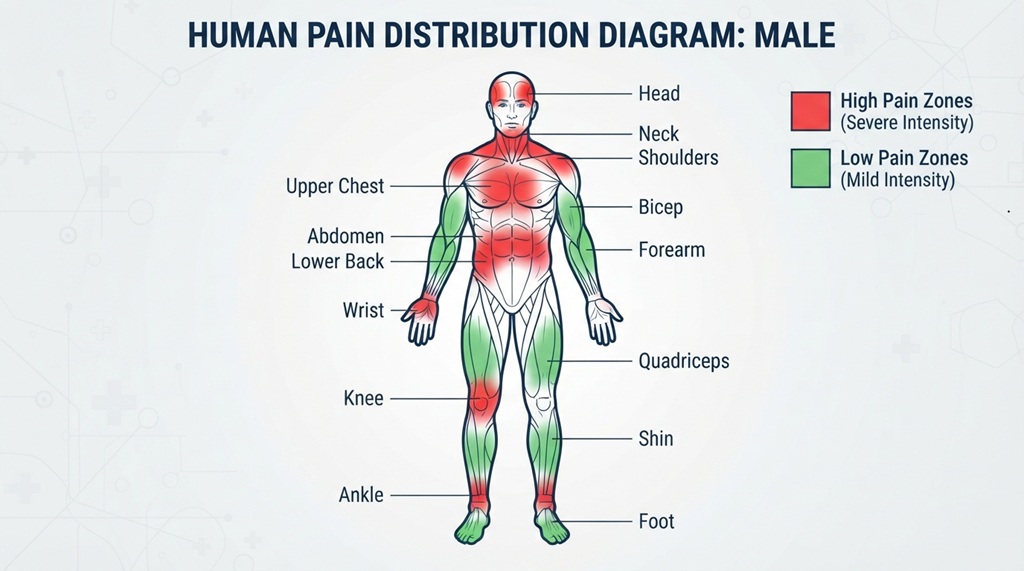

Choosing where to put your tattoo matters as much as choosing the design. The best spots for pain tolerance sit over muscle and fat, like the outer arm, thigh, or calf. The best spots for aging well have thicker skin and less sun exposure, like the upper back, ribs, or outer bicep. Some placements score well on both. Others force you to pick one priority over the other.
This guide breaks down exactly which areas hurt the most, which fade fastest, and how to balance both when you’re planning your next piece. You’ll also get real trade-offs, not just a generic pain chart copied from every other tattoo blog.
We’ll cover pain by body zone, aging factors that actually matter, and specific placement picks for people who want a tattoo that still looks sharp in twenty years.
Why Pain Level Depends on More Than Just “Toughness”
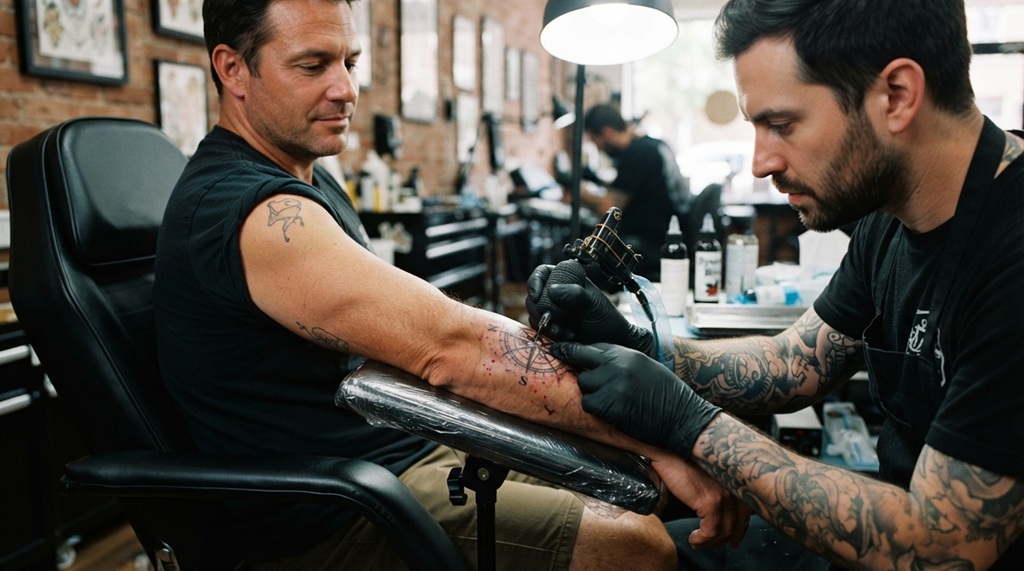
Pain during a tattoo isn’t about how tough you are. It comes down to nerve density, skin thickness, and how close the area sits to bone.
Spots with thin skin and lots of nerve endings hurt more. Think ribs, spine, feet, and hands. Spots with more muscle, fat, or thicker skin hurt less. Think outer thighs, calves, and upper arms.
High-Pain Zones
These areas consistently rank as the most painful, according to tattoo artists and pain-mapping surveys shared across the industry:
- Ribs and sternum
- Spine and lower back
- Hands, fingers, and feet
- Inner elbow and armpit
- Behind the knee
- Head and neck
Lower-Pain Zones
These areas tend to be more tolerable for most people:
- Outer thigh
- Calf
- Outer bicep and forearm
- Upper back (away from spine)
- Shoulder
Your personal pain tolerance still plays a role. Someone with a high pain threshold might barely flinch on their ribs. Someone else might struggle on their forearm. Use these zones as a general guide, not a guarantee.
How Tattoo Placement Affects Aging and Fading
Some tattoos still look crisp after fifteen years. Others blur into a smudge within five. Placement is a huge reason why.
Areas that stretch, fold, or see constant sun exposure age faster. Areas with stable skin and minimal movement hold detail longer.
Body Areas That Age Well
Skin that stays relatively flat and protected tends to keep tattoo lines sharp:
- Upper back and shoulder blades
- Outer bicep
- Ribs (once healed, they stay stable if weight doesn’t fluctuate)
- Chest (for those with stable body composition)
Body Areas That Age Poorly
Skin that stretches, sags, or gets constant friction breaks down ink faster:
- Stomach (especially with weight changes or pregnancy)
- Inner arm and inner thigh (friction and thinner skin)
- Hands and feet (constant use, sun, and washing)
- Ankles (friction from socks and shoes)
- Neck (sun exposure and frequent movement)
Sun exposure is one of the biggest factors in tattoo fading. According to dermatology experts, UV rays break down ink pigment over time, which is why tattoos on hands, feet, and neck often fade faster than tattoos kept under clothing.
Placements That Balance Low Pain and Long-Term Durability
If you want a spot that’s both bearable to sit through and likely to age well, a few areas stand out clearly.
Outer Bicep
This is one of the most recommended spots for first-time tattoo clients. It has enough muscle to reduce pain, and the skin stays relatively stable over time. It also works well for both small and larger pieces.
Upper Back and Shoulder Blade
The upper back offers a large flat canvas with lower pain levels than the spine or lower back. Because it doesn’t stretch much and isn’t constantly exposed to sun, detailed linework tends to hold up well here for years.
Outer Thigh
The outer thigh combines a thick muscle layer with skin that doesn’t see much friction or stretching in most people’s daily lives. It’s a strong choice for larger pieces that need to stay sharp.
Calf
Calves are often overlooked, but they offer solid pain tolerance and decent long-term stability, especially for people who don’t experience major weight fluctuations in that area.
Placements Worth Reconsidering for Long-Term Tattoo Aging
Certain popular areas carry distinct structural trade-offs as skin matures over time. High-exposure placements such as the face, neck, and hands experience frequent sun exposure, accelerated tissue movement, and faster ink fading, demanding meticulous upkeep and unwavering confidence. If you are contemplating prominent facial ink, understanding how to style like Amber Rose face tattoo offers valuable perspective on balancing high-impact placement with a cohesive overall aesthetic.
Ribs
Ribs are one of the most painful spots, but the payoff is real: once healed, rib skin is fairly stable unless weight shifts significantly. If you can handle the pain, ribs age reasonably well.
Hands and Fingers
Hand and finger tattoos have exploded in popularity, but they fade the fastest of almost any placement. Constant washing, sun exposure, and friction from daily use break down ink quickly. Many artists recommend planning for a touch-up within a few years if you go this route.
Stomach
Stomach tattoos look great on stable, unchanging skin. But this area is one of the most likely to stretch from weight changes, pregnancy, or muscle gain. A design that looks perfect today could distort significantly later.
Neck and Face
These spots see constant sun exposure and frequent skin movement from talking, turning, and expressions. They tend to fade and blur faster than covered areas, and they’re also harder to conceal if your priorities change later.
An Angle Most Guides Skip: Match Placement to Your Actual Lifestyle
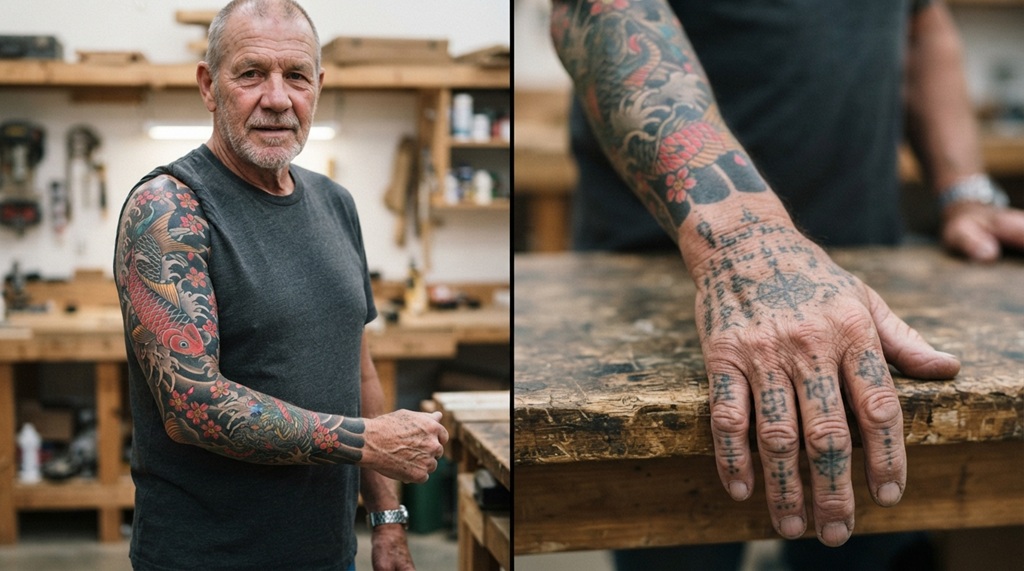
Most tattoo articles talk about pain charts and aging in isolation. But your daily habits matter just as much as anatomy.
If you work outdoors, sun exposure will hit forearms, hands, and neck tattoos harder than someone with a desk job. If you lift weights regularly, muscle growth and shrinkage can distort tattoos on biceps or thighs over time. If you swim often, chlorine exposure can dull ink faster on exposed areas.
Before picking a spot purely based on a pain chart, think through:
- Your job (sun exposure, friction, chemical contact)
- Your fitness routine (muscle or fat fluctuation)
- Your long-term weight stability
- How often that body part is exposed to washing or friction
A tattoo placed with your actual life in mind will age better than one chosen from a generic list alone.
How to Talk to Your Artist About Pain and Placement
A good tattoo artist can help you weigh pain tolerance against long-term durability before you commit to a spot.
Bring reference images and be honest about your pain tolerance. Ask directly how the design might age in that location, especially if it includes fine lines, small text, or intricate shading. Fine details fade faster than bold linework, so placement matters even more for delicate designs.
If you’re nervous about pain, ask about numbing cream options. If you’re worried about aging, ask your artist to adjust line thickness or shading style to hold up better long-term in that specific spot.
Frequently Asked Questions
What is the least painful place to get a tattoo?
The outer thigh, calf, and outer bicep are generally the least painful spots. These areas have more muscle and fat, which cushions the needle. Pain tolerance still varies from person to person.
Where do tattoos age the best?
Tattoos age best on the upper back, outer bicep, and shoulder. These areas have stable skin, minimal stretching, and less sun exposure compared to hands, feet, or the stomach.
Do rib tattoos fade faster than other placements?
Not necessarily. Ribs are painful to tattoo, but once healed, the skin stays fairly stable unless you experience major weight changes. Fading has more to do with sun exposure and skin movement than pain level.
Why do hand and finger tattoos fade so quickly?
Hands and fingers face constant washing, friction, and sun exposure. According to industry experts, this combination breaks down ink faster than almost any other placement, often requiring touch-ups within a few years.
Should I choose placement based on pain or aging?
It depends on your priorities. If this is your first tattoo, pain tolerance might matter more. If you want the design to last decades with minimal touch-ups, prioritize stable, sun-protected skin like the upper back or outer bicep.
Final Thoughts
The best tattoo placement balances what you can handle in the chair with what you want to see in the mirror ten years from now. Low-pain spots like the outer bicep, thigh, and calf work well for most people. High-durability spots like the upper back and shoulder blade hold detail longer.
Think about your lifestyle, your pain tolerance, and how much the design’s fine details matter to you. Talk it through with your artist before you commit. The right placement isn’t just about today’s appointment. It’s about how your tattoo looks for years to come.