

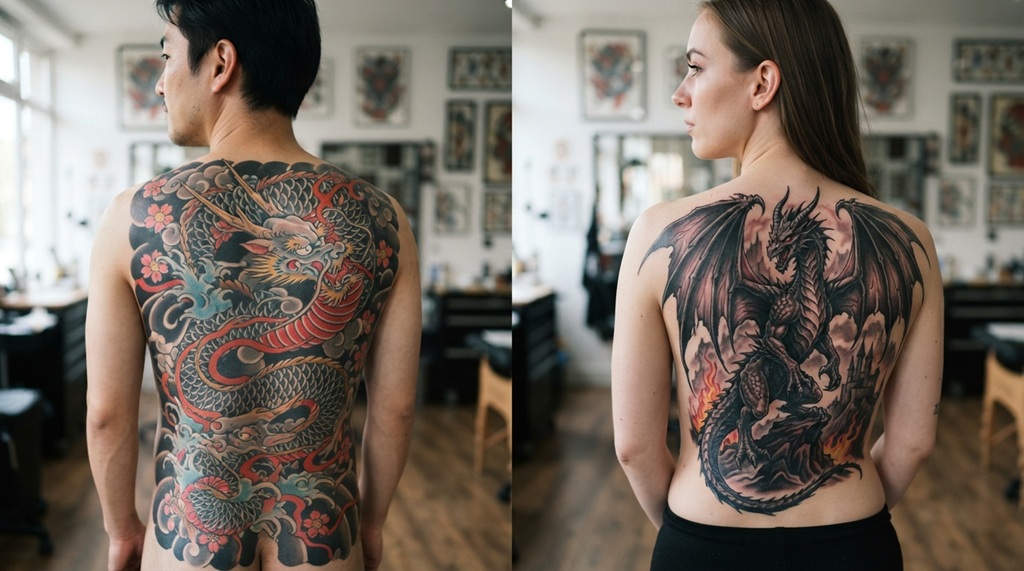

Dragon tattoos look wildly different depending on where their style comes from. A Japanese dragon curls through clouds with sharp claws and long whiskers. A Chinese dragon looks serpentine and regal, often chasing a flaming pearl. A Western dragon is thicker, more muscular, and closer to a medieval beast.
Each culture built its own visual language for dragons over centuries. Once you know the key markers body shape, number of claws, color choices, and surrounding symbols you can tell these styles apart at a glance. This guide breaks down the major dragon tattoo traditions so you can read any dragon piece like an expert, and choose the right style for your own ink.
Whether you’re researching before a tattoo appointment or just curious about the art form, this article walks through each major style, what makes it distinct, and what it symbolizes.
Why Dragon Tattoos Look So Different Across Cultures
Dragon tattoo styles differ because each culture developed the dragon myth independently, with its own beliefs about what dragons represent. In East Asia, dragons are benevolent and linked to water, wisdom, and imperial power. In Western folklore, dragons are typically fire-breathing guardians of treasure, often cast as adversaries in a hero’s story.
These different origin stories shaped the art. Japanese and Chinese tattoo traditions favor long, flowing serpentine bodies without wings. Western traditions give dragons thick legs, bat-like wings, and a more reptilian, armored look. Tattoo artists trained in a specific tradition tend to stay faithful to these visual rules, which is why a skilled eye can usually name the style within seconds.
Knowing these differences matters if you’re planning a tattoo. Mixing elements from unrelated traditions without understanding them can produce a design that looks unintentional or culturally muddled rather than deliberate.
Japanese Dragon Tattoos (Irezumi Style)
Japanese dragon tattoos, rooted in the Irezumi tradition, feature a long snake-like body, three claws per foot, and a mane of flowing whiskers around the face. The design usually fills a large area of the body, since Irezumi originated as full-body work covering the back, arms, and torso together.
Design Traits to Look For
The Japanese dragon has no wings and moves through the composition like smoke or water. Artists surround the dragon with clouds, waves, cherry blossoms, or wind bars to show motion and give the piece a sense of depth. The scales are drawn individually and shaded with heavy black work, a signature of traditional Irezumi.
Symbolism Behind the Style
In Japanese folklore, dragons bring rain, protect against evil, and represent wisdom and strength rather than destruction. A koi fish transforming into a dragon is a common companion image, referencing the legend of a koi that swims upstream and becomes a dragon as a reward for its perseverance.
Placement Traditions
Because Irezumi developed as large-scale body art, Japanese dragon tattoos often wrap around the arm, cover the back, or extend down the ribs as part of a larger scene. Smaller standalone versions exist, but the style reads most authentically when it has room to flow.
Chinese Dragon Tattoos
Chinese dragon tattoos share the same wingless, serpentine body as Japanese designs but usually have four or five claws instead of three, along with a more ornate, regal appearance. The dragon is a symbol of the emperor in Chinese history, so these tattoos carry associations with power, luck, and authority.
The head shape is a key giveaway: Chinese dragons often have a more horse-like or camel-like face with a longer snout, deer-like antlers, and a beard, compared to the more lion-like features of a Japanese dragon. Chinese designs frequently include a flaming pearl, representing wisdom or cosmic energy, which the dragon chases or holds near its claws.
Color choices also differ. Traditional Chinese dragon art leans toward gold, red, and green, tied to luck and prosperity in Chinese culture, while Japanese pieces lean more toward black, grey, and red ink work.
European & American Traditional Dragon Tattooing
In Western tattoo tradition, dragons take on a powerful, muscular presence defined by thick limbs, leathery bat-like wings, and a barbed tail drawing directly from European folklore and classic fantasy art rather than the fluid, serpentine silhouettes of East Asian lore. This muscular anatomy makes the Western dragon the definitive archetype for classic, bold body art, perfect for capturing raw strength and dramatic movement. If you’re weighing which motifs best express your personal story, exploring pick meaningful symbols for your next big piece will help you seamlessly blend these iconic features with other elements in your layout.
Old School American Traditional
Old school dragon tattoos use bold black outlines, a limited color palette (usually red, green, yellow, and black), and simple shading. These designs come from the early American tattoo tradition, built for durability and visibility on skin over decades. The dragon often appears mid-roar or mid-flight, breathing fire or gripping something in its claws.
Neo-Traditional and Realism Variations
Neo-traditional dragon tattoos keep the bold outlines of old school work but add more detailed shading, a wider color range, and a more illustrative, painterly feel. Realism-style dragon tattoos go further, aiming for lifelike scale texture and dramatic lighting, often inspired by fantasy film and book cover art rather than folk tradition.
Celtic and European Dragon Tattoos
Celtic dragon tattoos are built from continuous knotwork lines that form the shape of a dragon, reflecting the interlocking spiral and knot patterns found throughout Celtic art. Unlike Japanese, Chinese, or Western styles, the dragon’s body is often abstracted into a pattern rather than drawn with realistic scales or muscle detail.
These tattoos usually appear in black ink only, since the knotwork style depends on clean line contrast rather than color or shading. Celtic dragon symbolism connects to protection, strength, and sovereignty, and the interlocking lines are sometimes read as representing the eternal cycle of life.
Because the whole design relies on unbroken lines, Celtic dragon tattoos need a skilled linework artist. Uneven spacing or breaks in the knot pattern are easy to spot and can throw off the entire design.
Tribal and Polynesian-Inspired Dragon Tattoos
Tribal dragon tattoos use bold black shapes, sharp angles, and negative space to suggest a dragon’s form rather than depict it realistically. It’s worth noting upfront that dragons are not a traditional Polynesian motif authentic Polynesian tattooing (like Samoan or Maori work) uses specific ancestral symbols tied to genealogy and status, not dragon imagery.
What’s commonly sold as a “tribal dragon” tattoo is a modern Western invention that borrows the bold, black, high-contrast look of tribal tattooing and applies it to a dragon silhouette. If cultural authenticity matters to you, it’s more accurate to think of this as a tribal-style dragon rather than a traditional tribal dragon, and it’s worth researching an artist who works specifically in Polynesian tattooing if you want a piece rooted in that actual tradition.
How to Spot a Fusion or Mixed-Style Dragon Tattoo
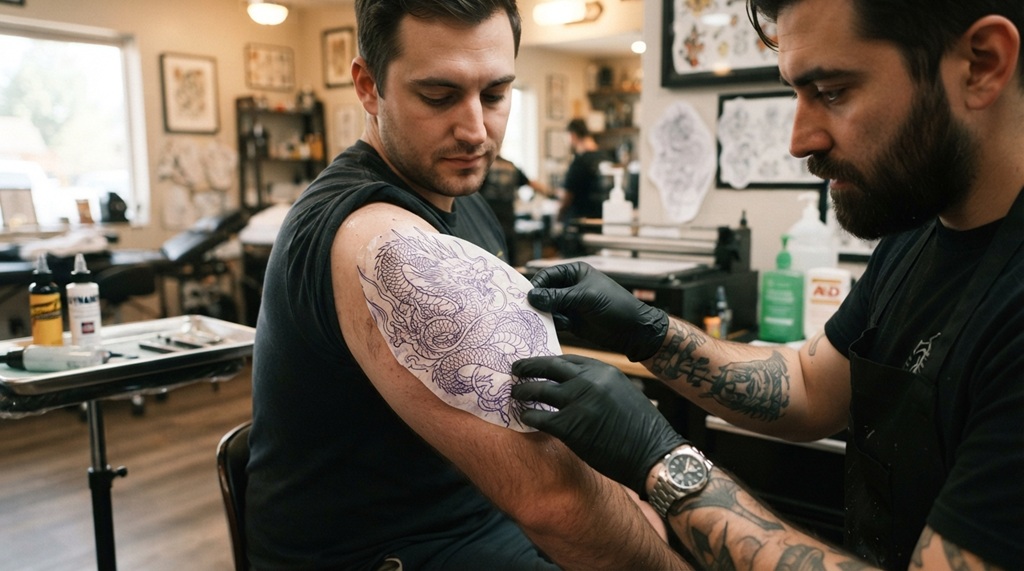
Many dragon tattoos in modern tattoo shops blend elements from two or more traditions, and learning to spot this helps you communicate more clearly with your artist. A common combination pairs a Japanese-style serpentine body with Western-style wings, or a Chinese dragon head with American traditional color work and shading.
Look at three details to identify a fusion piece: the body shape (serpentine versus muscular), the presence or absence of wings, and the claw count. If a design combines traits that don’t naturally belong together say, five claws with a Western dragon body it likely started as a custom or hybrid concept rather than a piece pulled from one specific tradition.
This isn’t necessarily a flaw. Many tattoo artists intentionally fuse styles to create something original. The key is making sure the fusion is a deliberate creative choice by you and your artist, not an accident from mismatched reference images.
How to Choose the Right Dragon Style for You
Start by deciding what the dragon should represent to you personally, since that will narrow down the style faster than browsing designs alone. If you want a piece tied to strength and protection with clean linework, Celtic knotwork might fit. If you want something bold and colorful with a strong graphic feel, American traditional is a solid match.
Consider your pain tolerance and budget too. Large-scale Japanese Irezumi pieces take multiple long sessions and a significant investment, while a smaller Celtic or old school design can often be completed in one or two sittings. Bring reference images from a single tradition to your consultation, and ask your artist directly about their experience in that specific style not every tattoo artist works comfortably across all of these traditions.
Frequently Asked Questions
What is the difference between a Chinese and Japanese dragon tattoo?
The main differences are claw count and face shape. Chinese dragons typically have four or five claws and a horse-like face with a beard, while Japanese dragons usually have three claws and a more lion-like face with flowing whiskers.
Do dragon tattoos have different meanings in different cultures?
Yes. East Asian dragons generally symbolize wisdom, protection, and good fortune, while Western dragons are more often linked to power, danger, or a battle overcome. The meaning you connect to the tattoo is ultimately personal, but knowing the cultural background helps you choose a design that fits your intent.
Can I combine two dragon tattoo styles in one design?
You can, and many people do, but it helps to work with an artist experienced in both traditions so the fusion looks intentional. Clearly explain which specific elements you want from each style, such as body shape from one tradition and coloring from another.
Is it disrespectful to get a Japanese or Chinese dragon tattoo if I’m not from that culture?
Dragon imagery is a shared mythological figure rather than a sacred or restricted symbol in most East Asian traditions, and these tattoo styles are widely practiced by artists and clients outside those cultures. That said, it’s respectful to research the symbolism, work with a skilled artist, and avoid pairing the design with unrelated sacred symbols you don’t understand.
How much does a traditional dragon tattoo cost?
Cost varies widely by size, detail level, and the artist’s experience, so it’s best to get a quote directly from a tattoo studio. Large-scale pieces like a full-back Japanese dragon will cost significantly more than a small forearm design, both in price and number of sessions required.
Final Thoughts
Dragon tattoos carry centuries of cultural history in their claws, colors, and body shapes. Once you know what to look for wings or no wings, three claws or five, knotwork or realism you can read the story behind almost any dragon tattoo you see. Use that knowledge to have a clearer conversation with your artist, and choose a style that actually matches what the dragon means to you.