

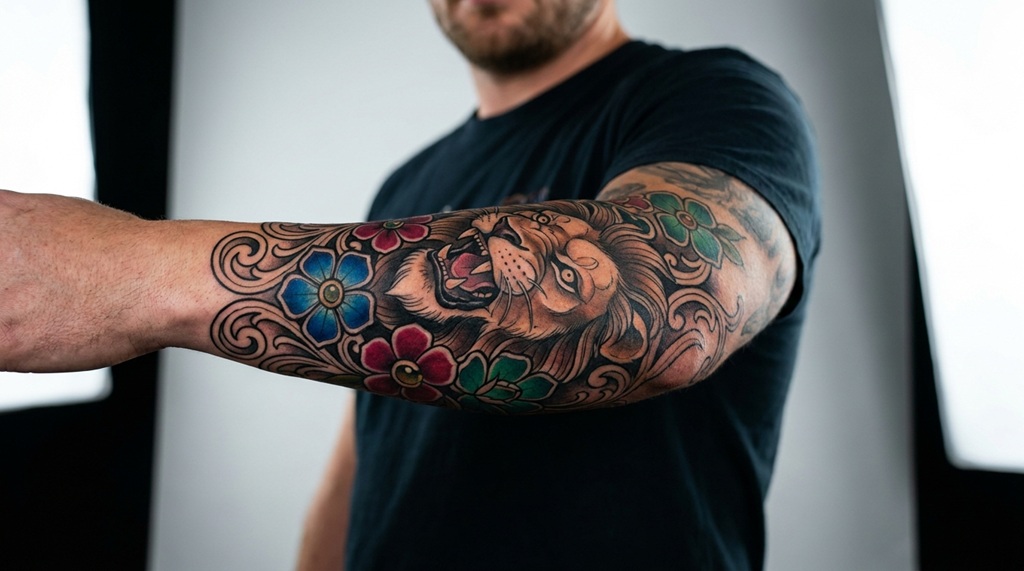

Neo-traditional tattoos blend bold old-school lines with modern detail and color. You can spot them by their thick outlines, rich shading, and illustrative subjects like animals, flowers, and portraits. This style sits between American traditional tattoos and realism, and it borrows the best parts of both.
If you’ve ever seen a tattoo that looks like a vintage poster but with extra depth and richer colors, you were probably looking at neo-traditional work. This guide breaks down exactly what to look for, so you can identify the style with confidence.
We’ll cover the key visual traits, common subjects, color choices, and how neo-traditional differs from similar styles. By the end, you’ll know exactly what separates this style from the rest.
What Makes Neo-Traditional Tattoos Different From Other Styles
Neo-traditional tattoos stand out because they combine bold outlines with detailed shading and a wider color range. Traditional American tattoos use flat color and simple shapes. Neo-traditional pushes further with depth, texture, and more realistic proportions.
This style emerged in the 1980s and 1990s. Artists wanted to keep the boldness of old-school tattoos but add more artistic freedom. They started adding gradients, decorative elements, and finer details that older styles didn’t allow.
The result is a tattoo that reads clearly from a distance, like classic American traditional work. But up close, it reveals layers of shading and color you won’t find in older styles. This balance of boldness and detail is the style’s calling card.
Key Visual Traits That Define Neo-Traditional Tattoos
Bold, Consistent Linework
Neo-traditional tattoos always start with strong outlines. These lines stay thick and consistent throughout the design, which helps the tattoo age well over time.
Thin, wispy lines fade fast. Bold lines hold their shape for decades. That’s part of why this style borrows its linework approach directly from American traditional tattoos.
Dimensional Shading and Depth
Unlike flat traditional tattoos, neo-traditional designs use shading to create depth. Artists add highlights, shadows, and gradients to make subjects look three-dimensional.
This shading technique is one of the clearest ways to tell neo-traditional apart from old-school tattoos. Look for smooth transitions between light and dark areas within the same shape.
Rich, Expanded Color Palettes
Traditional tattoos rely on a small set of bold colors, usually red, green, yellow, and black. Neo-traditional expands that palette significantly.
You’ll often see muted tones, pastels, and complex color blending. Purples, deep blues, and warm oranges show up frequently. This wider range gives artists more room to create mood and realism.
Decorative and Ornamental Details
Many neo-traditional tattoos include decorative elements that serve no purpose beyond visual interest. Think jewelry, ornate borders, filigree patterns, or symbolic objects woven into the design.
These details add richness without cluttering the piece. A skilled artist balances decoration with the main subject, so nothing feels overdone.
Common Subjects and Themes in Neo-Traditional Tattoos
Neo-traditional artists tend to favor subjects that allow for detailed rendering and symbolic meaning. You’ll see these themes repeated across the style because they work so well with its techniques.
Animals appear constantly in this style, especially wolves, owls, foxes, and big cats. Artists render their fur and feathers with layered shading that shows off the style’s strengths.
Female portraits are another staple, often inspired by Art Nouveau and vintage pin-up art. These portraits usually include flowing hair, floral crowns, or dramatic lighting.
Botanical elements like roses, peonies, and skulls surrounded by flowers show up frequently too. Flowers give artists a chance to play with color gradients and layered petals.
Mythical and folklore imagery, including mermaids, witches, and moon phases, rounds out the most common themes. These subjects fit naturally with the style’s decorative, storybook quality.
Neo-Traditional vs. American Traditional vs. Neo-Japanese: How to Tell Them Apart
People often confuse neo-traditional with American traditional or neo-Japanese tattoos. Here’s how to tell them apart quickly.
American traditional uses flat, bold color with minimal shading. The designs stay simple, with limited detail and a smaller color palette. Think anchors, swallows, and pin-up girls from classic tattoo flash art.
Neo-traditional takes those same bold outlines but adds dimensional shading, expanded colors, and more intricate detail. The subjects feel more illustrative and painterly compared to flat traditional work.
Neo-Japanese blends Japanese irezumi traditions, like koi fish, dragons, and waves, with modern shading techniques. It shares some visual similarities with neo-traditional but pulls its imagery and composition rules from Japanese art history specifically.
Check spot trending tattoo art styles this year to compare neo-traditional designs with other popular ink trends.
The easiest way to spot the difference: check the shading. Flat color usually means traditional. Gradients and dimensional shading point to neo-traditional or neo-Japanese, depending on the subject matter.
How Artists Achieve the Neo-Traditional Look: Techniques to Watch For
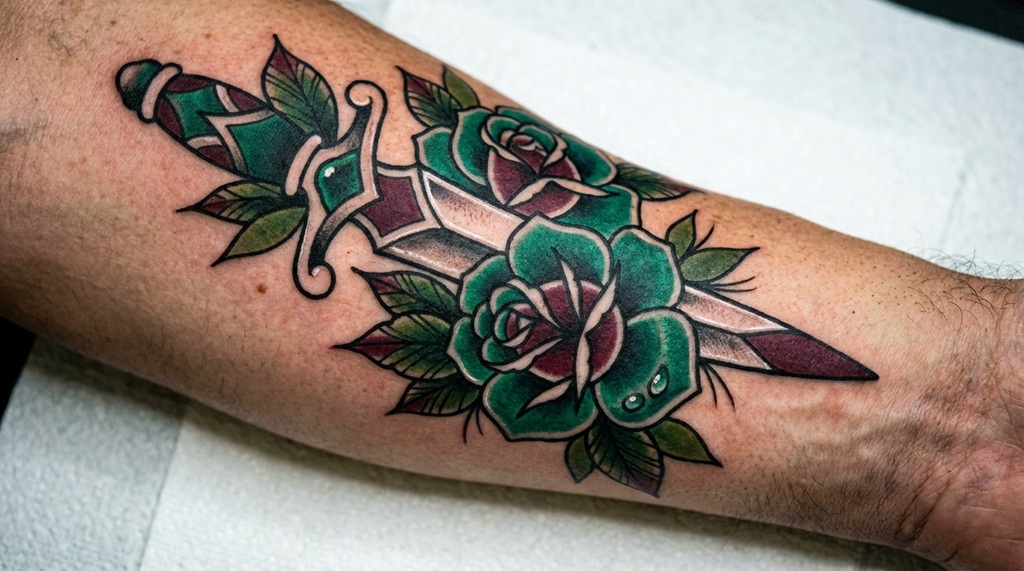
Artists use specific techniques to create the signature neo-traditional look, and spotting these techniques makes identification easier. According to industry experts, the style relies heavily on controlled color blending and precise linework.
Whip shading creates smooth gradients that fade from dark to light. This technique gives neo-traditional tattoos their sense of volume and movement.
Color packing involves saturating an area fully before blending it into the next shade. This method produces the rich, layered color effect you see in high-quality neo-traditional work.
Selective detailing means artists don’t shade every inch of the tattoo evenly. Instead, they add extra detail to focal points, like an animal’s eyes or a flower’s center, to draw the viewer’s attention.
If you notice a tattoo with smooth color transitions, a clear focal point, and thick outlines holding it all together, you’re likely looking at neo-traditional work.
What to Look for When Choosing a Neo-Traditional Tattoo Artist
Not every tattoo artist specializes in neo-traditional work, so checking their portfolio matters. Look for consistent linework across multiple pieces, not just one standout photo.
Check how the artist handles color blending in their healed tattoo photos, not just fresh ones. Neo-traditional tattoos should hold their shading and color well after the skin heals, typically over four to six weeks.
Ask to see examples of the specific subject you want, whether that’s an animal, portrait, or floral design. Artists often have strengths within the style, and matching your idea to their specialty produces better results.
Frequently Asked Questions
What is the main difference between neo-traditional and traditional tattoos?
Neo-traditional tattoos add dimensional shading, a wider color palette, and more decorative detail compared to flat, simple traditional designs. Traditional tattoos rely on bold outlines and flat color with minimal shading. Neo-traditional keeps the bold lines but builds in more depth and realism.
Do neo-traditional tattoos age well over time?
Yes, neo-traditional tattoos age well because they use the same bold, thick outlines found in American traditional tattoos. These strong lines hold their shape better than fine linework as skin changes over the years. Proper aftercare and sun protection also help preserve the color and detail long-term.
Can neo-traditional tattoos be small, or do they need to be large?
Neo-traditional tattoos can work at almost any size, though larger pieces allow for more shading and color detail. Smaller designs need simpler compositions to keep the linework clean and readable. Talk to your artist about scaling the design appropriately for the size you want.
How much does a neo-traditional tattoo typically cost?
Pricing varies widely based on the artist’s experience, location, and the size and complexity of the design. Detailed neo-traditional work often costs more than simple traditional tattoos due to the extra shading and color work involved. Always ask for a quote directly from your chosen artist before booking.
Is neo-traditional a good style choice for a first tattoo?
Neo-traditional can work well for a first tattoo, especially if you want something detailed and colorful that still holds up over time. The bold outlines make it more forgiving than fine-line styles as your skin ages. Just make sure to choose an artist experienced specifically in this style.
Conclusion
Neo-traditional tattoos combine the boldness of old-school American traditional work with modern shading, richer colors, and illustrative detail. You can spot the style by looking for thick, consistent linework, dimensional shading, expanded color palettes, and decorative elements woven into the design. Common subjects include animals, female portraits, and botanical imagery, all rendered with techniques like whip shading and color packing.
Once you know what to look for, spotting neo-traditional tattoos becomes second nature. Whether you’re researching styles for your next tattoo or just building your knowledge of tattoo art, these traits will help you recognize the style anywhere.