

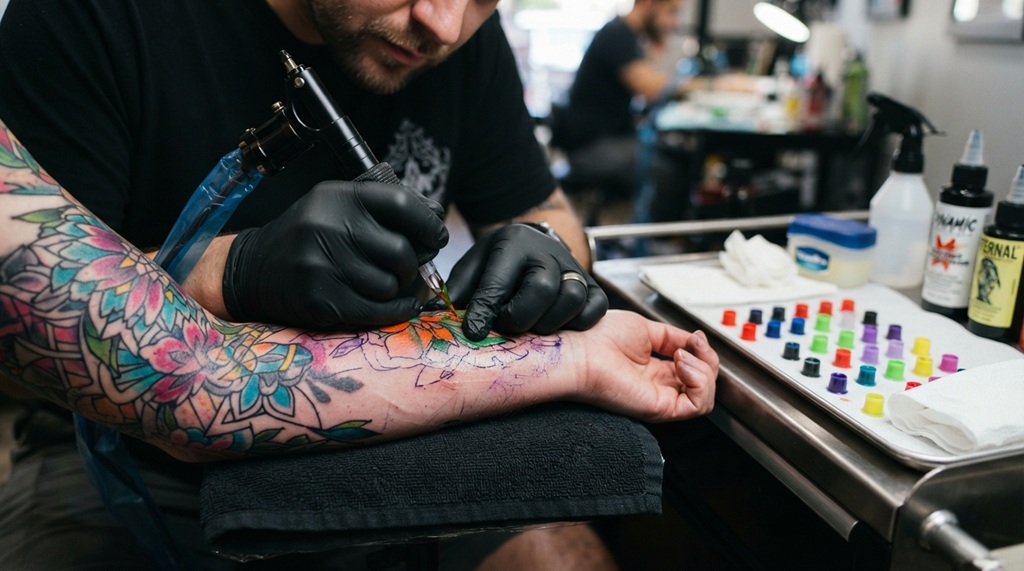

The best tattoo ink for long-lasting color combines high-quality pigments, safe additives, and a formula built to resist fading. Cheap or poorly made inks break down fast under sunlight and skin turnover. That leads to blurry lines and dull colors within a few years.
Good ink is only half the equation. Skin type, aftercare, and sun exposure all affect how long a tattoo stays sharp. But the ink you start with sets the ceiling for how vibrant your tattoo can look, no matter how well you care for it later.
This guide breaks down what makes tattoo ink last, which brands and ingredients to look for, and how to avoid the mistakes that cause premature fading. Whether you’re an artist stocking your station or a client picking a studio, this article covers what actually matters.
Key Factors Behind Long-Lasting Tattoo Ink Performance
The longevity and vibrancy of color tattoo ink rely on high-grade pigment purity, optimal particle density, and a stable carrier solution that ensures seamless dermal absorption without rapid breakdown. Premium formulations utilize finely ground micro-particles that lock securely into the skin’s collagen matrix, effectively preserving crisp contrast and preventing premature fading across decades of sun exposure and natural skin cell turnover. However, even the highest-grade pigments will compromise skin health and degrade prematurely if introduced with contaminated tools. Achieving flawless, enduring color requires an absolute commitment to hygiene mastering sterilize tattoo equipment properly guarantees a safe healing process that keeps your artistic work bold, brilliant, and pristine over time.
Pigment Quality and Purity
Pure, finely ground pigments produce sharper, more saturated color. Lower-grade pigments often contain fillers or inconsistent particle sizes, which causes the color to look patchy or muddy over time. High-quality inks use pigments tested for purity and free of heavy metal contaminants.
Particle Size and Consistency
Smaller, evenly sized pigment particles sit in the dermis more securely. Uneven particles are more likely to break apart during the skin’s natural healing process, which fades the tattoo faster and unevenly. This is one reason two red inks can look identical fresh but age completely differently.
Carrier Solution
The carrier solution suspends the pigment and helps it flow through the needle. A well-formulated carrier, usually a mix of purified water, glycerin, and witch hazel, keeps pigment stable and reduces the risk of irritation. Poor carriers can cause the ink to separate or react badly with skin.
Types of Tattoo Ink and How They Differ
Not all tattoo inks are built the same way, and the type you choose affects both safety and longevity.
Traditional Pigment-Based Inks
These are the most common inks used by professional artists. They rely on solid pigment particles, either organic or inorganic, suspended in a carrier fluid. Traditional inks generally offer the best long-term color retention when made by reputable manufacturers.
Organic vs. Inorganic Pigments
Organic pigments tend to produce brighter, more vivid colors, especially reds and yellows. Inorganic pigments, often mineral-based, are typically more stable and resistant to breakdown from UV light. Many high-quality inks blend both types to balance vibrancy with durability.
Vegan and Ethically Sourced Inks
Vegan tattoo inks skip animal-derived ingredients like bone char or glycerin from animal fat. These formulas have improved significantly in recent years and now perform comparably to traditional inks in most cases. If ethics matter to you, this is worth asking your artist about directly.
Key Ingredients to Look For (and Avoid)

The ingredient list on tattoo ink tells you a lot about how it will perform and how safe it is for your skin.
Safe, Skin-Friendly Ingredients
Look for inks that list purified or distilled water, glycerin, and witch hazel as primary carriers. These ingredients are well tolerated by most skin types and support even pigment distribution. Reputable brands also disclose their pigment sources and batch testing results.
Ingredients and Additives to Avoid
Avoid inks with unclear or missing ingredient labels, since this often signals inconsistent manufacturing. According to industry experts, some lower-cost inks have historically contained heavy metals or unlisted fillers that increase the risk of allergic reaction and premature fading. If a brand won’t share safety data or certifications, treat that as a red flag.
How to Evaluate Ink Brands Before You Buy
Choosing a trustworthy brand matters as much as the ink formula itself.
Check for Regulatory Compliance
Look for ink that meets safety standards relevant to your region, such as REACH compliance in the EU or FDA guidance in the US. Brands that invest in compliance testing are more likely to use consistent, high-quality pigments. This information is usually listed on the brand’s website or product packaging.
Read Independent Reviews from Working Artists
Artist forums and tattoo community groups often share real feedback on how ink performs over months and years, not just fresh out of the gun. Look for comments specifically about fading, healing, and color retention rather than just initial appearance. A single glowing review means less than a pattern of consistent feedback.
Test Small Batches First
If you’re an artist trying a new brand, test it on a small piece before committing to larger pieces. Watch how the ink heals over 4 to 6 weeks, since this is when most quality issues become visible. This simple step can save you from a bad experience with a full sleeve or back piece.
Choosing Ink Colors That Hold Up Over Time
Some colors naturally fade faster than others, regardless of ink quality, and knowing this helps set realistic expectations.
Reds, yellows, and light pastels tend to fade faster than blacks, dark blues, and greens. This happens because the pigment molecules in brighter colors are often more sensitive to UV light exposure. If longevity is your top priority, consider designs that lean on darker, more stable colors, or plan for a touch-up on brighter areas after several years.
White ink is particularly prone to fading and can turn yellowish over time on some skin tones. Discuss color choices with your artist before your session, since they can recommend combinations that age well together based on your skin type and the tattoo’s placement.
Aftercare Tips That Protect Your Investment
Even the best ink fades faster without proper aftercare, so this step is not optional.
Keep the tattoo clean and moisturized during the healing period, typically the first 2 to 3 weeks. Follow your artist’s specific aftercare instructions, since products and timelines can vary slightly by studio. Avoid picking at scabs, since this can pull pigment out of the skin and cause patchy fading.
Sun exposure is the biggest long-term threat to any tattoo, regardless of ink quality. UV rays break down pigment molecules over time, which is why tattoos on frequently exposed skin, like hands and forearms, often fade faster than covered areas. Apply a broad-spectrum sunscreen (SPF 30 or higher) to healed tattoos whenever they’re exposed to sunlight.
Frequently Asked Questions
What is the best tattoo ink brand for color longevity?
There’s no single “best” brand for every situation, since ink performance depends on pigment type, skin, and aftercare. Brands with strong reputations among professional artists, transparent ingredient lists, and regulatory compliance tend to perform most consistently over time. Ask your artist which brands they trust and why.
How long does tattoo ink last before it starts fading?
Most well-done tattoos with quality ink hold strong, vibrant color for 5 to 10 years before noticeable fading begins. Sun exposure, skin type, and aftercare all speed up or slow down this timeline. Touch-ups every several years can keep colors looking fresh indefinitely.
Is more expensive tattoo ink always better quality?
Not always, but price often reflects better pigment purity, testing, and manufacturing standards. The safest approach is checking ingredient transparency and independent artist reviews rather than relying on price alone. Some mid-priced brands perform just as well as premium ones.
Can certain skin types affect how long tattoo ink lasts?
Yes, skin type plays a real role in color retention. Oilier skin and skin with faster cell turnover can cause pigment to fade slightly faster than average, regardless of ink quality. Sun-sensitive or fair skin also tends to show fading sooner without diligent sunscreen use.
Does black ink fade less than colored ink?
Generally, yes. Black ink typically uses more stable pigment compounds and holds up better against UV exposure than bright colors like red, yellow, or white. This is why many long-lasting tattoo designs rely heavily on black and dark shading for structure.
Conclusion
Choosing the best tattoo ink for long-lasting color comes down to pigment quality, ingredient transparency, and a brand’s manufacturing standards. Traditional pigment-based inks from reputable brands generally offer the strongest, most reliable color retention. Pair that ink with proper aftercare and consistent sun protection, and your tattoo has the best possible chance of staying vibrant for years to come.