

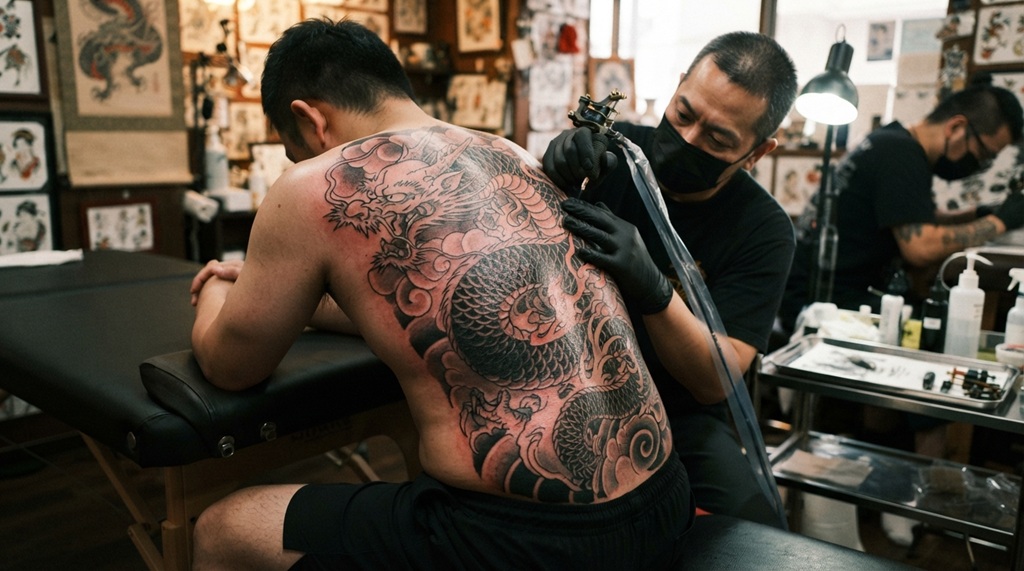

Japanese tattoos are not random art. Every image carries a specific meaning rooted in centuries of folklore, religion, and social history. Before you get inked, you need to know what your chosen design actually says about you.
This style is called Irezumi. It grew out of woodblock printing, samurai culture, and Buddhist art. Each creature, flower, and color choice has its own story. Picking a design just because it looks cool can lead to a tattoo that sends the wrong message, or worse, offends someone who understands the tradition.
This guide breaks down the major symbols, colors, and placement rules. You’ll walk into your tattoo studio with real knowledge, not just a Pinterest screenshot.
Common Japanese Tattoo Symbols and Their Meanings
Each symbol in Japanese tattoo art tells a different story. Here are the most requested designs and what they actually represent.
Koi Fish
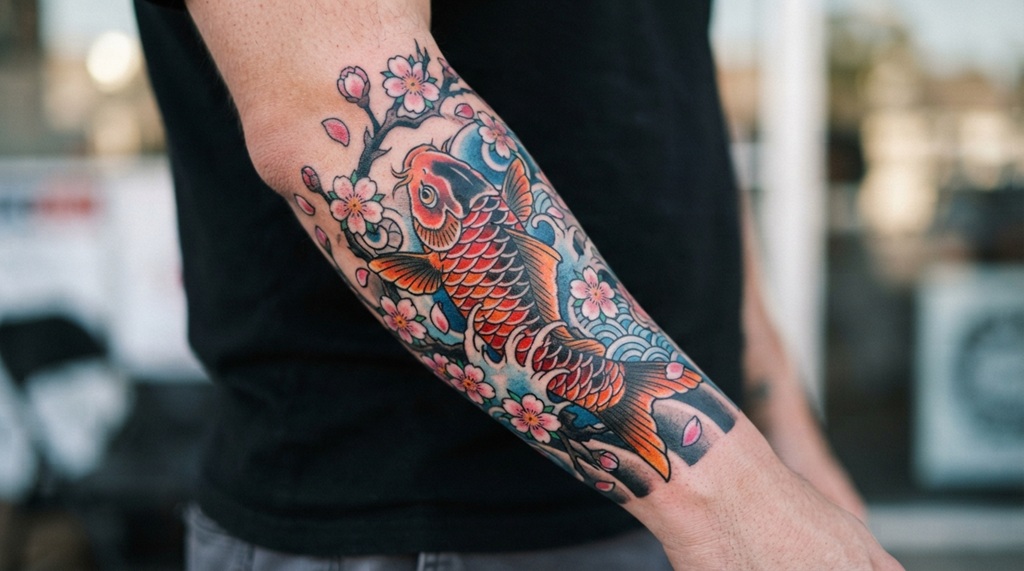
The koi fish stands for perseverance and strength against the odds. According to Japanese legend, a koi that swims upstream and climbs a waterfall transforms into a dragon. This is why koi tattoos often show the fish swimming upward, against a current.
The direction matters. A koi swimming upstream symbolizes struggle and ambition. A koi swimming downstream can represent that the hard part is over, or that someone has already achieved their goal.
Dragons
Japanese dragons differ from Western dragons in one key way: they are protectors, not villains. They represent wisdom, strength, and good fortune. Unlike the fire-breathing monsters of European myth, Japanese dragons are guardians of nature and bringers of rain.
Dragon tattoos are popular for people who want a symbol of power without aggression. The dragon’s pose, color, and the objects it holds (like a pearl) all shift the meaning slightly.
Cherry Blossoms (Sakura)
Cherry blossoms represent the fleeting nature of life. Because the flowers bloom brightly and fall within weeks, they remind us that beauty and life itself are temporary. This concept, called “mono no aware” in Japanese, is about finding grace in impermanence.
Sakura tattoos are often paired with other symbols, like koi or dragons, to soften a fierce design with a reminder of life’s beauty.
Foo Dogs (Shishi)
Foo dogs, also called shishi or lion-dogs, are guardians. They traditionally appear in pairs and are believed to protect their owner from evil spirits. One dog usually has its mouth open, the other closed, representing the beginning and end of all things.
Oni Masks
Oni are demon-like figures from Japanese folklore. They look frightening, but their meaning is more complex. Oni tattoos often symbolize protection from evil, since some legends say a fierce oni can scare away worse spirits. Others use oni to represent inner struggle or the fight against personal demons.
Phoenix (Ho-o)
The phoenix represents rebirth, justice, and fidelity. In Japanese mythology, it appears during times of peace and disappears during unrest. People who have gone through major life changes, like recovery or a fresh start, often choose this design.
What Colors Mean in Japanese Tattoo Art
Color is not just decoration in Irezumi. It carries its own symbolic weight, and picking the wrong shade can change your tattoo’s message entirely.
- Black often represents the unknown or a solid foundation. It’s also the base color for most outline work.
- Red stands for passion, life force, and sometimes danger. It’s a common color for dragon scales or oni skin.
- Blue suggests calm, tranquility, and depth, and is a frequent choice for water and koi designs.
- Gold and yellow are tied to royalty, wealth, and good fortune.
- Green connects to nature, growth, and jealousy in some folklore contexts.
Before finalizing your design, ask your artist why they chose a specific color palette. A skilled Irezumi artist should have a reason beyond “it looks good.”
Spatial Symbolism: How Body Placement Shapes Irezumi’s Meaning
In traditional Japanese tattooing, body placement is fundamentally intertwined with symbolic meaning a critical nuance novitiates frequently overlook. Rather than viewing the skin as a blank canvas for disconnected motifs, Irezumi treats the human anatomy as an integrated landscape where location elevates narrative. Expansive back compositions (senaka) historically served as the ultimate testaments to endurance due to the extreme physical fortitude required to complete them, while continuous sleeve arrangements (hikae) transformed limbs into flowing visual sagas connected by traditional backdrop elements like wind bars (kaze) and crashing waves (nami). Conversely, smaller standalone pieces on exposed focal points like the hands or neck carry distinct social weight; due to Irezumi’s complex history with the Yakuza, highly visible ink still creates friction in modern Japan, often restricting access to traditional public baths (onsen) and fitness facilities. While traditional Irezumi relies on these interconnected Japanese folk motifs and elemental backdrops, Western mythological designs depend heavily on stark, isolated personal symbolism explore our in-depth analysis of what a Medusa tattoo means to compare how different cultures articulate transformation and protection.
Cultural Respect: What to Know Before You Get an Irezumi Tattoo
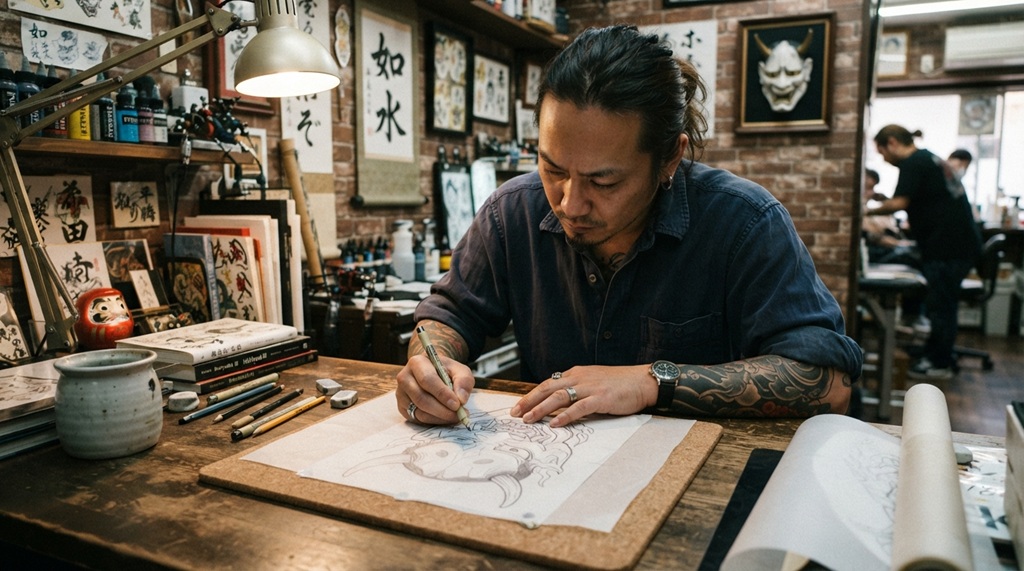
Getting a Japanese-style tattoo without understanding its background can come across as disrespectful, even if that’s not your intention. A little research goes a long way toward avoiding this.
One overlooked detail: combining symbols carelessly can send a confusing or contradictory message. For example, pairing a fierce protective dragon with a symbol tied to mourning, without understanding either, can create a design that doesn’t actually say what you think it says. Many Western tattoo-seekers pick multiple “cool-looking” elements and combine them without checking if the symbols actually work together in traditional Irezumi composition. Ask your artist to explain how the elements you’ve chosen relate to each other, not just what each one means individually.
It also helps to know the difference between traditional Irezumi (done with hand tools called tebori) and Japanese-style tattoos done with modern machines. Both are valid, but they come from different techniques and traditions. If authenticity matters to you, look for an artist trained specifically in Irezumi, not just someone who copies the visual style.
Finally, consider the source. Learning symbol meanings from a single blog post isn’t the same as talking to an artist who has studied the tradition. Whenever possible, discuss your design with your tattoo artist before your appointment, not during it.
How to Choose a Design That Matches Your Personal Story
The best Japanese tattoo is one that means something to you personally, not just one that looks impressive. Start by identifying what you want the tattoo to represent, then find the symbol that matches.
Ask yourself a few questions first:
- Do you want to represent a struggle you’ve overcome, or one you’re currently facing?
- Are you drawn to protection, transformation, or beauty?
- Do you want a single symbol, or a larger piece that tells a story over time?
Once you know the feeling or story you want to convey, bring reference images and your intended meaning to a consultation. A good artist will help you refine the design so the symbolism, color, and placement all work together, rather than picking pieces that clash.
Frequently Asked Questions
What is the most popular Japanese tattoo symbol?
Koi fish and dragons are consistently among the most requested Japanese tattoo designs. Both represent strength and perseverance, which makes them appealing across different personal stories and body placements.
Is it disrespectful for non-Japanese people to get Japanese tattoos?
Opinions vary, but most tattoo artists agree that respect comes from understanding the symbolism, not from your ethnicity. Taking the time to learn what a design means, and choosing an artist trained in the style, shows genuine appreciation rather than careless copying.
How do I know if my tattoo artist understands Irezumi?
Ask about their training and look at their portfolio for traditional composition, like connected background elements and balanced symbol placement. An artist who can explain the meaning behind their design choices, not just the technique, is a good sign.
Can I mix Japanese symbols with other tattoo styles?
Yes, but it takes a skilled artist to blend styles without losing the meaning of the Japanese elements. Talk through your idea with your artist first so the symbolism stays intact even in a mixed-style piece.
Do Japanese tattoo colors fade differently than black ink?
Colored ink, especially red and yellow, can fade faster than black ink over time, according to industry experts. Sun exposure and skin type also affect how quickly colors shift, so ask your artist about aftercare specific to colored work.
Final Thoughts
A Japanese tattoo is a visual language built from centuries of symbolism, color meaning, and cultural history. Taking the time to decode what your chosen design actually represents, from the koi’s direction to the color of the ink, helps you avoid a piece that looks good but says the wrong thing.
Before your next appointment, talk to your artist about the story you want your tattoo to tell. A design chosen with real understanding will mean more to you for the rest of your life than one picked from a random image search.