

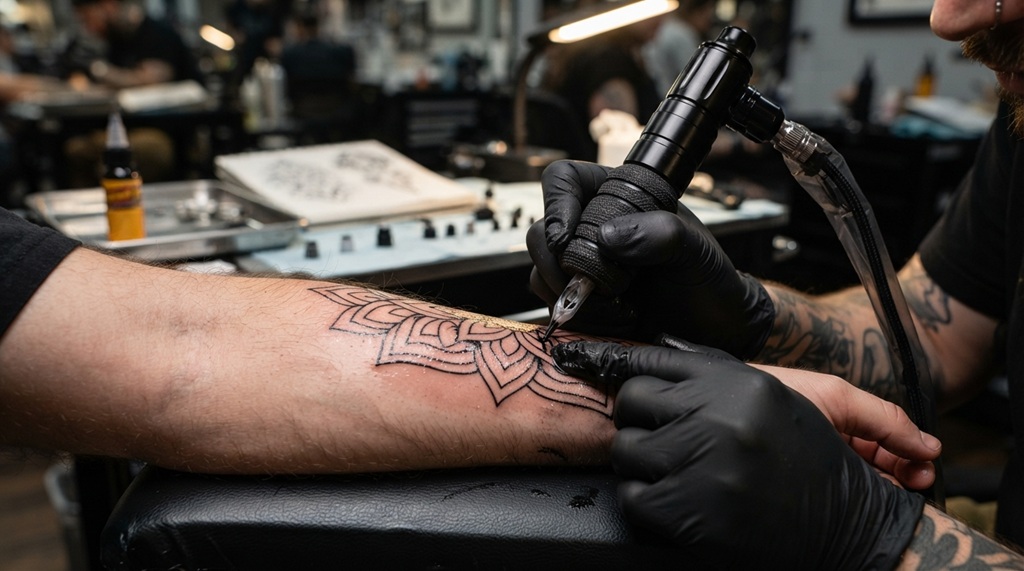

The best rotary tattoo machine for clean lines has a stable stroke, a tight needle grip, and consistent voltage control. These three things matter more than brand names or fancy looks. Get them right, and your lines will stay sharp from the first pass to the last.
Many artists blame their needles or ink when lines come out shaky. But often, the real problem is the machine itself. A rotary machine with poor motor stability will fight you on every line, no matter how steady your hand is.
This guide breaks down exactly what to look for. We’ll cover motor type, stroke length, grip design, and the small details that separate a good machine from a great one.
What Makes a Rotary Machine Good for Lining
A good lining machine gives you a short, tight stroke and a motor that doesn’t slow down under pressure. This combination keeps the needle moving at a steady speed, which is what actually creates a clean line.
Here’s what to check first:
Stroke Length
Shorter strokes work best for lining. Look for machines with a stroke length between 2.5mm and 3.5mm. This range gives you precision without sacrificing speed. Longer strokes (4mm or more) tend to suit shading work better, not lining.
Motor Torque
Torque means how well the motor holds its speed when you push into the skin. A weak motor will bog down mid-line, causing wobbles or skips. Higher-torque motors keep a steady rhythm even on tougher skin, like the outer forearm or calf.
Needle Stability
The needle bar should move in a straight, predictable path. Any side-to-side wobble, even a tiny one, will show up in your linework. Test this by running the machine (unplugged from power, needle in) and watching the tip closely.
Direct Drive vs. Swashdrive: Which One Gives Cleaner Lines
Direct drive machines generally give more precise, controllable lines than swashdrive machines. That said, both types can produce clean work in skilled hands.
How Direct Drive Machines Work
Direct drive machines connect the motor straight to the needle bar. There’s no gear system in between. This design gives you a very direct, responsive feel. Small hand movements translate immediately to needle movement, which many linework artists prefer.
How Swashdrive Machines Work
Swashdrive machines use a cam mechanism to convert the motor’s spin into a straight up-and-down motion. This adds a slight cushion or “give” to the stroke. Some artists like this softer feel for shading. For tight lining, though, it can feel less precise.
Direct Drive vs. Swashdrive: Matching Machine Mechanics to Your Lining Style
If lining dominates your daily workflow, a direct drive machine delivers the unyielding, punchy torque required to push crisp single passes without dynamic give. However, for artists balancing precise line work with soft shading, a swashdrive rotary equipped with an adjustable stroke offers essential versatility, allowing seamless adaptation within a single tool. Keep in mind that while precise mechanical control yields clean outlines, long-term saturation ultimately hinges on premium pigments; pairing your technique with the best tattoo ink for long-lasting color ensures your lines remain bold and vibrant as they heal.
Voltage Range and Power Supply Matching
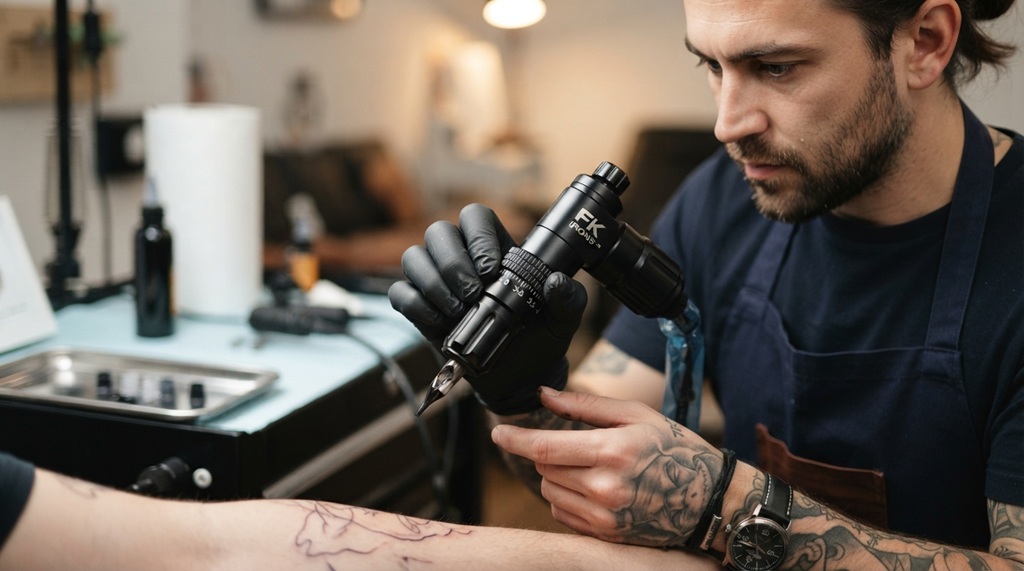
Your machine needs a power supply that matches its voltage range exactly, or your lines will suffer no matter how good the machine is. Most rotary machines run between 5V and 10V for lining work.
Running a machine at too low a voltage causes weak, shaky lines because the needle isn’t moving fast enough to cut cleanly through the skin. Running it too high causes trauma to the skin and blowouts, where ink spreads under the surface instead of staying in a tight line.
Check your machine’s manual for its exact voltage range. Then set your power supply within that range, and adjust in small increments (0.5V at a time) until your test line looks sharp and consistent.
Grip Design and Needle Cartridge Compatibility
The grip needs to feel balanced in your hand and hold the needle cartridge without any play or looseness. A loose cartridge fit is one of the most overlooked causes of inconsistent lines.
Cartridge Lock Systems
Most modern rotary machines use a cartridge system rather than loose needles. Look for a locking mechanism that clicks the cartridge firmly into place. If the cartridge wiggles at all when locked in, that wiggle transfers directly to your line.
Grip Weight and Balance
A heavier machine tires your hand faster over long sessions, which leads to less control near the end of a piece. Lighter machines (under 130 grams) tend to reduce fatigue, especially for artists doing long linework sessions.
An Angle Most Guides Skip: Grip Diameter Matters as Much as Weight
Most buying guides focus only on weight and stroke length. But grip diameter has a huge, often ignored effect on line control. A grip that’s too thick for your hand forces you to hold the machine with more tension in your fingers, which reduces fine motor control exactly where you need it most.
Try holding a few different grip sizes before buying, if you can. A 25mm to 28mm grip diameter suits most hand sizes for detailed linework, but this is worth testing in person rather than guessing from a spec sheet.
Noise and Vibration Levels
Lower vibration means steadier lines and less hand fatigue, so it’s worth paying attention to during test runs. Excess vibration doesn’t just tire your hand. It also makes it harder to follow a precise stencil line, especially on curved or detailed areas.
Most manufacturers don’t publish vibration specs, so this is hard to judge before you buy. Reading verified artist reviews, or testing a machine at a supply shop or convention, is often the most reliable way to gauge this.
Price Range and What You’re Actually Paying For
You don’t need the most expensive machine on the market to get clean lines. According to industry experts, mid-range machines (roughly $150 to $350) often include the same core motor technology as premium models.
What higher price usually buys you is better build materials, longer warranty coverage, and sometimes swappable stroke lengths. These are nice extras, but they don’t replace the fundamentals covered above: stroke length, torque, and needle stability.
New artists should avoid the very cheapest machines. These often use lower-quality motors that lose torque quickly, which shows up as inconsistent lines within just a few tattoos.
Frequently Asked Questions
What’s the best stroke length for tattoo lining?
A stroke length between 2.5mm and 3.5mm works best for most lining work. This range balances precision with enough needle travel to cut a clean line. Longer strokes suit shading better.
Do I need a direct drive machine for clean lines?
Not necessarily, but many artists find direct drive machines give a more precise, controllable feel for lining. Swashdrive machines can also produce clean lines, especially with an adjustable stroke setting. Try both if you can before deciding.
What voltage should I run for lining?
Most rotary machines run between 5V and 10V for lining, but check your specific machine’s manual first. Start in the middle of that range and adjust in small steps. Test on practice skin until your line looks sharp.
How much should a beginner spend on a rotary machine?
A solid beginner machine typically falls in the $150 to $350 range. This price range usually includes reliable motor technology without paying extra for premium extras. Avoid the cheapest options, since their motors often lose torque quickly.
Can a good needle make up for a bad machine?
No, a needle can’t fix problems caused by an unstable machine. Needle quality matters, but a wobbly needle bar or weak motor will still produce shaky lines. Fix the machine’s core stability first, then dial in your needle choice.
Conclusion
Clean, confident lines come down to a few key factors: stroke length, motor torque, needle stability, and a grip that fits your hand well. You don’t need the most expensive machine on the market. You need one that matches your working style and holds steady under pressure.
Test a machine in person when you can. Pay attention to grip diameter and vibration, not just the spec sheet. These details make the real difference between a machine that fights you and one that feels like an extension of your hand.