


You want your new tattoo to heal fast, stay smooth, and keep its color sharp. The short answer: keep it clean, keep it moisturized (not soaked), avoid the sun, and don’t pick at it. Do these four things consistently, and you’ll dodge most scabbing and fading problems.
A new tattoo is an open wound. Your body treats it that way, whether you do or not. The first two weeks decide a lot about how the final piece looks a year from now.
This guide walks you through the exact steps, product types, and mistakes to avoid no fluff, just what actually works.
Why Tattoos Scab and Fade in the First Place
Scabbing happens when a wound dries out too much or gets irritated. Fading happens when ink sits too close to the skin’s surface or gets damaged during healing.
Your skin naturally forms a thin protective layer over any wound. Tattoos are no different. Problems start when that layer turns into a thick, hard scab instead of a light film. Thick scabs form when the skin dries out, gets over-moisturized, or gets rubbed by clothing.
Fading during healing usually comes from one of three causes:
- Picking or scratching – this pulls ink out with the scab
- Sun exposure – UV rays break down pigment fast, even through a bandage
- Excess friction – tight clothes or rough towels drag on healing skin and disturb the ink
Understanding this cause-and-effect relationship makes the rest of your aftercare routine make sense, instead of feeling like a random checklist.
The First 24 Hours: Essential Post-Session Tattoo Care
Your artist’s initial protective bandage serves as your fresh ink’s primary barrier against pathogens, making those first few hours critical to a seamless recovery. While maintaining proper skin hydration keeps the area supple and prevents micro-cracking, over-saturating the tissue or handling unhealed skin with unwashed hands can quickly invite bacterial complications. Should you notice warning signs like intensifying redness, throbbing pain, or abnormal discharge, halt your routine immediately and consult our guide on treat an infected fresh tattoo safely at home to address the underlying issue before permanent ink degradation occurs.
How Long to Keep the Initial Bandage On
Most artists recommend leaving the first wrap on for 2 to 6 hours. Some use a thin plastic film like Saniderm or Tegaderm, which can stay on for 24 to 72 hours instead. Always follow your specific artist’s instructions here they know their own technique and products best.
How to Remove the Bandage Safely
Wash your hands first. Remove the bandage slowly, ideally in the shower with warm water to soften any dried plasma or ink that’s stuck to it. Never rip it off dry. Pulling too fast can tear off tiny bits of skin and pull ink with it.
First Wash Instructions
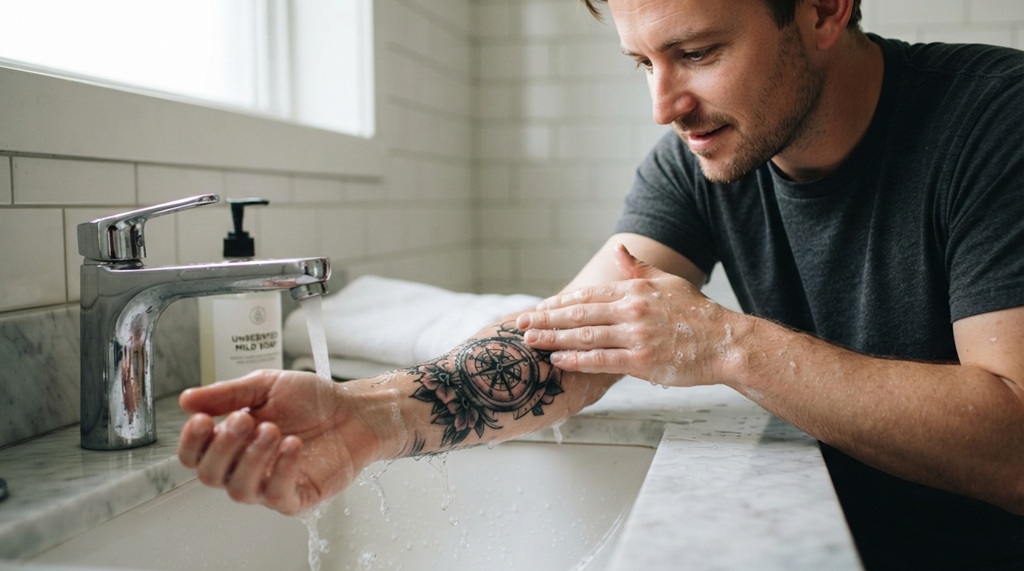
Use lukewarm water and a fragrance-free, antibacterial soap. Gently clean the area with your fingertips never a washcloth or loofah. Pat it dry with a clean paper towel instead of rubbing with a cloth towel, which can carry bacteria and irritate the skin.
Daily Aftercare Routine for the First Two Weeks
Consistency matters more than any single product you use. Here’s a routine that works for most skin types.
Cleaning Schedule
Wash the tattoo two to three times a day for the first week. Use clean hands and lukewarm water each time. Skipping washes lets bacteria and dried plasma build up, which increases scabbing.
Moisturizing Without Overdoing It
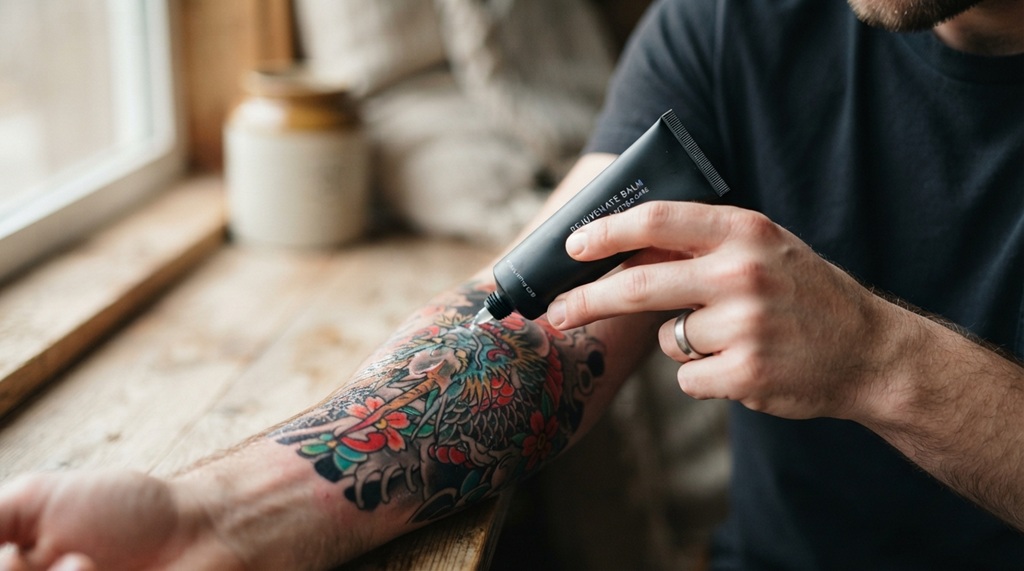
Apply a thin layer of fragrance-free lotion or a tattoo-specific balm after each wash. The goal is a light sheen, not a thick, greasy coat. Over-moisturizing traps moisture under the skin and can actually cause more scabbing, not less this trips up a lot of first-timers who assume more product means better healing.
Good options include:
- Fragrance-free, dye-free lotions (like the kind made for sensitive skin)
- Tattoo-specific balms with ingredients like shea butter or vitamin E
- Avoid petroleum-heavy products in the first few days they can suffocate the skin
What Fabric and Clothing to Wear
Loose, breathable clothing over the tattoo cuts down on friction dramatically. Cotton works better than synthetic blends, which trap heat and sweat. If the tattoo is somewhere clothes rub constantly, like your ribs or ankle, consider a breathable barrier like Saniderm for the first several days.
The Peeling and Itching Stage (Days 5–14)
Peeling and itching are normal signs of healing, not a warning sign as long as you don’t interfere with them.
Around day 5 to day 7, the top layer of skin starts to flake and peel, similar to a sunburn. This is your skin shedding the damaged outer layer while the ink settles into the deeper layer where it stays permanently. Let it happen on its own. Picking off peeling skin early can pull ink out along with it, leaving patchy, faded spots.
Itching typically peaks during this stage too. Instead of scratching, try:
- Gently slapping the area (not scratching) to relieve the itch
- Applying a thin layer of moisturizer to calm dry skin
- Wearing loose clothing so fabric doesn’t trigger the itch further
If itching becomes unbearable or comes with swelling, redness spreading outward, or pus, that’s a sign to check with your artist or a doctor it may be an infection rather than normal healing.
How to Prevent Fading While Your Tattoo Heals
Fading prevention starts the moment you leave the studio and continues well past full healing most people just stop paying attention too soon.
Sun Protection Is Non-Negotiable
UV rays are the single biggest long-term threat to tattoo color. Keep a healing tattoo fully covered and out of direct sunlight for at least the first two to three weeks. Once it’s healed, use a broad-spectrum SPF 30 or higher every time it’s exposed to the sun, indefinitely. Sunscreen isn’t a one-time step it’s a lifetime habit for anyone who wants their tattoo to stay vibrant.
Avoid Soaking the Tattoo
Skip baths, swimming pools, hot tubs, and long showers for at least two weeks. Submerging a healing tattoo softens the skin too much and can pull ink out, plus it exposes an open wound to bacteria in the water.
Don’t Over-Exfoliate Once Healed
Even after full healing, aggressive scrubbing, harsh exfoliants, or rough loofahs can wear down the top layer of skin faster than normal and dull the ink over time. Treat tattooed skin a little more gently than the rest of your body, even years later.
Common Mistakes That Slow Healing or Cause Damage
Most healing problems come from a handful of repeated mistakes knowing them ahead of time helps you avoid them entirely.
Picking at scabs or peeling skin. This is the number one cause of patchy, faded tattoos. Every time you pull off skin before it’s ready, you risk pulling ink with it.
Using too much ointment. Thick layers of petroleum jelly or heavy ointments trap moisture and bacteria underneath, which often causes more scabbing, not less.
Wearing tight clothing over a fresh tattoo. Friction from tight fabric irritates healing skin and can cause raised, uneven scabs.
Re-bandaging with regular tape or non-breathable wrap. Skin needs to breathe. Non-breathable coverings trap sweat and moisture, creating a bacteria-friendly environment.
Skipping sunscreen once it looks healed. A tattoo can look fully healed on the surface within two to three weeks, but the deeper layers are still settling for up to three months. UV exposure during this window causes real, permanent fading.
Frequently Asked Questions
How long does it take for a new tattoo to fully heal?
Surface healing usually takes 2 to 3 weeks, but the deeper skin layers continue settling for up to 3 months. Avoid sun exposure and heavy friction during this entire window, not just the first few weeks.
Is it normal for a new tattoo to scab?
A light, thin layer of scabbing is normal and expected. Thick, raised scabs usually mean the skin dried out too much or got irritated adjusting your moisturizing routine can help prevent this on future tattoos.
Can I put Vaseline on a new tattoo?
Most tattoo artists recommend against heavy petroleum products in the first few days because they can trap too much moisture under the skin. A thin, fragrance-free lotion or tattoo-specific balm is generally a safer choice.
Why is my tattoo fading while it’s still healing?
Fading during healing usually comes from picking at scabs, sun exposure, or excessive friction from clothing. Sticking to a gentle cleaning and moisturizing routine, and keeping the area covered from the sun, prevents most early fading.
When can I go swimming after getting a tattoo?
Most artists recommend waiting at least 2 weeks before swimming in pools, lakes, or the ocean. Submerging a healing tattoo raises the risk of infection and can pull ink out of the skin before it fully sets.
Conclusion
Healing a tattoo fast without scabbing or fading comes down to a few consistent habits: gentle cleaning, light moisturizing, sun protection, and keeping your hands off it while it heals. Skip the shortcuts and resist the urge to pick your future self, and your tattoo’s color, will thank you.