

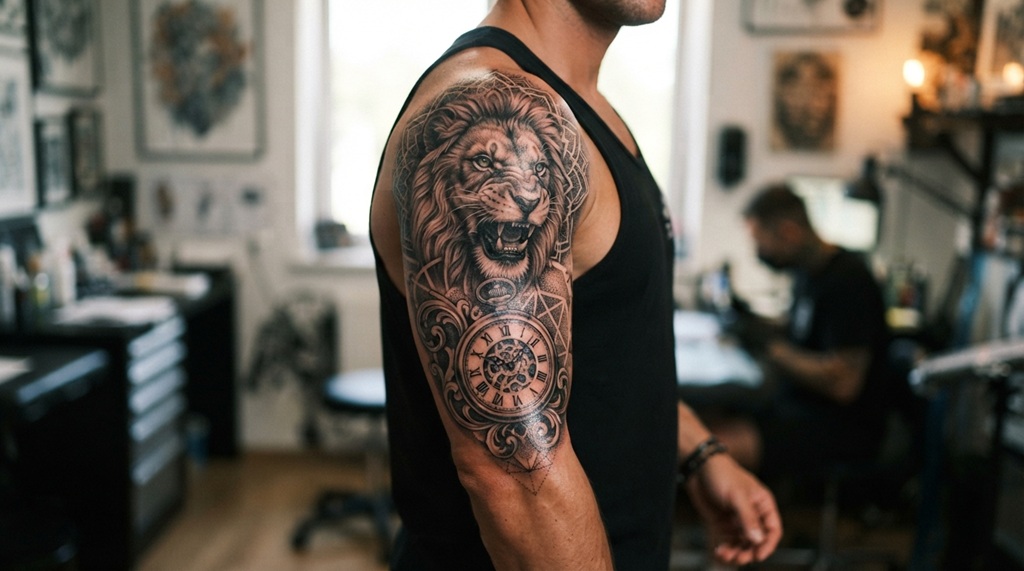

To combine tattoo elements into a custom half-sleeve, you need a unifying theme, a consistent style, and a clear flow that guides the eye from shoulder to elbow. Random images placed side by side rarely work. A strong half-sleeve reads as one piece of art, not a collage.
This guide breaks down exactly how tattoo artists and collectors plan a cohesive half-sleeve. You’ll learn how to pick a theme, blend different subjects, choose the right style, and avoid the mistakes that turn a promising design into a cluttered mess.
Whether you’re combining a portrait with florals, mixing traditional and neo-traditional elements, or building a nature scene with symbolic pieces, the same core principles apply. Let’s get into them.
Start With One Unifying Theme
Every strong half-sleeve begins with a single theme that ties every element together. Without this anchor, even beautifully drawn pieces can look disconnected once they share skin space.
A theme doesn’t have to be literal. It can be a mood (dark and moody, soft and dreamy), a color story (black and grey, warm earth tones), or a narrative (a personal journey, a tribute to family). The theme acts as a filter: any element that doesn’t fit gets left out, no matter how much you like it on its own.
Examples of Strong Unifying Themes
- Nature and growth: florals, animals, and landscape elements that share a botanical feel
- Japanese folklore: koi, waves, cherry blossoms, and clouds in one cohesive style
- Personal timeline: symbols representing different life chapters, connected by consistent shading
- Dark fantasy: skulls, roses, and gothic linework unified by heavy contrast
Once you settle on a theme, every design decision becomes easier. You’ll know instantly whether a new idea belongs or whether it should go on a different part of the body.
Choose a Single Art Style for Every Element
Mixing subjects works. Mixing styles usually doesn’t. If you combine a hyper-realistic rose with a cartoonish skull, the two pieces will fight for attention instead of working together.
Pick one style and commit to it across the whole sleeve. Common styles for combined half-sleeves include:
- Black and grey realism: ideal for portraits, animals, and detailed florals
- Neo-traditional: bold outlines with a modern color palette, great for blending multiple subjects
- Traditional American: bold lines and limited color, historically built for combining images
- Illustrative: pen-and-ink style linework that works well for storytelling pieces
If you want to mix two styles, ask your artist how to soften the transition. Some artists use shared shading techniques or a consistent line weight to bridge the gap. This takes skill, so choose an artist experienced in the specific combination you want.
Plan the Flow From Shoulder to Elbow
A half-sleeve isn’t a series of separate images. It’s one continuous piece that needs to move naturally across the arm. Good flow keeps the eye traveling smoothly instead of jumping between disconnected sections.
Use Background Elements to Connect Foreground Pieces
Background fillers do more than fill space. Smoke, clouds, water, or botanical linework can link a portrait to a floral piece, or connect a large animal to a smaller symbol. Think of them as visual bridges.
Follow the Natural Shape of the Arm
Skilled artists design around muscle contours instead of against them. A design that follows the arm’s natural curve looks intentional. A flat design placed without regard for anatomy often looks stiff once the arm moves.
Balance Positive and Negative Space
Not every inch needs ink. Negative space (bare skin) gives the eye a place to rest and helps busy elements stand out. Overcrowding a half-sleeve is one of the most common mistakes people make when combining multiple elements.
Collaborating with Your Artist on a Custom Layout Sketch
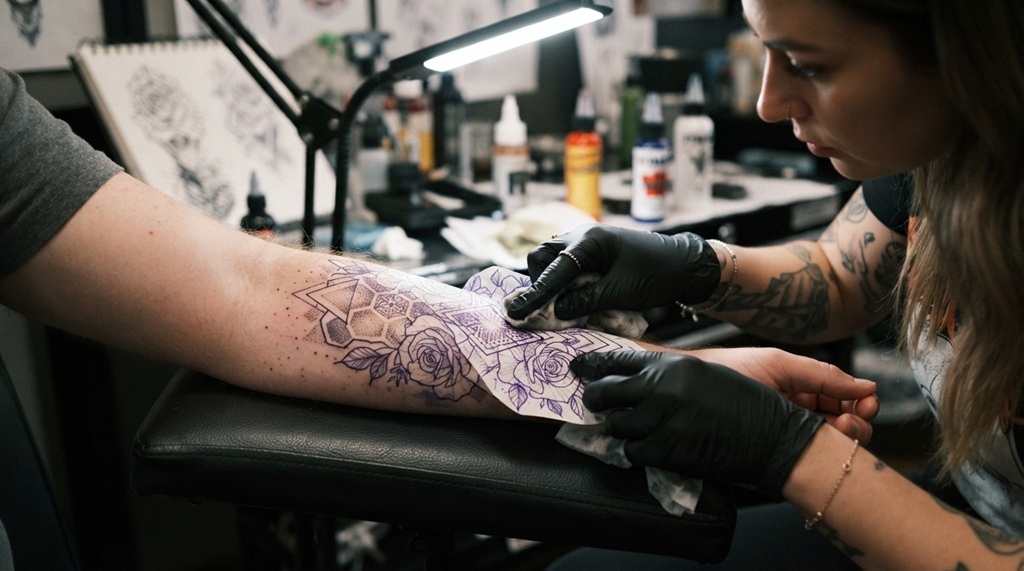
A dedicated one-on-one consultation serves as the vital bridge where distinct design elements seamlessly unite into a singular, cohesive vision. By bringing high-quality reference images for each intended motif, you enable your tattoo artist to masterfully calculate placement, scale, and organic transitions tailored to your unique anatomy. When planning subtle filler patterns or delicate framing to connect your primary focal points, choosing a minimalist tattoo design that lasts will help you balance complex imagery with clean, enduring elements for an effortlessly timeless half-sleeve.
Most experienced tattoo artists will:
- Ask about your top priority element (the piece you care about most)
- Sketch a rough composition showing where each piece sits
- Adjust scale so no single element overwhelms the rest
- Suggest connecting elements you may not have considered
Don’t skip this planning stage, even if you’re eager to start. According to industry experts, poorly planned combination pieces are among the most common reasons for costly cover-up work later. A few extra weeks of planning saves years of regret.
Common Combinations That Work Well Together
Some element pairings are easier to blend than others because they share visual weight, texture, or symbolism. Below are combinations tattoo artists frequently recommend for half-sleeves.
Portrait + Florals
A realistic portrait paired with surrounding florals softens the intensity of the face and adds movement around it. Roses, peonies, or wildflowers are common choices because their shading style matches realism well.
Animal + Nature Scene
A large animal (wolf, lion, owl) combined with a landscape background creates depth without needing a second focal subject. The landscape acts as both setting and filler.
Script + Symbolic Imagery
Meaningful text paired with a symbol (a compass, a cross, a set of wings) works well when the lettering style matches the linework of the image. Keep script minimal so it doesn’t compete with the visual elements.
Geometric + Organic Shapes
Combining sharp geometric patterns with organic subjects like animals or plants creates contrast that many collectors find visually striking. This pairing works especially well in blackwork or dotwork styles.
Avoid These Common Mistakes When Combining Elements
Even well-planned half-sleeves can go wrong if a few key mistakes slip through. Here’s what experienced artists warn against most often.
- Too many focal points. A half-sleeve needs one or two main subjects, not five competing for attention.
- Ignoring scale. A tiny symbol next to a large portrait can look like an afterthought instead of a deliberate choice.
- Skipping the filler plan. Leaving connective elements as an afterthought often results in a patchy, unfinished look.
- Mixing incompatible styles. Realism and cartoon styles rarely blend without a skilled hand guiding the transition.
- Rushing the design phase. A half-sleeve is a long-term commitment. Take the time to get the layout right before the needle touches skin.
Frequently Asked Questions
How many tattoo elements can I combine in one half-sleeve?
Most artists recommend two to four main elements, plus supporting filler like botanical linework or smoke. More than that risks overcrowding and losing a clear focal point. Your artist can help you decide based on arm size and design complexity.
Can I combine different tattoo styles in one half-sleeve?
Yes, but it requires an experienced artist who knows how to bridge the transition with shading, line weight, or color palette. Without that skill, mixed styles often look disjointed rather than intentional. Ask to see the artist’s past work combining similar styles before booking.
How much does a custom combined half-sleeve typically cost?
Pricing varies widely by region, artist experience, and session count, so no fixed number applies everywhere. Multi-element half-sleeves usually take several sessions, and cost is often based on hourly or day rates. Ask your artist for a session estimate during the consultation.
Should I get all the elements tattooed in one session?
Most half-sleeves are done across multiple sessions, especially when combining detailed elements like portraits or full color work. Spacing sessions out also gives your skin time to heal between larger sections. Your artist will map out a session plan based on the design’s complexity.
What if I want to add more elements later?
Tell your artist upfront if you plan to expand the design in the future. Planning lets them leave appropriate space and design connective elements that will still work once you add new pieces. Adding elements without a plan can disrupt the flow of an already-finished piece.
Final Thoughts
Combining tattoo elements into a custom half-sleeve comes down to three things: a unifying theme, one consistent art style, and a layout that flows naturally across the arm. Skip any of these, and even great individual designs can end up looking like separate tattoos placed side by side.
Take your time in the planning stage, bring clear references to your consultation, and choose an artist with proven experience in multi-element designs. A well-planned half-sleeve isn’t just a collection of images. It’s one piece of art that tells a complete story.