

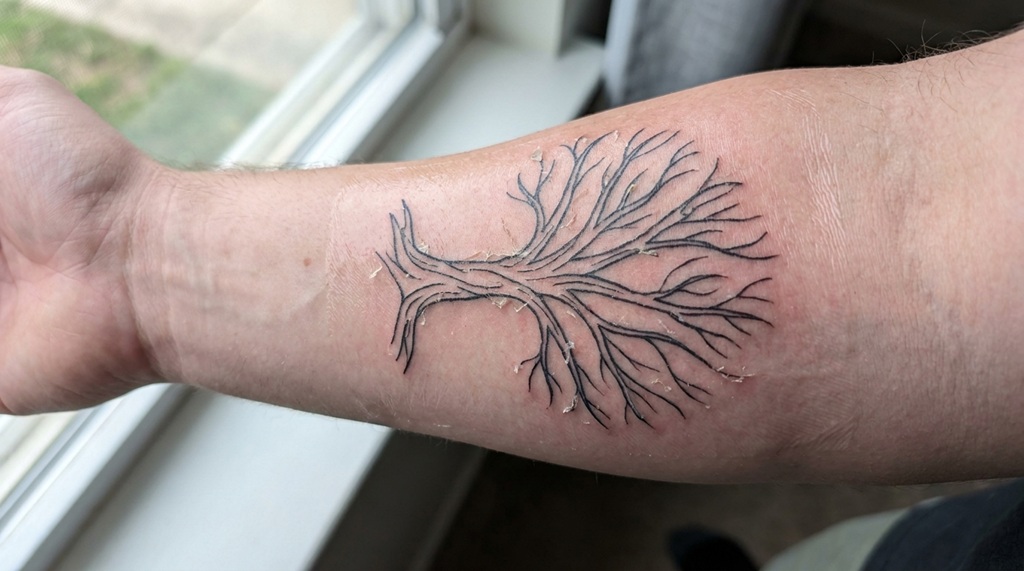

Peeling is a normal part of tattoo healing. It usually starts on day 3 to 6 and means your skin is shedding the top layer of damaged cells, not your ink.
The key is to clean it gently, keep it moisturized, and never pick or scratch. Do this wrong, and you risk patchy color, scabbing, or infection.
This guide walks you through the exact cleaning routine artists recommend, what to avoid, and how to tell normal peeling from a problem that needs attention.
Why Tattoos Peel in the First Place
Your tattoo peels because the needle damages the top layers of skin, and your body replaces them. This is the same process that happens after a sunburn.
The peeling usually shows up between day 3 and day 6 of healing. Flaky, dry-looking skin appears over the tattooed area, and it can last anywhere from a few days to about a week.
Don’t panic if you see color in the flakes. That’s dead skin carrying pigment residue from the surface, not ink from deep in your dermis. The real ink sits much deeper and stays put.
How to Clean a Peeling Tattoo Step by Step
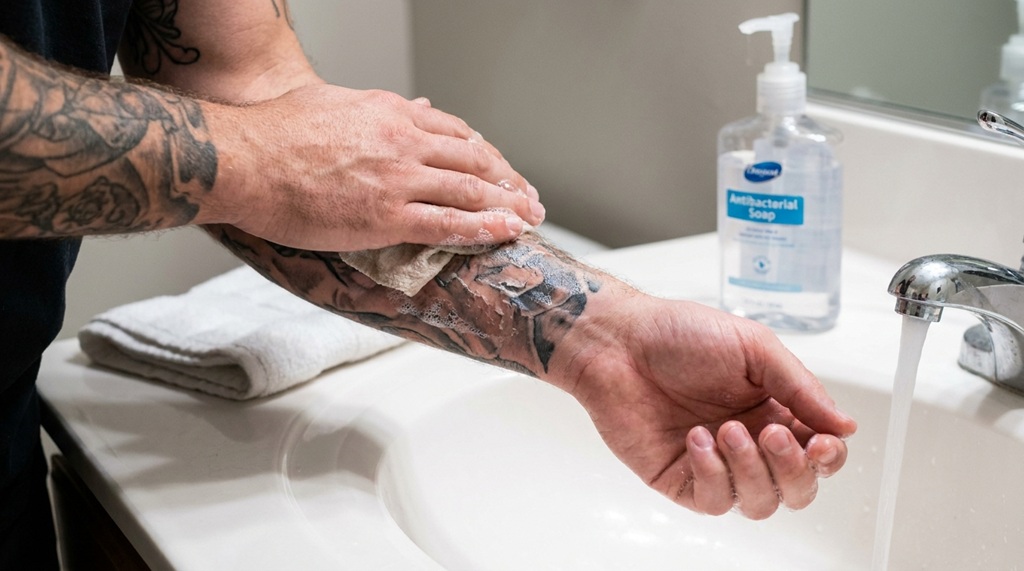
Clean your peeling tattoo twice a day using lukewarm water and a fragrance-free antibacterial soap. Keep your touch light and never scrub.
Step 1: Wash Your Hands First
Always start with clean hands. Touching a healing tattoo with dirty hands introduces bacteria right when your skin barrier is compromised.
Step 2: Wet the Area with Lukewarm Water
Avoid hot water. Heat opens your pores and can pull moisture out of the skin, which makes peeling and itching worse.
Step 3: Apply a Small Amount of Fragrance-Free Soap
Use your fingertips only. A pea-sized amount is enough to cover most tattoos, and you don’t need a washcloth or sponge.
Step 4: Gently Pat, Don’t Rub
Move your fingers in soft circular motions for a few seconds. Never rub back and forth, since friction can lift loose flakes before they’re ready to fall off on their own.
Step 5: Rinse Thoroughly
Rinse until no soap residue remains. Leftover soap can dry out the skin and trigger extra itching.
Step 6: Pat Dry with a Clean Paper Towel
Skip the bath towel. Cloth towels can harbor bacteria and snag on peeling skin, while a fresh paper towel is gentler and more hygienic.
Step 7: Apply a Thin Layer of Moisturizer
Once the skin is fully dry, apply a fragrance-free, tattoo-safe lotion. A thin layer is enough; a thick, greasy coat can actually trap moisture underneath and slow healing.
Essential Rules for Protecting Your Healing Skin
Certain habits during the peeling phase can cause permanent damage to your tattoo’s artwork, so avoiding key mistakes like picking at loose flakes, scrubbing the area, or applying heavy ointments is critical to preserving crisp lines and vibrant color. If your ink is located in a high-friction or delicate spot, taking extra care becomes even more crucial; learning how to manage tattoo pain in sensitive areas can help you avoid unnecessary touching or irritation while keeping your entire healing process as seamless and comfortable as possible.
Don’t Pick or Scratch the Flakes
Picking at peeling skin can pull out ink along with the flake, leaving light or patchy spots that don’t grow back. Let flakes fall off naturally, even if it takes longer than you’d like.
Don’t Over-Moisturize
Applying too much lotion suffocates the skin and can lead to a condition called “moisture trapping,” which often shows up as tiny raised bumps or prolonged peeling. Two to three thin applications a day is plenty for most tattoos.
Don’t Soak the Tattoo
Skip long showers, baths, swimming pools, and hot tubs until your tattoo fully heals. Soaking softens scabs and flakes too early, increasing the chance you’ll accidentally pull them off.
Don’t Use Scented Products
Fragranced soaps and lotions often contain alcohol or dyes that irritate freshly healing skin. Stick to products labeled fragrance-free, not just “unscented,” since some unscented products still use masking chemicals.
Don’t Expose It to Direct Sunlight
UV rays fade fresh ink fast and can burn already-sensitive skin. Cover the area with loose clothing if you have to be outside, and skip sunscreen until the peeling stage is fully over unless your artist says otherwise.
How Long Does Tattoo Peeling Last?
Most tattoos finish peeling within 7 to 14 days after the session, though this varies by placement and skin type. Areas with thinner skin, like wrists or ribs, sometimes peel faster than thicker areas like calves or shoulders.
Larger tattoos or ones with heavy black work and shading may take slightly longer, since more skin surface was traumatized during the session. If your tattoo is still peeling heavily after three weeks, it’s worth checking in with your artist.
A Tip Most Guides Skip: Watch Your Fabric, Not Just Your Hands
Most articles only talk about what you put on your tattoo. Few mention what your tattoo rubs against all day.
Tight clothing, rough denim, and even certain bedsheet materials can quietly pull off flakes while you sleep or move around. If your tattoo is on an arm, leg, or torso, switch to loose, breathable cotton clothing during the peeling phase, and consider a soft breathable dressing at night if you tend to toss and turn. This one change prevents a surprising amount of accidental ink loss that has nothing to do with your cleaning routine.
Signs of Infection vs. Normal Peeling
Normal peeling looks dry and flaky, with mild itching and no spreading redness. Infection looks different, and it needs medical attention, not more lotion.
Watch for these warning signs:
- Redness that spreads outward instead of staying at the tattoo’s edges
- Green, yellow, or foul-smelling discharge
- Increasing pain instead of gradual improvement
- Fever or chills
- Swelling that gets worse after day 4 or 5
If you notice any of these, contact your tattoo artist or a doctor right away. Waiting can turn a minor issue into a bigger one.
FAQ: Common Questions About Peeling Tattoos
Is it normal for color to come off when my tattoo peels?
Yes, this is completely normal. The color you see in the flakes comes from surface-level pigment residue, not the ink that’s permanently settled in your dermis.
Can I use regular lotion on a peeling tattoo?
Stick to fragrance-free, dye-free lotions specifically recommended by your artist. Regular lotions often contain additives that irritate healing skin and can slow the process down.
What happens if I accidentally scratch my tattoo while it’s peeling?
A single accidental scratch usually won’t ruin your tattoo, but repeated scratching increases the risk of pulling out ink and causing scarring. Apply a thin layer of moisturizer and keep an eye on the spot for any unusual redness or irritation.
Should I keep my peeling tattoo covered or let it breathe?
Most artists recommend leaving it uncovered once the initial bandage comes off, since airflow supports healing. Only cover it with a breathable, non-stick dressing if it will rub against clothing or bedding.
Why is my tattoo peeling unevenly?
Uneven peeling often happens because of skin thickness differences across the tattooed area, or slight variations in how deep the needle went in different spots. This is common and usually resolves on its own without affecting the final look.
Conclusion
Peeling is your skin’s natural way of healing after a tattoo, and it’s nothing to worry about if you handle it correctly. Clean gently twice a day, moisturize lightly, keep flakes alone, and protect the area from sun, friction, and soaking.
Follow these steps, and your tattoo will come out of the peeling phase looking exactly like your artist intended: sharp lines, solid color, and skin that healed the way it should.